🧠 👁️🕯️👁️👂 Anamnesis, Shema, and Covenant Memory: Why Remembering in Scripture Means More Than Recall [2 parts]
Intro: The concept of anamnesis (Greek: ἀνάμνησις, anamnēsis) means “remembrance,” “recollection,” or “bringing to mind,” but in biblical and covenantal contexts it often means something stronger than mere mental recall. It can imply a living remembrance that makes a past reality present and active, especially before God and within a covenant relationship. 🕯️
In Scripture, anamnesis is often tied to memory that leads to participation, obedience, worship, or covenant renewal.
I. 1. The Lord’s Supper - “Do this in remembrance of Me”
Luke 22:19/1 Corinthians 11:24–25 - “Do this in remembrance (anamnesin) of Me.”
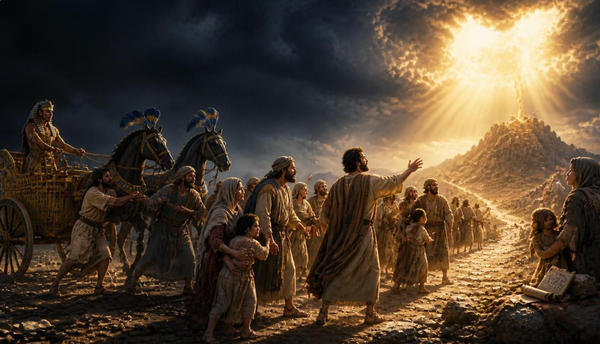
This is the clearest New Testament use of anamnesis. Jesus does not merely say, “Think about Me occasionally.” The context is Passover, where Israel did not merely remember the Exodus intellectually—they participated in its story generation after generation.
In biblical thought:
- The meal re-presents covenant reality
- The worshiper enters into the meaning of God’s saving act
- Remembrance becomes transformative participation
Paul reinforces this by connecting the meal with participation (koinōnia) in Christ’s body and blood (1 Corinthians 10:16).
This resembles the Hebrew idea of (zikaron)—a memorial that makes covenant realities present.
2. Passover as Covenant Remembrance
Exodus 12:14 - “This day shall be for you a memorial (zikaron).”
Israel was not commanded to merely remember Egypt intellectually. Each generation was to see themselves as those whom God delivered.
Notice the language:
Exodus 13:8 - “It is because of what the LORD did for me when I came out of Egypt.”
Generations later, people spoke as though they themselves experienced the Exodus. This is biblical anamnesis: Past saving action → remembered ritually → present identity formed.
3. Memorial Offerings Before God
The grain offering included a “memorial portion” (Hebrew: azkarah, from zakar, “remember”).
The offering ascended:
Leviticus 2:2, 24:7 - “as a memorial before the LORD.”
The point is not that God forgets. Rather, covenant language suggests: the act brings the worshiper into remembered relationship before God.
Similarly, the angel tells Cornelius:
Acts 10:4 - “Your prayers and alms have ascended as a memorial before God.”
His actions become a kind of covenant remembrance.
4. The Twelve Stones at the Jordan
Joshua 4:6–7 - “These stones shall be a memorial.”
Israel sets up stones. Why? So future generations ask:
“What do these stones mean?”
Memory here is pedagogical and participatory. The memorial reactivates covenant identity. Children do not merely learn history—they learn:
✨ “This is who we are because of what God has done.” ✨
5. Feast Days as Sacred Remembrance
Leviticus 23. Israel’s festivals function as enacted anamnesis.
Passover
Remembers deliverance.
Feast of Booths (Sukkot)
Israel reenacts wilderness wandering by living in booths.
Leviticus 23:43 - “That your generations may know…”
The people bodily relive dependence on God.
Trumpets
A “memorial proclaimed with blasts.” Memory is communal, embodied, covenantal.
6. “Remember” in Covenant Language
Throughout Scripture, “remember” is covenant vocabulary. When God “remembers,” He acts.
Genesis 8:1 - “God remembered Noah…”
Result: deliverance begins.
Exodus 2:24 - “God remembered His covenant…”
Result: redemption from slavery.
Likewise humans are repeatedly told:
Deuteronomy 8:18 - “Remember the LORD your God”
Meaning: Live covenantally in light of Him. Biblical remembrance is not nostalgia. It is memory with obedience attached.
7. Psalms as Anamnesis
Psalm 77, 78, 105, 106
The psalmists rehearse God’s past works to sustain present faith.
Psalm 77:
“I will remember the deeds of the LORD.”
Notice the movement: memory → confidence → worship
Israel combats fear by retelling God’s acts. Remembrance reshapes what the “eye” sees. The one who remembers God’s faithfulness interprets present trials differently.
8. Hebrews and the Negative Form of Anamnesis
Animal sacrifices produced:
Hebrews 10:3 - “a reminder (anamnesis) of sins every year.”
Interesting contrast:
Old covenant sacrifices repeatedly recalled guilt.
Christ’s sacrifice creates:
Hebrews 10:17 - “No more remembrance of sins.”
So anamnesis can function positively or negatively:
- Remembering deliverance → faith
- Remembering covenant → obedience
- Remembering sin continually → unresolved guilt
- Remembering Christ → participation in redemption
A Biblical Pattern of Anamnesis
A recurring biblical pattern looks like this:
God acts → people remember → remembrance becomes ritual/story → identity is renewed → obedience follows
This is why forgetting God in Scripture is spiritually dangerous. Forgetfulness is not bad memory—it is covenantal drift.
You can almost summarize much of the biblical drama this way:
Humanity forgets.
God establishes memorials.
Worship restores memory.
Memory restores covenant life.
II. 🕯️ Shema and Covenant Memory
If we pursue this theme deeply, a striking pattern emerges:
✨ In Scripture, forgetting is one of humanity’s core spiritual failures, and anamnesis/remembrance is one of God’s primary remedies. ✨
Biblical remembrance is not merely intellectual memory. It is memory that restores right perception, loyalty, identity, and obedience.
This connects directly to shema—hearing that results in faithful response.
1. Biblical Memory Is Covenantal, Not Merely Cognitive
Modern thought often treats memory like information storage:
“I remember facts.”
Biblical thought treats memory relationally:
“I live in light of what is true.”
To “remember God” means:
- to remain loyal
- to trust His character
- to act according to covenant
- to interpret reality through His past faithfulness
✨ The opposite of remembering is not absent-mindedness, it is unfaithfulness. ✨
This is why Israel can “forget” God while still knowing theology.
“They forgot God their Savior”
Psalm 106:21 - They forgot the God who saved them, who had done great things in Egypt.
Israel did not literally forget Yahweh existed. They forgot Him practically.
Notice the sequence: God delivers → fear arises → memory collapses → idolatry appears.
This resembles Eden.
2. Eden: The First Failure of Anamnesis
In Eden, humanity possessed prior revelation. God had spoken. Yet the serpent introduces an alternative interpretive framework:
“Did God really say…?”
The issue becomes: Will humanity remember God’s word rightly? Or will they reinterpret reality apart from Him? Genesis 3 shows a collapse of covenant memory.
The woman sees that “the tree was good…” Her perception changes. What happened? The memory of God’s trustworthiness was displaced by another voice.
This parallels Israel repeatedly:
God speaks
People forget
Alternate loyalties emerge
✨ often begins as failed remembrance. ✨
3. Deuteronomy: Israel’s Great Warning Against Forgetting
No biblical book emphasizes remembrance more than Deuteronomy.
Repeated command, “Take care lest you forget…”
Deuteronomy 6–8 especially. The danger? Prosperity. When needs are met, memory fades.
Deuteronomy 8 pattern:
God provides manna → teaches dependence → enters abundance →
“then your heart becomes proud and you forget.”
✨ Forgetfulness produces autonomy. ✨
Notice the progression: Forget → pride → self-sufficiency → idolatry
This sounds remarkably like Eden.
“You shall remember the LORD your God…”
Why? Because remembrance protects perception. Without memory, reality becomes distorted.
4. Shema: Hearing as Living Memory
The Hebrew (shema) means more than hearing.
It means: hear → internalize → obey
Deuteronomy 6:4–9 - “Hear, O Israel: The Lord is our God, the Lord Alone. Love the Lord your God with all your heart and with all your soul and with all your strength.
These commandments that I give you today are to be on your hearts. Impress them on your children. Talk about them when you sit at home and when you walk along the road, when you lie down and when you get up.
Tie them as symbols on your hands and bind them on your foreheads. Write them on the doorframes of your houses and on your gates.”
Notice what follows: Remember constantly. Bind it. Speak it. Teach children. Write it on doors. Why such repetition? Because:
✨ covenant fidelity requires intentional memory formation. ✨
Israel structures life around remembrance. This is essentially a culture of anamnesis. God knows humans drift. So He embeds memory into daily life.
5. Jesus as the Faithful Israelite Who Remembers
This becomes profound in Jesus’ wilderness testing in Matthew 4.
Israel failed in the wilderness. Jesus enters wilderness for 40 days, echoing Israel’s 40 years. Each test centers on remembering God rightly.
Satan offers alternate interpretations:
Stones → bread
Temple → spectacle
Kingdoms → shortcut power
Jesus responds repeatedly, “It is written…” He remembers. He performs perfect covenant anamnesis.
✨ Where Adam forgot and Israel forgot, Jesus remembers. He lives by the Word. ✨
The battle is often over which memory governs interpretation.
6. Communion as Restored Covenant Memory
Then Jesus says, “Do this in remembrance (anamnesis) of Me.”
This is much bigger than nostalgia. The Lord’s Supper becomes:
covenant renewal
identity restoration
perception correction
✨ The communion meal says: Remember what kind of King God is: a crucified King. ✨
Remember:
- mercy
- sacrifice
- covenant love
- forgiveness
- Kingdom values
Without remembrance, disciples drift into fear, pride, rivalry, and worldly thinking.
Exactly what happened to Israel.
7. The Human Heart Is Shaped by Rehearsed Memory
This is why Scripture constantly rehearses God’s acts.
Psalms retell history
Festivals reenact salvation
Stones memorialize crossing
Communion remembers Christ
Sabbath remembers creation and redemption
Why? Because:
✨ what we repeatedly remember shapes what we love. And what we love shapes what we become. ✨
This ties directly to the biblical “heart” (lev/levav). The heart is not merely emotions. It is the center of:
- will
- thought
- perception
- desire
The heart remembers narratives.
✨ Whatever story occupies the heart becomes reality’s interpretive lens. ✨
Proverbs 23:7 - As he thinketh in his heart, so is he (KJV).
8. Peter Walking on Water: A Picture of Failed Remembrance
Matthew 14. Peter walks toward Jesus. Then “seeing the wind…” he sinks.
This resembles Eden.
Perception shifts. His interpretive center changes. He momentarily forgets 'if Jesus called me, Jesus sustains me.'
Fear replaces remembered trust. This is why Scripture repeatedly says:
Fix your eyes.
Remember.
Set your mind.
Keep. Hold. Guard. Remain. Abide.
The battle is often perceptual.
9. Hebrews: Remembering to Endure
Hebrews 10:32 - “Remember the former days…”
Why? Because remembrance sustains endurance. The author uses anamnesis pastorally: You survived before, God was faithful before.
✨ Remembering previous grace strengthens present perseverance. ✨
James echoes this pattern: Trial → steadfastness → maturity.
Memory prevents despair.
10. The Gospel as Divine Anamnesis
Perhaps one of the deepest themes in Scripture is this: Humanity forgets, God remembers...and then teaches humanity to remember again.
Even when humans forget covenant:
Ezekiel 16:60 - “Yet I will remember My covenant…”
Ultimately Jesus becomes the living restoration of remembrance. He restores distorted perception of God. In a sense: Jesus is God’s answer to humanity’s amnesia.
🪞 A Narrative Thread Through Scripture
Eden → forget God's word → distorted sight → grasping
Israel → forget God's works → idolatry → exile
Jesus → remembers perfectly → faithful obedience → victory
Church → remember Christ → remain faithful → inherit Kingdom
✨ Forgetfulness leads to false worship, Remembrance leads to faithful love. ✨