👑💰⚖️💔🌫️✝️👁️ Beasts of Deception, Sons of Truth: Solomon’s Example and Christ’s Restoration [3 parts]
Introduction
Few figures in Scripture are as unsettling—or as revealing—as Solomon.
He begins as the king who asks not for power, wealth, or vengeance, but for wisdom to discern good from evil (1 Kings 3:9). He is granted extraordinary understanding, becoming a living testimony that wisdom is a gift from God rather than a product of human ingenuity. Yet Solomon’s story unfolds as one of Scripture’s great tensions: Can wisdom survive sustained compromise? Can discernment remain intact when desire is continually indulged?
In Ecclesiastes, Solomon (or Qoheleth) claims that he denied himself nothing while his wisdom remained with him. He explored pleasure, achievement, wealth, and excess as though wisdom might supervise indulgence without becoming corrupted. But when his life is held against the covenant standards of Torah—especially the commands for kings in Deuteronomy 17—the picture becomes more sobering. The king who should not multiply horses, wives, or gold becomes the very embodiment of excess. What begins as wisdom appears to drift into rationalized compromise.
This drift is illuminated further by the warnings of Hebrews 3:12–14 and Ephesians 4:17, 22, which describe the deceitfulness of sin, the futility of mind, and desires capable of corrupting the inner person. Solomon’s life raises the uncomfortable possibility that one may remain intellectually brilliant while gradually becoming spiritually divided.
Even more provocative is the strange numerical marker of Solomon’s kingdom: 666 talents of gold (1 Kings 10:14). Rather than beginning with apocalyptic speculation, this study will approach the number through the biblical theme of becoming brutish or beast-like—a condition described in passages like Psalm 73:22, Jeremiah 10:14, and Proverbs 12:1. In Scripture, beastliness is not primarily physical but moral and spiritual: the loss of rightly ordered perception through pride, idolatry, appetite, and resistance to correction.
Taken together, these themes invite a searching question:
What if the deepest danger in Solomon’s story was not the loss of wisdom, but the slow erosion of true humanity through compromised worship and unrestrained desire?
I. 1. Solomon’s Experiment: “I Denied Myself Nothing”
The Preacher (Qoheleth), widely considered to be King Solomon, conducts what is essentially an experiment in unrestricted desire:
Ecclesiastes 2:10–11 - “Whatever my eyes desired I did not keep from them. I kept my heart from no pleasure… Then I considered all that my hands had done… and behold, all was vanity and a striving after wind.”
Yet what makes the statement especially striking is:
Ecclesiastes 2:2–3 - “I searched with my heart how to cheer my body with wine—my heart still guiding me with wisdom…”
This creates a paradox: he indulges himself while believing wisdom remains intact enough to guide the experiment. He does not abandon discernment outright; rather, he attempts to walk into excess while retaining enough self-awareness to evaluate it.
When placed alongside Hebrews 3:12–14 and Ephesians 4:17, 22, a profound theological tension emerges.
In Ecclesiastes, the author tests whether fulfillment can be found through:
- pleasure 🍷
- achievement 🏛️
- wealth 💰
- sexuality and entertainment 🎶
- possessions and status 👑
His reasoning appears almost clinical: “Can wisdom remain present while I pursue every earthly appetite? Can I understand life from inside indulgence?”
He attempts to let wisdom supervise desire. Yet the outcome is devastating:
Ecclesiastes 2:1–2 - “Vanity of vanities.”
Not because the pleasures were unreal, but because they were incapable of carrying the weight of meaning. The experiment reveals something uncomfortable:
✨ human desire has no natural stopping point.✨
Ecclesiastes 1:8 - The eye never has enough of seeing.
The Deceitfulness of Sin
The author of Hebrews warns:
Hebrews 3:12-14 - “Take care, brothers, lest there be in any of you an evil, unbelieving heart… exhort one another every day… that none of you may be hardened by the deceitfulness of sin.”
Here, sin is not merely lawbreaking. It is deceptive. Sin persuades the heart that:
- “This will satisfy.”
- “You can control this.”
- “Wisdom will keep you safe.”
- “You can flirt with darkness without becoming shaped by it.”
This raises an important question: Was Solomon wiser than sin’s deceit? Ecclesiastes suggests: No. Even with extraordinary wisdom, the experiment produced grief:
Ecclesiastes 2:1–18 - “In much wisdom is much vexation.”
Hebrews would likely interpret Solomon’s journey as a warning about hardening through gradual compromise. Sin rarely announces itself with, “I will destroy you.” Instead it whispers, “You are wise enough to handle me.”
That is the deception.
Futility of Mind
Ephesians 4:17 - “You must no longer walk as the Gentiles do, in the futility of their minds.”
The Greek idea behind futility (mataiotēs) overlaps conceptually with Ecclesiastes’ repeated word: hevel (“vapor,” “breath,” “vanity.”) Paul is essentially describing the very world Solomon explored.
Solomon says: I tried everything under the sun—it was vapor.
Paul says: Do not walk in the futility of mind that governs those alienated from God.
✨ Ecclesiastes demonstrated what Ephesians later warns against. ✨
Solomon performs the experiment; Paul gives the theological diagnosis.
Life pursued horizontally—“under the sun”—becomes: cyclical, fragmented, unsatisfying, and restless. Not good for folks who are commanded to honor the Sabbath.
The issue is not intelligence, Solomon was gifted wisdom, the issue is orientation. A brilliant mind can still move in circles if detached from God.
Deceitful Desires
Ephesians 4:22 - “Put off your old self, which belongs to your former manner of life and is corrupt through deceitful desires.”
Desires are liars. They promise that pleasure leads to fulfillment, indulgence is evidence of freedom, and more leads to enough, (an "enough" that doesn't actually exist). Ecclesiastes exposes these promises as false.
Solomon repeatedly says: I gained more… and still found emptiness.
This does not mean pleasure itself is evil. Ecclesiastes actually affirms enjoyment as a gift from God:
Ecclessiastes 2:24–25 - There is nothing better for a person than that he should eat and drink and find enjoyment in his toil. This also, I saw, is from the hand of God, for apart from Him who can eat or who can have enjoyment?
✨ The problem is treating gifts as gods. ✨
- The old self says: 'If I experience enough, possess enough, or achieve enough, I will finally rest.'
- Ecclesiastes replies: 'No, you will still hunger.'
- Hebrews adds: 'And sin will deceive you into thinking otherwise.'
- Paul concludes: 'Therefore put off the old self.'
A Sobering Contrast: Solomon vs. Jesus
There is also an important biblical contrast. Solomon says, in effect, 'I withheld nothing from myself.' Jesus says, “Not My will, but Yours be done.”
Solomon explores meaning through unrestrained acquisition. Jesus reveals life through self-denial.
One tests every appetite and concludes: “Vanity,” the other empties Himself and receives resurrection, inheritance, an eternal Kingdom, and glorification.
This echoes Jesus’ paradox:
Matthew 16:25 - “Whoever loses his life for My sake will find it.”
✨ Ecclesiastes demonstrates the exhaustion of self-directed desire; the Gospel reveals the fruitfulness of God-directed surrender. ✨
Reflection
Taken together, these passages reveal a sobering pattern:
- Ecclesiastes asks: What happens if wisdom accompanies unlimited desire?
- Hebrews answers: Do not underestimate sin’s power to deceive and harden.
- Ephesians explains: The old self is corrupted through deceitful desires and futile thinking.
Solomon’s testimony becomes less a celebration of freedom and more a mercy-filled warning: 'I went to the end of indulgence so you would not have to.' He explored the far country of appetite and returned saying, 'The feast cannot save you.'
✨ The heart was not designed merely to consume. It was designed to commune—with God. ✨
II. The Claim: “My Wisdom Remained With Me”
Did Solomon’s wisdom actually remain intact while he indulged himself, or did indulgence slowly erode wisdom while he believed he still possessed it? The text of Scripture seems to lean strongly toward the second conclusion.
Ecclesiastes 2:9–10 - “I became great and surpassed all who were before me in Jerusalem. Also my wisdom remained with me. And whatever my eyes desired I did not keep from them.”
At face value, Solomon appears to say, 'I indulged broadly, yet wisdom stayed intact enough to evaluate the experiment.' But Scripture invites us to test that claim rather than accept it uncritically. The Bible often lets people narrate themselves while later texts expose deeper realities.
For example:
- Samson assumes divine strength remains while the Spirit has departed (Judges 16:20).
- David convinces himself secrecy can conceal sin until confronted.
- The church of Laodicea says, “I am rich,” while Christ says, “You are poor” (Revelation 3:17).
So we should ask: Did Solomon merely think wisdom remained with him?
Torah’s Blueprint for a King
The clearest measuring rod is in:
Deuteronomy 17:14–20 - “When you come to the land that the LORD your God is giving you, and you possess it and dwell in it and then say, ‘I will set a king over me, like all the nations that are around me,’ you may indeed set a king over you whom the Lord your God will choose. One from among your brothers you shall set as king over you. You may not put a foreigner over you, who is not your brother.
Only he must not acquire many horses for himself or cause the people to return to Egypt in order to acquire many horses, since the Lord has said to you, ‘You shall never return that way again.’ And he shall not acquire many wives for himself, lest his heart turn away, nor shall he acquire for himself excessive silver and gold.
“And when he sits on the throne of his kingdom, he shall write for himself in a book a copy of this law, approved by the Levitical priests. And it shall be with him, and he shall read in it all the days of his life, that he may learn to fear the Lord his God by keeping all the words of this law and these statutes, and doing them, that his heart may not be lifted up above his brothers, and that he may not turn aside from the commandment, either to the right hand or to the left, so that he may continue long in his kingdom, he and his children, in Israel."
God anticipated Israel asking for a king and placed explicit limits on royal behavior. The king was not to multiply:
- Horses 🐎
- Wives 💍
- Silver and gold 💰
And he must:
- Keep Torah before him daily 📜
Why? Because unchecked royal abundance would distort the king’s heart.
The Warnings For the king:
“he must not acquire many horses for himself” (Deuteronomy 17:16)
“Neither shall he multiply wives for himself, lest his heart turn away” (17:17)
“Nor shall he greatly multiply silver and gold for himself” (17:17)
Notice: The concern is not legalism, it is heart formation.
✨ God predicts abundance can deform perception. This is why scarcity is such a powerful tool of His. ✨
Solomon Violates Every Category
When we examine Solomon’s reign, the narrative almost deliberately shows him violating each Torah restriction in sequence.
1. Horses: Military Prestige Over Trust
In 1 Kings 10:26–29:
Solomon amassed chariots and horsemen.
He imported horses from Egypt—the very place Israel was told not to return to for security.
Deuteronomy warned:
“He shall not cause the people to return to Egypt in order to acquire many horses.”
Yet Solomon creates an empire of chariots. This is not accidental storytelling. The narrator is flashing 🚨 warning lights 🚨.
The wise king is beginning to trust imperial machinery. Compare this to a Psalm of David's:
Psalm 20:7 - “Some trust in chariots and some in horses, but we trust in the Name of the LORD.”
Solomon increasingly resembles surrounding kings rather than a Torah-shaped king.
2. Gold and Silver: Excessive Accumulation
Then comes staggering wealth.
1 Kings 10:14 - “The weight of gold that came to Solomon in one year was 666 talents of gold.”
That number should make readers uncomfortable. Not because of later apocalyptic symbolism, but because the context emphasizes excessive imperial wealth. Silver becomes “as common in Jerusalem as stones” (10:27).
666 talents of gold ≈ 49,950 pounds of gold (~25 U.S. tons)
Yet Torah explicitly warned: do not greatly multiply silver and gold. Solomon’s kingdom becomes economically dazzling—but spiritually precarious. Wisdom literature repeatedly warns: riches distort judgment.
Compare:
Proverbs 30:8-9 - “Give me neither poverty nor riches. Feed me with the food that is needful for me, lest I be full and deny You and say, “Who is the LORD?” or lest I be poor and steal and profane the Name of my God.”
Ironically, Solomon’s own tradition recognizes wealth’s danger.
3. Wives: The Direct Fulfillment of Torah’s Warning
Then comes the clearest betrayal.
1 Kings 11:1-3 - King Solomon loved many foreign women, along with the daughter of Pharaoh: Moabite, Ammonite, Edomite, Sidonian, and Hittite women, from the nations concerning which the LORD had said to the people of Israel, “You shall not enter into marriage with them, neither shall they with you, for surely they will turn away your heart after their gods.” Solomon clung to these in love.
He had 700 wives, who were princesses, and 300 concubines. And his wives turned away his heart.
This phrase matters enormously. God predicted precisely this outcome, “lest his heart turn away.” The narrator is intentionally showing Torah was right. Solomon’s downfall was not random. It was covenantal consequence.
1 Kings 11:4 - “When Solomon was old his wives turned away his heart after other gods, and his heart was not wholly true to the LORD his God.”
Wisdom could not protect him from long-term compromise. Instead, repeated compromise appears to have slowly reshaped him.
Ecclessiastes 10:1 - A little folly outweighs wisdom and honor. ⚖️
The Tragedy: Wisdom Without Obedience
This exposes something sobering: wisdom is not the same as faithfulness. Solomon possessed extraordinary discernment but discernment alone does not guarantee obedience. A person may know truth while slowly refusing it.
This parallels:
Hebrews 3:12–14 - “Take care… lest there be in any of you an evil, unbelieving heart… hardened by the deceitfulness of sin.”
Hardening is gradual. Not catastrophic overnight collapse. Solomon’s fall appears incremental: gift → abundance → compromise → accommodation → divided heart.
Ephesians 4:17, 22 and Solomon
Ephesians 4:17, 22 - “You must no longer walk as the Gentiles do, in the futility of their minds...put off your old self, which belongs to your former manner of life and is corrupt through deceitful desires.”
Solomon may be the biblical case study. At first, indulgence feels supervised: “my wisdom remained with me.” But eventually the desires themselves become formative.
✨ The king who once prayed for wisdom (1 Kings 3) ends up sponsoring idolatrous worship (1 Kings 11:5–8). ✨
That is staggering. Not ignorance, compromise. His heart becomes divided.
And in Scripture, the heart (lev/levav) is the center of worship, loyalty, and perception. A divided heart eventually becomes distorted sight.
Did Wisdom Hold Fast?
The answer seems to be: Partially, but not victoriously. Solomon never became a fool in the intellectual sense. He remained insightful. He still authored wisdom. He could still perceive vanity.
Ecclesiastes itself may even be the voice of painful realization after the experiment. But: wisdom did not hold the throne of his heart. Torah obedience did not remain central. His loves outran his discernment.
This may explain why Ecclesiastes sounds so weary. It reads less like triumphant philosophy and more like someone standing amid the ruins of excess saying, 'I tried everything you think will save you.'
And the haunting implication is that the man who knew better still wandered. Which makes Solomon one of Scripture’s strongest witnesses that: knowledge alone cannot preserve the heart.
The heart must be guarded, disciplined, and continually turned toward God (Prov. 4:23).
III. First: “Brutish” in Scripture = Beast-Like Humanity
Revelation 13:18 - This calls for wisdom: let the one who has understanding calculate the number of the beast, for it is the number of a man, and his number is 666.
Q: What if “the beast” is not merely political or eschatological, but also a biblical picture of what humans become when wisdom is rejected and desire rules?
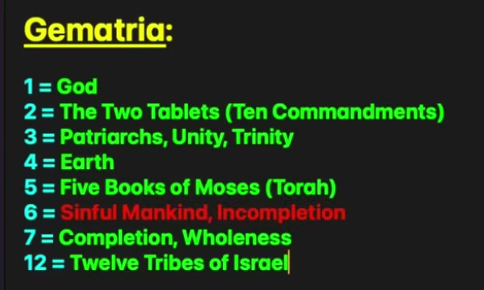
And in that light, Solomon’s 666 talents of gold (1 Kings 10:14) suddenly becomes symbolically provocative as it may be a biblical anthropology of dehumanization through corrupted desire—becoming beast-like through rebellion, pride, and idolatry.
The Hebrew Bible repeatedly uses language of becoming animal-like to describe spiritual dullness.
Psalm 73:22
Psalm 73:22 - “I was brutish and ignorant; I was like a beast toward You.”
The Hebrew word is ba‘ar (בַּעַר). Meaning:
- stupid
- senseless (come back to your senses - 1 Corinthians 15:32-34)
- spiritually dull
- animal-like in perception
The contrast is important. The psalm begins with envy, the writer sees the prosperity of the wicked and desires what they have. His desires distort his sight. Then he realizes, “I was like a beast.”
Beastliness here is not claws and fangs, its misordered perception, living by appetite rather than truth. To judge reality by desire.
The psalmist becomes “beast-like” when he loses perspective. That matters for Solomon. Because Solomon’s kingdom increasingly becomes organized around accumulation, pleasure, power, and prestige.
Precisely the things Psalm 73 warns can deform perception.
Idolatry Makes Men Brutish
Jeremiah 10:14 - “Every man is brutish and without knowledge.”
Why? Because of idolatry. The context is false worship. Humans fashion idols and then become spiritually senseless. The irony is devastating: The image-bearer becomes less human by bearing the wrong image and worshiping what is beneath him. Instead of reflecting God, man reflects idols.
Psalm 115:8 - "Those who make idols become like them."
This is a profound biblical principle: Worship shapes ontology. You become what you bow to. Worshiping God → become more fully human, worshiping idols → become diminished. Brutish. Beast-like.
Now consider Solomon. His decline in 1 Kings 11 is fundamentally a story of idolatry. Foreign wives lead him into worship of:
- Ashtoreth (Greek form: Astarte) - A major Canaanite/Phoenician goddess, often associated with fertility, sexuality, love, war, and royal power.
Especially worshiped by the Sidonians/Phoenicians (1 Kings 11:5).
- Molech (Alternate spelling: Moloch) - A deity associated with the Ammonites. Israelites are repeatedly forbidden from “passing children through the fire to Molech" (Lev. 18:21; 20:2–5).
Solomon builds a high place for Molech near Jerusalem (1 Kings 11:7).
- Chemosh - The national god of the Moabites. Frequently called, “the abomination of Moab.” Possibly worshipped via human sacrifice (2 Kings 3:27 - "The king of Moab took his firstborn son, who was to succeed him as king, and offered him as a sacrifice on the city wall)" strongly suggests this connection.
Solomon builds a high place for Chemosh “on the mountain east of Jerusalem”
(1 Kings 11:7).
Why These Three Matter Together ⚖️
The trio forms an unsettling pattern:
Ashtoreth → desire & sensuality 💍
Molech → power purchased through sacrifice 🔥
Chemosh → security through force & empire ⚔️
Together they mirror the very temptations Solomon increasingly embraced:
- pleasure 🍷
- accumulation 💰
- political alliances 👑
- imperial strength 🐎
✨ The gods Solomon tolerated externally reflected the desires already growing internally. His idolatry was not random, it mirrored the direction of his heart. ✨
Hatred of Correction Is Beast-Like
Proverbs 12:1 - “Whoever loves discipline loves knowledge, but he who hates correction is stupid.”
The Hebrew again is startlingly strong: ba‘ar — brutish. Literally: beast-like.
The proverb teaches: Refusal of correction dehumanizes. What distinguishes humans biblically? Wisdom. Correction. Moral formation. A beast acts according to instinct. A wise person submits desire to truth.
Now apply this to Solomon. After receiving extraordinary wisdom: Did he remain correctable? The narrative is definitive, no.
God warned kings beforehand (Deuteronomy 17) and Solomon personally.
1 Kings 11:9–10 - "The Lord was angry with Solomon, because his heart had turned away from the LORD, the God of Israel, who had appeared to him twice and had commanded him concerning this thing, that he should not go after other gods. But he did not keep what the LORD commanded."
The Hebrew for keep: shamar. Solomon is shown as another Adam, failing to 'shamar' the LORD's command or what He has entrusted to him. So Solomon persisted. The king, gifted by God with wisdom, stops loving correction and slowly becomes beast-like.
Ecclessiastes 4:13 - Better is a poor and wise youth than an old and foolish king who no longer knows how to heed a warding/take advice.
The Beast in Biblical Theology
Before Revelation, “beast” imagery already exists. In Daniel 7, kingdoms become beasts. Why? Because empire detached from God becomes subhuman. Power without righteousness animalizes and kings become predators. We find the same issue with shepherds in Ezekiel 34. The imagery says something shocking:
✨ Humanity without God does not evolve upward, it devolves. ✨
This idea is already dramatized in the story of Nebuchadnezzar in Daniel 4. The proud king exalts himself. Judgment comes. And what happens? He literally becomes beast-like, "eating grass like an ox." Why? Because pride had already animalized his soul before it manifested physically.
Daniel is making theological symbolism visible.
Solomon and his 666 talents of gold
Now the strange detail mentioned in 1 Kings 10:14. This occurs in a chapter emphasizing: multiplied wealth 💰, multiplied horses 🐎, multiplied wives 💍, royal excess 👑 — all direct violations of Deuteronomy 17.
The narrator appears to be signaling: Something has gone wrong. Then Revelation later presents the number of the beast: 666. Instead of reading this first through modern apocalyptic speculation, consider a biblical symbolic reading:
What if 666 represents humanity collapsing into beastliness through autonomous glory?
Six in Scripture often symbolizes humanity, which was created on the sixth day, but falling short of seven (completeness). Then intensified: 6-6-6. Humanity magnified in self-exaltation.
Glorious externally. Diminished internally. Like Solomon’s kingdom. The kingdom shines gold outwardly while the king’s heart fractures inwardly. The number may symbolize: perfected incompleteness.
Humanity attempting divine status while becoming less human.
- Psalm 73 → desire distorts perception
- Jeremiah 10 → idolatry makes man brutish
- Proverbs 12 → rejecting correction makes man beast-like
✨ The “beast” then becomes not merely a future tyrant but humanity enthroning appetite over wisdom and worship over God. ✨
Philippians 3:18-19 - Many live as enemies of the cross of Christ. Their destiny is destruction, their god is their stomach, and their glory is in their shame. Their mind is set on earthly things.
Solomon as a Proto-Beast Pattern?
Here is what I am NOT saying: Solomon is “the Beast” of Revelation. But he may function as an early biblical pattern.
He possesses: ✅ wisdom, ✅ glory, ✅ wealth, and ✅ worldwide admiration.
Yet gradually becomes: ❌ idolatrous, ❌ indulgent, ❌ covenant-breaking, and ❌ spiritually divided.
The terrifying irony: Wisdom did not prevent beastliness. Because wisdom without obedience becomes rationalized rebellion.
1 Samuel 15:23 - Rebellion is like the sin of divination, and arrogance like the evil of idolatry.
One could argue Ecclesiastes itself is the confession of a man realizing, “I became less human chasing fullness apart from God.”
What is Fear of the LORD?
Proverbs 9:10 - “The fear of the LORD is the beginning of wisdom,
and the knowledge of the Holy One is insight.”
Job 28:28 - “Behold, the fear of the LORD, that is wisdom,
and to turn away from evil is understanding.”
The Hebrew word for “fear” (yir’ah) does not primarily mean terror. It carries the sense of reverence, awe, submission, covenant loyalty, and/or recognizing rightful authority.
✨ Wisdom begins when a person rightly orders themselves beneath God; the bent knee always precedes clear sight. ✨
Christ as the Anti-Beast
Scripture ultimately contrasts two kinds of humanity: Adamic humanity, which grasps, exalts self, consumes, with Christic humanity, which empties self, obeys, and reflects the Father.
The Beast says 'take power,' while Christ says 'take up your cross.' The Beast dehumanizes while Christ restores humanity.
Mark 5:1-8 - They went across the lake to the region of the Gerasenes. When Jesus got out of the boat, a man with an impure spirit came from the tombs to meet him. This man lived in the tombs, and no one could bind him anymore, not even with a chain. For he had often been chained hand and foot, but he tore the chains apart and broke the irons on his feet. No one was strong enough to subdue him. Night and day among the tombs and in the hills he would cry out and cut himself with stones.
When he saw Jesus from a distance, he ran and fell on his knees in front of Him. He shouted at the top of his voice, “What do you want with me, Jesus, Son of the Most High God? In God’s Name don’t torture me!” For Jesus had said to him, “Come out of this man, you impure spirit!”
Mark 5:15 - When they came to Jesus, they saw the man who had been possessed by the legion of demons, sitting there, dressed and in his right mind.
Mark 5:18-20 - As Jesus was getting into the boat, the man who had been demon-possessed begged to go with him. Jesus did not let him, but said, “Go home to your own people and tell them how much the LORD has done for you, and how He has had mercy on you.” So the man went away and began to tell in the Decapolis how much Jesus had done for him. And all the people were amazed.
Jesus is not merely anti-idolatry, He is the restoration of true humanness, the truly human-King. 👑
Reflection
Through the lens of Psalm 73:22, Jeremiah 10:14, and Proverbs 12:1, beastliness in Scripture is fundamentally moral and spiritual before it is political or apocalyptic.
A person becomes beast-like when:
- appetite overrules wisdom
- idolatry replaces worship
- correction is rejected
- pride eclipses dependence
Viewed this way, Solomon’s 666 talents of gold feels less random. It stands at the literary center of a king who increasingly mirrors Deuteronomy’s forbidden pattern. The warning may be:
✨ Even wisdom can become beast-like when desire enthrones itself above obedience. ✨
Mark 8:36 - What good is it for someone to gain the whole world, yet forfeit their soul?
Perhaps we should ask Esau post bowl of stew.
Conclusion
The question Solomon leaves with every reader is deeply personal: What is shaping your heart—and what are you slowly becoming?
When Solomon’s words, life, and legacy are examined together, Scripture offers neither simplistic condemnation nor naïve admiration. Instead, it presents a tragedy wrapped in wisdom.
Solomon’s testimony in Ecclesiastes suggests he believed wisdom remained with him even as he denied himself nothing. Yet Torah exposes the fault lines beneath that confidence.
The king who was commanded not to multiply horses, wives, or wealth gradually violated every safeguard designed to protect the heart. And the very consequences the LORD foresaw came to pass: his heart turned away.
The warnings of Hebrews and Ephesians help explain what the historical narrative reveals. Sin is deceitful—not because it appears evil at first, but because it persuades the wise that they can remain untouched by compromise.
Desire promises control while quietly reshaping affection. Futile thinking is not always ignorance; sometimes it is intelligence turned inward, wisdom slowly detached from worship.
This is where the biblical language of beastliness becomes unexpectedly illuminating. Psalm 73 confesses that distorted desire makes a person “like a beast.” Jeremiah teaches that idolatry renders humanity brutish. Proverbs warns that rejecting correction is fundamentally animal-like.
In Scripture, to become beastly is not to lose intellect but to lose rightly ordered loves—to surrender discernment to appetite. Viewed through this lens, Solomon’s 666 talents of gold stand as more than an economic statistic. Positioned amid multiplied horses, multiplied wealth, and multiplied wives, the number becomes an unsettling symbol of humanity crowned in glory yet hollowed by compromise.
Not complete wickedness, but magnified incompleteness—human greatness severed from covenant faithfulness. A king dazzling outwardly while inwardly drifting toward divided worship. (Some would liken him to a whitewashed wall or tomb - Ezekiel 13:15, Matthew 23:27, Acts 23:3).
And perhaps that is the deeper warning beneath both Solomon and “the beast” imagery:
The greatest threat to humanity is not becoming less intelligent, but becoming less human. (Although given the current state of things one may go well with the other).
For Scripture’s vision of true humanity has never been mere knowledge, power, or abundance. Humanity is fullest when it reflects the Father. The tragedy of Solomon is that wisdom alone could not preserve him.
Where Solomon accumulated, Jesus emptied Himself. Where Solomon’s loves divided, Jesus’ obedience remained whole. Where beastliness bends humanity downward, Christ lifts us up to restore the image of God.
✨ The hope of the Gospel is that what wisdom could diagnose, Christ came to heal. ✨