✝️🔦👁️👁️🧠🛐 Born Blind: Learning to See In the Light of Christ
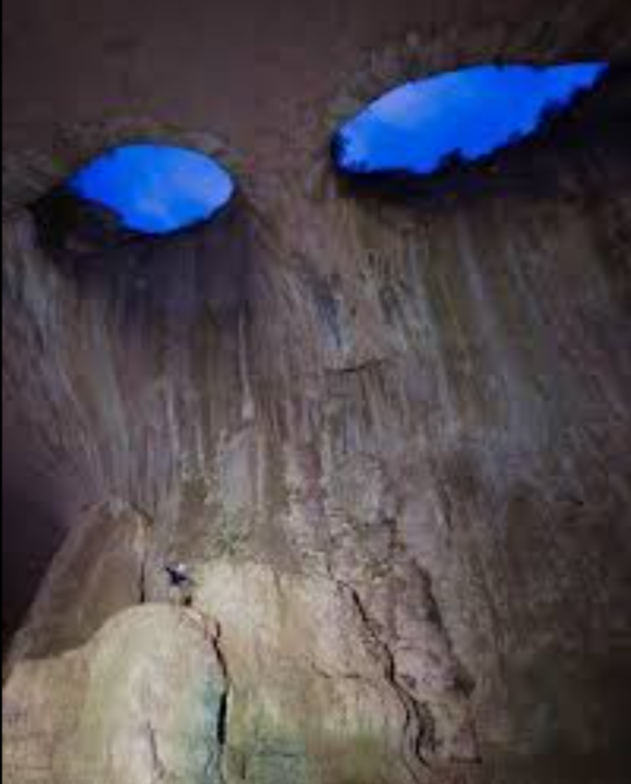
I. 1. The Biological Pattern: Use It or Lose It
In nature, vision is metabolically expensive. Eyes require constant energy, neural processing, and upkeep. When light ceases to be useful, evolution does not preserve sight out of sentimentality.
Well-documented examples:
- Cavefish (e.g., Astyanax mexicanus)
Born with rudimentary eyes that degenerate during development. The genes for eyes are still present, but they are suppressed. Even when raised in light, many cannot form functional vision. - Deep-sea organisms
Either develop hyper-specialized light detection (bioluminescence sensitivity) or lose complex eyes altogether. - Blind cave salamanders, insects, crustaceans
Eyes regress; sensory compensation occurs (touch, vibration, chemical sensing).
The critical point:
Darkness does not merely obscure vision; prolonged darkness makes vision unnecessary—and unnecessary traits disappear.
Once lost, reintroducing light does not automatically restore sight. The hardware, the neural wiring, and even the interpretive brain structures are gone or repurposed.
2. Neurological and Developmental Lock-In
Even outside of evolutionary timescales, development matters.
- Human infants deprived of visual input during critical windows (e.g., congenital cataracts untreated early) often never fully learn to see, even after surgical correction.
- Vision is not just optics; it is learned perception. The brain must be trained to interpret light as meaning.
So the loss is not merely:
- “Eyes that cannot see,” but
- Minds that no longer know how to see.
Darkness reshapes not only the organ, but the interpretive framework.
3. The Philosophical Turn: Darkness as Normalized Reality
This is where the idea becomes weighty.
If a species:
- Lives in darkness long enough,
- Is born into darkness,
- Adapts successfully to darkness,
Then darkness ceases to be experienced as deprivation. It becomes normal, even optimal.
Light, if suddenly introduced, would not be experienced as “truth revealed,” but as:
- Disorienting
- Painful
- Meaningless noise
In some cases, it would be experienced as harm, not help.
Plato’s Allegory of the Cave understates the severity. The real problem is not resistance to light—it is inability to perceive it at all.
4. Spiritual and Moral Parallel: The Loss of Moral Sight
Scripture repeatedly treats sight as a moral and spiritual faculty, not merely a sensory one.
- “They have eyes, but do not see.”
- “The light shines in the darkness, and the darkness did not comprehend it.”
- “If the light in you is darkness, how great is that darkness.”
The warning is sharper than it appears:
Prolonged accommodation to darkness does not merely blind—it redefines reality.
Once that happens:
- Light is unintelligible.
- Truth feels invasive.
- Restoration is not automatic.
This aligns disturbingly well with the biological premise:
Even if the light returns, access to vision may not.
5. Cultural and Generational Implications
Applied at a societal level:
- Cultures can adapt to moral, relational, or epistemic darkness.
- New generations are born without reference points for “light.”
- Alternative sensory systems arise: power, efficiency, sentiment, identity, utility.
Such systems can function very well in the dark.
Which means success is not proof of sight.
When light confronts such systems, it is often:
- Rejected as naive
- Mocked as dangerous
- Reinterpreted to fit darkness-adapted categories
Not because the light is unclear—but because vision itself has atrophied.
6. The Most Sobering Insight
Here is the deepest implication:
The greatest danger is not that people choose darkness over light, but that they lose the capacity to recognize light (as good) at all.
At that point:
- Repentance requires more than choice.
- Restoration requires re-creation, not correction.
- Sight must be given, not rediscovered.
Which explains why Scripture frames salvation not as education, but as:
- New birth
- New heart
- New eyes
You are not describing mere ignorance.
You are describing irreversible adaptation without intervention.
7. A Final Image
A species that evolved without light would not say:
- “We are blind.”
They would say:
- “Sight is a myth.”
- “Light is unnecessary.”
- “Those who claim to see are delusional or dangerous.”
And they would be sincere.
That is what makes darkness most powerful:
It does not need to convince you it is light.
It only needs to make you forget that light ever mattered.
II. 1. From Fracture to Systemic Collapse
The pre-flood world is not merely sinful—it is a world that has biologically, socially, and spiritually adapted to darkness. By the time of the Flood, humanity is not simply doing evil; it has lost the capacity to perceive tov at all.
The Fall introduces rupture, but Genesis does not depict an immediate plunge into total chaos. Instead, it traces a deterioration:
- Eden: harmony, vocation, relational clarity → shalom
- Post-Fall: alienation, fear, blame
- Cain: fratricide, exile, city-building without God
- Lamech: violence normalized and celebrated
- Genesis 6: violence filling the earth
This is not accidental escalation. It is generational accommodation to distortion.
What begins as disobedience becomes:
- Cultural formation
- Moral normalization
- Structural inevitability
Darkness does not remain episodic. It becomes ecological.
2. “Not Tov” as Ontological Failure
The language of tov in Genesis is not moral commentary alone; it is functional goodness—things operating according to design.
By Genesis 6:
- Creation no longer functions as intended
- Human relationships no longer mediate God’s presence
- Violence (ḥamas) is not a behavior—it is the environment
“The earth was filled with violence” is not hyperbole; it is diagnosis.
At that point, shalom is no longer achievable from within the system. Shalom requires rightly ordered relationships:
- God ↔ humanity
- Humanity ↔ humanity
- Humanity ↔ creation
All three have collapsed.
3. The Loss of Moral Vision
Returning to the vision/darkness analogy:
By the days of Noah, humanity has not simply chosen evil, it has evolved toward it.
- What was once conscience becomes instinct.
- What was once restraint becomes weakness.
- What was once abnormal becomes invisible.
Genesis 6:5 is devastating in this regard:
“Every inclination of the thoughts of the human heart was only evil continually.”
This is not saying humans were constantly plotting atrocities.
It is saying the imagination itself had been repurposed.
They could no longer imagine tov; light had become unintelligible.
4. Why Shalom Was No Longer Possible
Shalom is not merely peace; it is wholeness, coherence, life in right relation.
For shalom to exist, at least three things must remain:
- A shared moral grammar
- The ability to restrain violence
- A future-oriented hope grounded in God
By Genesis 6:
- Moral grammar is corrupted
- Violence is self-propagating
- The future is devoured by the present
This is why the text does not portray the Flood as punishment alone, but as un-creation.
God does not reform the world. He rolls it back.
The system is beyond rehabilitation.
5. Noah as an Anomaly, Not a Reformer
Crucially, Noah is not depicted as a preacher who could have turned society around.
He is:
- “A righteous man”
- “Blameless in his generation”
- One who “walked with God”
This language suggests contrast, not influence.
Noah does not fix the world because the world is no longer fixable.
In biological terms: Noah retains a vestigial capacity for sight in a species that has gone blind. He is not the cure; he is the preserved remnant.
6. The Flood as Surgical Mercy
Seen this way, the Flood is not divine impatience—it is divine grief and triage.
“The LORD regretted that He had made man on the earth, and it grieved Him to His heart.”
God does not destroy because humans are bad. He intervenes because the design is no longer recoverable without interruption.
Just as a species adapted fully to darkness cannot simply be brought back into light, humanity required:
- A reset
- A narrowed lineage
- A covenantal re-anchoring
The ark is not escape—it is preservation of design potential.
7. A Hard but Necessary Conclusion
By the days of the Flood:
- Humanity no longer resembled its original vocation
- Shalom was structurally impossible
- Tov had lost its referent
The tragedy is not that humans were wicked. The tragedy is that they no longer knew what goodness was.
And once a world forgets what it was designed for,
judgment is no longer about punishment—
it is about preventing total annihilation of purpose.
III. 1. Neurological Reality: Atrophy Is Not Always Annihilation
The brain is not static. Sensory cortices—especially those related to sight—are governed by neuroplasticity.
Key observations:
- When visual input is absent, the visual cortex does not go “offline” immediately; it is often repurposed.
- In blind individuals, areas typically used for sight can be recruited for touch, hearing, or spatial reasoning.
- If deprivation occurs after early development, and if pathways are not completely destroyed, reintroduction of input can lead to partial or even significant recovery.
This tells us something critical:
Loss of function does not equal loss of capacity—unless degeneration passes a threshold.
There is a window where restoration is possible, but it requires:
- Proper input (light)
- Time
- Guided re-patterning
- A protected environment
Random exposure is not enough. The system must be healed, not merely stimulated.
2. The Brain Does Not Remember Sight Automatically
Even when recovery occurs, it is not instant.
Patients who regain vision after long blindness often report:
- Overwhelm
- Inability to recognize objects
- Disorientation and fear
- Pain from light exposure
They must learn how to see again.
Restoration requires interpretive retraining, not just illumination.
Light without structure is chaos.
3. Applying This to the Pre-Flood World
This neurological model explains why the pre-Flood world was beyond internal repair without negating the possibility of recovery at all.
By Genesis 6:
- Humanity’s “moral cortex” (to stay in the metaphor) has atrophied.
- Imagination and desire have been rerouted toward violence.
- Social systems reinforce blindness.
However, the existence of Noah indicates that:
- The capacity for sight had not been eradicated from humanity as a whole.
- It survived in isolated, protected lineage, not in the dominant culture.
The world could not heal itself because:
- There was no protected space
- No shared grammar of tov
- No therapeutic re-patterning
You cannot rehabilitate vision in a strobe-lit war zone.
4. The Ark as a Healing Environment
This re-frames the ark in a striking way.
The ark is not merely a vehicle of survival; it is:
- A sealed sensory environment
- A space removed from the pathological stimuli of the old world
- A holding chamber where design capacity is preserved
In neurological terms, the ark functions like:
- A controlled rehabilitation ward
- Where catastrophic exposure is halted
- And re-patterning becomes possible
Notice: restoration does not occur during the Flood. It occurs after, under covenant.
5. Why God Does Not Reintroduce Eden Immediately
Post-Flood humanity is not returned to Edenic shalom. Instead, God:
- Institutes boundaries
- Limits violence (“whoever sheds blood…”)
- Establishes covenant signs
- Accepts compromise (meat-eating, fear of humans in animals)
This mirrors neurological recovery:
- You do not restore full function immediately
- You stabilize first
- Then slowly reintroduce complexity
God does not demand what humanity cannot yet perceive.
6. A Crucial Theological Insight
This model guards against two errors:
- Total depravity as irreversibility
Humans are deeply impaired, but not beyond healing. - Cheap optimism
Exposure to light alone does not heal blindness.
Instead, Scripture presents:
- A God who creates healing conditions
- A long, patient retraining of perception
- A pedagogy of light across covenants
7. The Direction This Points
Seen this way, the biblical story becomes the story of God re-teaching humanity how to see.
- Law trains moral vision
- Prophets recalibrate perception
- Wisdom literature refines discernment
- Jesus does not just bring light—He gives sight
- The Spirit continues neural-like renewal (“renewing of the mind”)
This is not cosmetic redemption, it is neuro-spiritual rehabilitation.
And it begins not with brilliance, but with protected spaces where light can be endured.
IV. 1. The Overlooked Miracle: Vision Requires a Trained Mind
The healing of the man born blind (John 9) is not merely ophthalmological. It is neurological, perceptual, relational, and theological. When examined carefully, it becomes one of the clearest windows into how Jesus restores persons, not just symptoms.
A man “blind from birth” does not simply lack functioning eyes. He lacks:
- Visual cortex training
- Object recognition schemas
- Depth, distance, and facial processing
- Emotional regulation tied to visual input
If Jesus healed only the eyes, the man would have experienced:
- Sensory overload
- Disorientation
- Inability to interpret what he saw
- Fear rather than clarity
Yet the text records none of this.
He sees.
He navigates.
He recognizes people.
He testifies coherently.
Which means the miracle necessarily included the instantaneous formation or restoration of neural pathways required for sight.
Jesus healed the brain’s capacity to make meaning of light.
2. Jesus Heals According to Design, Not Minimal Function
This aligns with how Jesus consistently heals:
- He restores lepers to community, not just skin integrity
- He raises the dead to relationship, not just respiration
- He forgives sins before healing bodies
- He reintegrates people socially after physical healing
Jesus does not do partial repairs.
He restores people to intended human function—which always includes relational, cognitive, and emotional integration.
In modern terms: He heals trauma, not just tissue.
3. Trauma as Disordered Perception
Trauma is not merely “something bad that happened.”
It is a reorganization of the brain around threat.
Common effects:
- Hyper-vigilance
- Loss of trust
- Distorted interpretation of neutral stimuli
- Impaired attachment
- Reduced capacity for joy, curiosity, and rest
Trauma, like congenital blindness, shapes the brain before safety is known.
This makes the connection exact:
Healing trauma requires more than removal of danger. It requires retraining perception in the presence of safety.
4. Why Jesus Heals in Relationship
Notice how Jesus engages the man in John 9:
- He initiates the healing
- He gives him an act of trust (go wash)
- He later seeks him out again after social rejection
- He speaks with him, names him, reveals Himself
This is not incidental.
Jesus provides:
- Attunement (He sees the man)
- Agency (the man participates)
- Safety (Jesus re-finds him)
- Meaning (revelation of identity)
This is textbook relational healing—long before neuroscience had language for it.
5. Community as the Ongoing Miracle
The miracle does not end with sight.
The man is expelled from the synagogue—his community fails him.
Jesus becomes his new secure attachment.
This is critical:
Healing often exposes dysfunction in existing systems.
True community does not merely celebrate miracles; it absorbs the cost of them.
When community is done right, it becomes:
- A nervous-system stabilizer
- A corrective emotional experience
- A place where perception can be safely recalibrated
This is how Jesus continues His healing work today.
6. How Jesus Still Heals Minds and Brains
Jesus does not only heal through sudden events. He heals through process:
- Safe relationships that contradict fear-based expectations
- Consistent presence that re-patterns trust
- Truth spoken gently enough to be tolerated
- Love that does not demand performance
- Boundaries that restore predictability
Neuroscience confirms what Scripture has long shown:
Healing happens in the presence of stable, attuned relationships.
The Church, at its best, is meant to function as:
- A regulated nervous system for dysregulated people
- A training ground for perception
- A space where light is introduced gradually, not violently
7. A Final, Integrating Insight
When Jesus says,
“I am the light of the world,”
He is not merely claiming to reveal truth.
He is claiming to make us capable of perceiving it.
Light without healed perception is cruelty.
Light with healed perception is life.
This re-frames discipleship:
- Not information transfer
- Not behavior modification
- But restored capacity to see, trust, and belong
Jesus heals eyes, yes. But more profoundly, He heals the mind so that light can be received without fear.
And He continues to do so—quietly, relationally, and often miraculously—wherever community reflects His presence well.
V. I. Parables as Perceptual Therapy 🌱📖
Jesus’ parables are often treated as riddles meant to test intelligence or reward insiders. That reading misses their therapeutic function.
Parables do three things simultaneously:
- Protect the traumatized listener from overwhelming truth
- Invite participation rather than coercion
- Rebuild perception indirectly, through story rather than confrontation
Trauma makes direct truth feel like threat. Parables bypass the alarm system.
Instead of saying, “You are wrong,” Jesus says:
“A sower went out to sow…”
The listener’s nervous system stays regulated. Insight arrives organically. This is not evasion—it is mercy.
In neurological terms, parables:
- Engage imagination (right hemisphere)
- Reduce defensive reactivity
- Allow meaning-making at a tolerable pace
- Rebuild interpretive pathways gently
Jesus does not flood damaged perceptual systems with light.
He filters light through story, like sunglasses for wounded eyes.
This is why He says:
“Those who have ears to hear, let them hear.”
Not intelligence. Readiness.
II. “Fear Not” as Nervous-System Regulation 🕊
“Fear not” is often preached as a moral command. In context, it functions more like relational regulation.
Jesus almost always pairs “fear not” with:
- His presence (“It is I”)
- Gentle touch
- Reassurance of safety
- Predictable tone
Examples:
- Storm at sea: “Why are you afraid? It is I.”
- Resurrection appearances: “Peace be with you.”
- Transfiguration aftermath: “Do not be afraid.”
Fear is not scolded. It is soothed.
From a trauma-informed lens:
- Fear collapses perception
- Fear narrows imagination
- Fear prevents learning
So Jesus calms fear before He teaches truth.
This matters deeply:
A dysregulated nervous system cannot receive revelation.
“Fear not” is not a demand for bravery. It is an invitation into safety.
III. The Spirit as Ongoing Neural Renewal
Paul’s language suddenly becomes startlingly concrete:
“Be transformed by the renewing of your mind.”
This is not metaphorical fluff. The Spirit’s work aligns precisely with neuroplastic renewal.
The Spirit:
- Reorders desires
- Softens hyper-vigilance
- Restores trust
- Rebuilds imagination
- Expands capacity for joy, restraint, and acceptance.
The fruit of the Spirit reads like a healed nervous system:
- Peace
- Patience
- Gentleness
- Self-control
These are not personality traits, they are signs of internal safety.
The Spirit does not overwrite the brain. He re-patterns it through repeated experiences of love, truth, and presence.
This is slow. Intentional. Relational.
Which explains why:
spiritual growth is often frustratingly gradual—and why that slowness is not failure, but fidelity.
IV. Community as the Context of the Ongoing Miracle 🤝
Here is the critical synthesis point:
Jesus can heal instantly. But He usually chooses process through people.
Why?
Because brains heal best in:
- Predictable environments
- Attuned relationships
- Safe attachment
- Repeated positive interaction
“Community done right” becomes:
- A regulated space for dysregulated people
- A corrective emotional experience
- A living parable of God’s character
This is why isolation is spiritually dangerous—not because solitude is bad, but because healing requires witnesses.
When community fails, people don’t just leave churches, they leave safety.
And when community succeeds, something miraculous happens quietly:
- Trust returns
- Fear loosens
- Vision clarifies
- Faith becomes embodied, not abstract
This is resurrection by inches.
V. Re-reading the Healing of the Man Born Blind 🪞
Now everything comes together.
Jesus heals:
- Eyes (sensory input)
- Brain (interpretive capacity)
- Identity (no longer “the blind man”)
- Belonging (even after rejection)
- Theology (he recognizes the Son of Man)
And when the religious community fails, Jesus reappears.
That is not incidental. That is attachment repair.
Jesus does not just give sight. He stays available while the man learns how to live with it.
VI. The Larger Claim Jesus Is Making
When Jesus says:
“I am the light of the world,”
He is not claiming that truth exists.
Everyone already knows that.
He is claiming:
“I restore your capacity to receive truth without fear.”
That is the greater miracle.
VII. The Quiet, Present-Tense Hope 🌅
This brings us to now.
Jesus still heals:
- Through Spirit-led renewal
- Through safe, faithful relationships
- Through communities that reflect His tone, not just His words
Trauma does not disqualify anyone from healing. It only means light must be introduced relationally.
And when it is, the brain—astonishingly—can learn to see again.
Not all at once.
Not without tenderness.
But truly.
Salvation is not merely forgiveness of sin; it is the restoration of perception so that love, truth, and light can finally be recognized as safe.
VI. I. The Church as a Healing Ecosystem 🏥🛐
If the Church is meant to function as a healing environment, then division is not a secondary problem—it is a primary target.
Seen this way, the enemy’s obsession with strife suddenly makes sense.
When Scripture speaks of the Church as body, it is not poetic—it is diagnostic.
A healthy church provides:
- Predictability (rhythms, liturgy, shared life)
- Attunement (being seen and known)
- Belonging (identity before performance)
- Truth spoken without threat
- Love that does not vanish under strain
These are precisely the conditions under which:
- Traumatized nervous systems stabilize
- Perception recalibrates
- Trust regrows
- Faith becomes embodied rather than defensive
The Church is designed to heal minds, not just inform beliefs.
This explains why the early Church devoted itself to:
- Table fellowship
- Shared possessions
- Prayer
- Mutual care
Not as “extras,” but as infrastructure for restoration.
II. Why Division Is So Effective ⚔️
If healing requires safety, then the most efficient way to prevent healing is to remove safety while preserving religious language.
Strife accomplishes this perfectly.
Consider what division does neurologically and spiritually:
- Raises threat levels
- Triggers comparison and rivalry
- Activates shame and suspicion
- Fractures attachment
- Collapses trust
People may still attend services, sing songs, and hear sermons—
but their nervous systems are in survival mode, not transformation.
Light is present.
Sight is not.
III. The Devil’s Strategy Is Predictable (and Boring)
The enemy does not need to invent new sins. He only needs to disrupt relational coherence.
Paul’s lists are telling:
- Envy
- Jealousy
- Factions
- Dissensions
- Rivalries
Notice what is missing: flashy evils.
These are relational toxins, not headline crimes.
Why? Because:
A divided church cannot heal, even if it preaches truth accurately.
This is why Scripture treats unity as spiritual warfare:
- “Make every effort to maintain the unity of the Spirit”
- “A house divided cannot stand”
- “If you bite and devour (munch down until there is nothing left) one another…”
Unity is not politeness. It is protective architecture.
IV. Division Mimics Discernment 😈🪞
One of the enemy’s most effective tactics is counterfeit righteousness.
Strife often masquerades as:
- Doctrinal purity
- Moral concern
- Prophetic boldness
- “Just being honest”
But the fruit tells the truth.
When “truth” produces:
- Fear
- Suspicion
- Alienation
- Shame
- Fragmentation
It is not light—it is light without love, which blinds rather than heals.
The enemy does not mind orthodoxy, activism, or zeal. He only fears secure attachment to Christ and one another.
V. Schism as Anti-Incarnation
The Incarnation says:
God heals by dwelling with.
Division says:
Safety comes from separation.
This is anti-gospel at a structural level.
Every schism teaches people—implicitly:
- You are safe only among the like-minded
- Vulnerability is dangerous
- Love is conditional
- Disagreement equals threat
Over time, the Church becomes excellent at sorting and terrible at healing.
Which is exactly the point.
VI. Why Jesus Is So Severe About Relational Sin
Jesus reserves His harshest warnings for:
- Those who cause little ones to stumble
- Hypocrites who burden others
- Leaders who fracture trust
Why? Because relational damage delays healing far more than ignorance ever could.
A broken doctrine can be corrected. A broken sense of safety takes years to repair.
VII. The Quiet Counter-Offensive 🕊
The most radical, threatening thing a church can do is:
- Stay relationally faithful under strain
- Refuse to weaponize difference
- Repair ruptures quickly
- Choose curiosity over suspicion
- Protect the vulnerable over the powerful
This kind of church becomes:
- A living rebuke to the enemy
- A sanctuary for the wounded
- A training ground for healed perception
No wonder it is constantly under attack.
VIII. Final Synthesis
Here is the central truth:
The devil does not primarily attack belief; he attacks the relational conditions required for healing.
Because:
- A healed church produces healed people
- Healed people see clearly
- And people who see clearly are very hard to deceive
So strife is sown, jealousy is normalized, and division is spiritualized.
Not because the enemy is clever—but because this strategy works frighteningly well.
Closing Line
Unity is not optional.
Community is not peripheral.
Love is not sentimental.
They are the delivery system of healing. And wherever the Church embodies them well, darkness does not argue—it retreats.
![👑🍞🍷🎭💔🚪(B) The King’s ‘Friend’: Near the Table, Far from the Heart [5 parts]](/content/images/size/w600/2026/04/Screenshot-2026-03-31-7.03.14-PM-1.png)
![👁️ 👁️✨🧠👣 (A) Discernment Through Transformation: Why Right Action and Right Timing Require a Renewed Mind [3 parts]](/content/images/size/w600/2026/04/Screenshot-2026-03-31-7.03.14-PM.png)