🧿🏃♂️🌀⚔️🔗🪞🍞🌿🍇 Hedonic Adaptation: Why Satisfaction Fades and What Scripture Says About It [4 parts]
![🧿🏃♂️🌀⚔️🔗🪞🍞🌿🍇 Hedonic Adaptation: Why Satisfaction Fades and What Scripture Says About It [4 parts]](https://storage.ghost.io/c/ab/d8/abd818ed-d1c7-4d9a-800d-8de8bae8d50c/content/images/size/w1200/2026/04/Screenshot-2026-04-27-9.44.59-AM.png)
Introduction
🧭 Hedonic adaptation sounds modern and clinical, but the core observation is ancient: humans quickly normalize what once thrilled them. It exposes a relentless truth:
✨ what we gain, we soon normalize—and then we want more. ✨
Scripture doesn’t deny this pattern; it diagnoses and dismantles it. Through the “eye,” daily bread, abiding, and Sabbath, the Bible offers not coping strategies but a different way of being human—one that interrupts the cycle at its root.
I. 🧠 Hedonic Adaptation
In behavioral science, hedonic adaptation refers to the tendency for people to return to a baseline level of happiness despite major positive or negative changes. Promotions, wealth, possessions, even relationships—over time, they “fade” in emotional impact.
✨ What excites you today becomes your new normal tomorrow. ✨
This creates a treadmill effect—often called the “hedonic treadmill”—where people keep pursuing more, assuming the next gain will finally satisfy.
📜 The Biblical Witness: “There Is Nothing New Here”
The Bible doesn’t use modern psychological terminology, but it describes this phenomenon with striking precision.
1. Ecclesiastes: The Laboratory of Hedonic Adaptation
The writer of Ecclesiastes (Qoheleth) essentially runs an ancient experiment:
Ecclesiastes 2:10–11 - “I denied myself nothing my eyes desired… yet when I surveyed all that my hands had done… everything was meaningless, a chasing after the wind.”
He was attempting to shepherd the wind. And he failed appropriately. This is hedonic adaptation in narrative form.
- Pleasure? Exhausted.
- Achievement? Hollow.
- Wealth? Insufficient.
The conclusion is not ignorance—it’s overexposure. He didn’t lack access; he lacked lasting satisfaction.
2. Proverbs: The Diminishing Return of Desire
Proverbs 5:10 - “Whoever loves money never has enough.”
That’s not just moral warning—it’s behavioral insight.
✨ Desire doesn’t terminate when fulfilled; it expands. ✨
This mirrors what psychologists observe: satisfaction recalibrates upward.
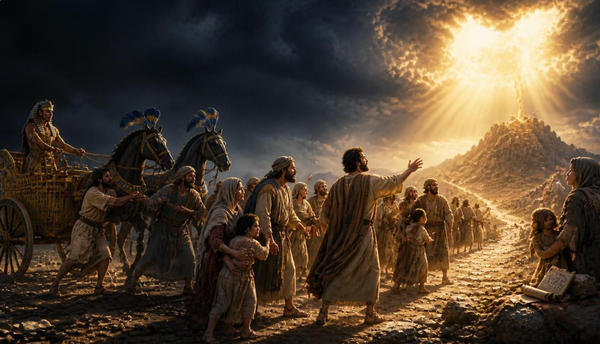
3. Israel in the Wilderness: Rapid Adaptation
Consider the pattern in Exodus and Numbers:
- Delivered from slavery → rejoice
- Days later → complain about water
- Then food
- Then leadership
This isn’t just rebellion—it’s a resetting expectation curve. And it doesn't just say something about the Israelites, it speaks to all of humanity.
✨ Humans adapt, even to miracles, with alarming speed. ✨
4. New Testament Framing: Misplaced Pursuit
Jesus cuts directly across the treadmill:
John 4:13–14 - “Whoever drinks of this water will thirst again…”
“But whoever drinks of the water I give them will never thirst.”
That’s a direct challenge to hedonic adaptation—not by denying it, but by redirecting the source of satisfaction.
⚖️ Agreement or Disagreement?
✅ Where the Bible Agrees with Hedonic Adaptation
- Earthly gains do not produce lasting fulfillment
- Desire escalates rather than resolves
- External circumstances cannot stabilize inner life
- Humans are prone to dissatisfaction even after blessing
In fact, Scripture goes further: it frames this not just as psychology, but as a condition of the fallen human heart.
❗ Where the Bible Disagrees (or re-frames)
Modern psychology often stops at management strategies:
- practice gratitude
- vary experiences
- adjust expectations
The Bible says those aren’t enough. It makes a far more radical claim: The problem isn’t just adaptation—it’s misalignment of desire.
🔍 The Core Difference: Baseline vs. Source
Hedonic adaptation assumes:
- You have a happiness baseline
- Life events temporarily move you above/below it
The Bible suggests:
- Your “baseline” is unstable because it’s tied to the wrong source
- True life (zoē) is not subject to decay or normalization
This is why passages like John 15 (“abide in Me”) matter so much:
- Not a spike of joy → but a sustained state of life
- Not novelty → but connection
- Not consumption → but communion
🌱 A Better Category: From Adaptation to Abiding
Hedonic adaptation describes what happens when you try to extract lasting satisfaction from temporary things.
The Bible proposes an alternative:
✨ Anchor yourself in what does not decay, and satisfaction no longer depends on fluctuation. ✨
This is why Paul can say:
Philippians 4:11 - “I have learned to be content whatever the circumstances…”
That’s not denial of adaptation—it’s freedom from dependence on it.
🪞 Synthesis
Hedonic adaptation is a confirmation of biblical wisdom. Scripture has been diagnosing this for thousands of years:
- The eyes are never satisfied
- The appetite grows by feeding
- The heart drifts when it consumes instead of abides
But it goes beyond diagnosis:
👉 It doesn’t just explain why you adapt
👉 It explains why you were never meant to live that way
II. 👁️ 🧿 1. The Good Eye vs. the Evil Eye
(Generosity vs. Consumption as Competing Lenses)
In Hebrew thought, the “eye” isn’t just perception—it’s orientation of the heart.
- Good eye (ayin tovah) → generosity, openness, abundance mindset
- Evil eye (ayin ra’ah) → stinginess, envy, scarcity fixation
Jesus brings this forward:
Matthew 6:22–23 - “The eye is the lamp of the body…”
This sits directly in a passage about treasure and money, which is not accidental.
🔍 Connection to Hedonic Adaptation
Hedonic adaptation thrives on consumption:
- acquire → normalize → desire more
That’s the “evil eye” pattern, always evaluating what you lack, unable to rest in what you have.
💡 Generosity Breaks the Feedback Loop
- It de-centers acquisition
- It resets perceived sufficiency
- It transforms resources into relationship and purpose
Acts 20:35 - “It is more blessed to give than to receive.”
Not just morally better—experientially different.
Modern research even confirms this: giving produces more durable well-being than receiving. But Scripture already embedded this insight in the “eye” metaphor.
👉 The good eye doesn’t adapt downward—it anchors upward.
🍞 2. Daily Bread
(Rhythm as a Defense Against Normalization)
Matthew 6:11 - “Give us this day our daily bread.”
This is not a quaint prayer—it’s a designed limitation.
🔍 Why “Daily”?
Because accumulation fuels adaptation.
When Israel stored manna it bred worms (Exodus 16) and became unusable.
✨ God structured provision so that dependence would be renewed daily and gratitude would be relearned daily. ✨
🧠 Contrast with Hedonic Pattern
Hedonic adaptation says stability → normalization → ingratitude.
Scripture counters with intentional instability of provision rhythm. Not insecurity—designed reliance.
💡 Daily Bread Disrupts Adaptation by:
- preventing over-accumulation
- reintroducing fresh dependence
- making gratitude a repeated act, not a fading feeling
✨ You don’t “get used to” what you must receive again each day. ✨
🌿 3. Zoē (Divine Life) vs. Psychological Happiness
This is where the framework shifts categories entirely.
John 17:3 - “This is eternal life (zōē aiōnios): that they know You the only true God, and Jesus Christ, whom You have sent.”
This is not mood, pleasure, or emotional state, its participation in God’s life.
🔍 Hedonic Adaptation Assumes:
- Happiness = emotional experience
- Experiences lose intensity over time
- Therefore all joy decays
❗ Scripture Responds:
You’re measuring the wrong thing.
Psychological happiness → stimulus-based → decays
Zoē (life in God) → relational/ontological → abides
🔗 A Coherent Biblical Strategy
Hedonic adaptation says you will normalize everything you receive.
The Bible responds with a threefold reorientation:
1. 👁️ Change Your Lens (Good Eye)
Stop relating to the world as a consumer.
- generosity > accumulation
- giving > grasping
➡️ This breaks the escalation of desire
2. 🍞 Change Your Rhythm (Daily Bread)
Stop trying to secure permanent satisfaction through stockpiling.
- daily dependence
- repeated gratitude
➡️ This prevents normalization through constant renewal
3. 🌿 Change Your Source (Zoē)
Stop expecting created things to sustain uncreated longing.
- abide, don’t consume
- participate, don’t extract
➡️ This bypasses the adaptation problem entirely
🪞 Reflection
Hedonic adaptation exposes a hard truth:
✨ The human heart cannot sustain satisfaction from what it consumes. ✨
Scripture agrees—but adds:
Because you were not designed to live by consumption.
Instead:
- The evil eye consumes and empties
- The good eye gives and is filled
- daily bread trains dependence
- zoē replaces the entire system
Hedonic adaptation is what happens when you try to live on fruit instead of staying connected to the vine.
III.🏺 1. Idolatry
(The Engine Behind Hedonic Adaptation)
Colossians 3:5 - “Put to death… greed, which is idolatry.”
Paul doesn’t say greed leads to idolatry, he says it is idolatry.
🔍 What Is Idolatry at Its Core?
Not just statues or false gods, its assigning ultimate life-giving value to something created.
In functional terms its attributing to something other than God what can only come from Him.
⚙️ How This Connects to Hedonic Adaptation
Idolatry creates a loop:
- Desire → “This will satisfy me”
- Acquisition → temporary satisfaction
- Adaptation → diminished effect
- Escalation → need more or something new
Repeat.
That is the hedonic treadmill, but Scripture gives it a theological diagnosis:
✨ The issue isn’t just adaptation—it’s misdirected worship. ✨
📖 Genesis 3: The First Cycle
Genesis 3:6 - “When the woman saw that the fruit of the tree was good for food and pleasing to the eye, and also desirable for gaining wisdom, she took some and ate it.”
This is the prototype:
- Seeing (evaluation)
- Desiring (projection of fulfillment)
- Taking (consumption)
And then? No lasting satisfaction—only:
- shame
- fear
- hiding
That’s hedonic collapse in its earliest form.
💡 Why Idolatry Guarantees Dissatisfaction
Because created things are finite, they cannot bear ultimate weight and cannot sustain infinite desire. So they always overpromise, underdeliver, and require replacement.
✨ Idolatry doesn’t just fail—it must fail repeatedly. ✨
🌿 2. Abiding (John 15)
(The Structural Reversal of the Cycle)
Now contrast that with Jesus:
John 15:4–5 - “Abide in Me… apart from Me you can do nothing.”
This is not advice—it’s a different operating system.
🔍 Abiding vs. Consuming
| Pattern | Genesis 3 / Idolatry | John 15 / Abiding |
|---|---|---|
| Orientation | Take | Remain |
| Source | External object | Living relationship |
| Mechanism | Consumption | Connection |
| Outcome | Diminishing return | Sustained life |
🌊 Why Abiding Breaks Hedonic Adaptation
Because it removes the conditions that make adaptation inevitable.
1. No Extraction
You’re not “using” something up.
2. No Novelty Dependence
The value isn’t in newness, but in depth of relationship.
3. Continuous Flow
“Like a branch… receiving life from the vine”
Life is not a one-time intake—it’s ongoing transmission.
🧠 Hedonic Adaptation (Symptom)
You normalize what you consume.
🏺 Idolatry (Cause)
You’re trying to extract life from what cannot sustain it.
🌿 Abiding (Cure)
You receive life from a source that does not diminish.
🪞 A Sharpened Contrast
The World’s Pattern:
See → Desire → Take → Adapt → Desire More → Take More
The Kingdom Pattern:
See rightly → Trust → Abide → Receive → Bear fruit
⚠️ A Crucial Implication
This re-frames even subtle behaviors:
- Constant scrolling
- Upgrade mentality
- Emotional dependency on circumstances
- Even spiritual “experience chasing”
All can become: micro-forms of idolatry fueled by hedonic adaptation.
🌱 Synthesis
✨ Hedonic adaptation is the predictable outcome of a life oriented around taking instead of abiding. ✨
In one clean line:
Idolatry turns life into consumption,
and consumption guarantees adaptation.
Abiding restores life as connection,
and connection sustains what consumption cannot.
IV. 🕊️ Sabbath
(A Weekly Disruption of the Hedonic Machine)
📖 The Core Command
Exodus 20:8 - “Remember the Sabbath day, to keep it holy…”
“Holy” (qadosh) = set apart, not just from work, but from normal patterns of striving and securing.
✨ Sabbath isn’t just “rest”—it’s a deliberate interruption of the entire system that drives hedonic adaptation and idolatry. ✨
⚙️ What Sabbath Actually Interrupts
Hedonic adaptation runs on this cycle:
produce → acquire → normalize → desire more
Sabbath cuts directly across it:
stop → receive → recognize → be satisfied
It is not passive rest—it’s active resistance.
🧠 1. It Breaks the Illusion of Control
For six days:
- you work
- you build
- you manage outcomes
On the seventh:
- you cease
That cessation is theological “I am not the one sustaining my life.”
💡 Why This Matters
Control fuels idolatry.
- “If I do enough, I’ll secure enough.”
- “If I secure enough, I’ll feel at peace.”
Sabbath exposes that as fragile.
👉 You stop—and the world doesn’t collapse.
🍞 2. It Retrains Desire (Daily Bread, Weekly Scale)
✨Sabbath is the macro version of daily bread.✨
- Daily bread → trust God for today
- Sabbath → trust God for what you didn’t do this week
In Exodus 16:
- manna falls daily
- but on the sixth day, a double portion is given
- no manna falls on the seventh
God builds a rhythm where provision must be trusted, not controlled.
👁️ 3. It Reorients the “Eye”
Remember:
- evil eye → scarcity, grasping
- good eye → generosity, sufficiency
Sabbath trains the good eye. Why? Because you intentionally:
- stop accumulating
- stop producing
- stop advancing
And instead:
- enjoy what is already given
- recognize sufficiency
✨ You cannot practice Sabbath and maintain a scarcity mindset without tension. One of them will break.✨
🏺 4. It Weakens Idolatry at the Root
Idolatry says, “This is what sustains me.”
Sabbath responds, “I will stop engaging with that—and see if I still live.”
That’s not symbolic. It’s diagnostic.
🔍 What You Struggle to Stop Reveals Your Functional god
- Work
- Money
- Productivity
- Entertainment
- Even ministry
✨ Sabbath surfaces attachment by removing access. ✨
🌿 5. It Reinforces Abiding
John 15:1-4 - “I am the true vine, and My Father is the Gardener. He cuts off every branch in Me that bears no fruit, while every branch that does bear fruit He prunes [kathaírō] so that it will be even more fruitful. You are already clean because of the word I have spoken to you. Remain in Me, as I also remain in you. No branch can bear fruit by itself; it must remain in the vine. Neither can you bear fruit unless you remain in Me.”
kathaírō – make clean by purging (removing undesirable elements); hence, "pruned (purged)"; eliminating what is fruitless by purifying (making unmixed).
Sabbath creates space for that to actually happen.
Because abiding requires:
- attention
- stillness
- non-striving
All of which are suffocated by constant production/consumption cycles.
Without Sabbath:
You default to taking instead of receiving, consuming instead of connecting.
With Sabbath:
You practice presence over production, communion over consumption.
🔗 The Integrated Framework
👁️ Good Eye
Trains how you see (generosity vs scarcity)
🍞 Daily Bread
Trains how you trust (dependence vs control)
🌿 Abiding
Defines where life comes from (connection vs consumption)
🕊️ Sabbath
Protects the entire system through rhythmic interruption
🪞 Insight
Hedonic adaptation thrives on:
- constant input
- constant pursuit
- constant escalation
Sabbath says, “You will stop—even if nothing feels finished.”
And in that stopping, something profound happens:
- desire settles
- gratitude resurfaces
- false dependencies are exposed
- real life becomes noticeable again
✨ Sabbath is a weekly act of defiance against the lie that more will finally be enough.✨