⚠️🧠🔒⚠️ Peter's Denial of Christ: The Rebellion Inherent in Fear
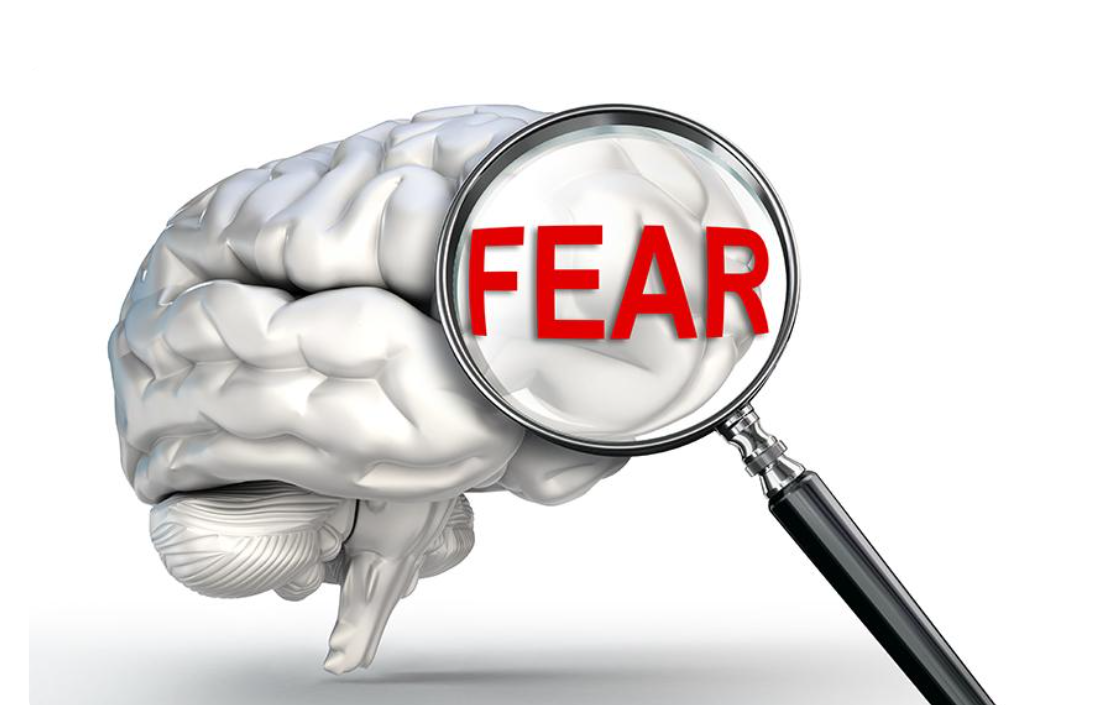
1. “Love the LORD…with all your mind” assumes an available mind
“You shall love the LORD your God with all your heart, soul, mind, and strength”—presumes that the mind is:
- Engaged
- Integrated
- Capable of discernment, reflection, and judgment
Biblically, the “mind” (Greek dianoia) refers not merely to intellect, but to the faculty that reasons, weighs, perceives meaning, and directs will. Love of God is not instinctive or reflexive; it is relational, intentional, and discerning.
That kind of love requires a brain that is capable.
2. Fear neurologically diminishes access to the thinking brain
Modern neuroscience consistently observes that fear activates survival circuitry (amygdala, brainstem) and down-regulates the prefrontal cortex, which is responsible for:
- Reasoned judgment
- Moral decision-making
- Empathy
- Long-term planning
- Complex thought
In short:
Fear narrows cognition.
Under fear:
- We react rather than reflect
- We simplify rather than discern
- We preserve rather than trust
This is not pathology; it is biology doing what it was designed to do in danger. But it is incompatible with love-driven worship.
3. Scripture anticipates this reality with striking clarity
The Bible repeatedly pairs “do not fear” with commands that require thought, obedience, and trust:
- “Do not fear… stand firm and see the salvation of the LORD” (Exod. 14:13)
- “Do not fear… remember the LORD” (Neh. 4:14)
- “Do not fear… I am with you” (Isa. 41:10)
- “Do not fear… consider the birds” (Matt. 6:26)
These are not emotional platitudes. They are cognitive invitations.
Fear would make these commands neurologically difficult—if not impossible—to carry out.
4. Fear collapses worship into survival; love expands it into communion
When fear dominates:
- God is approached as a threat manager
- Obedience becomes compliance
- Faith becomes risk avoidance
- The mind seeks control, not understanding
When fear is cast out:
- The cortex re-engages
- Reflection becomes possible
- Trust replaces hyper-vigilance
- Love becomes intelligent, not impulsive
This aligns directly with “perfect love casts out fear” (1 John 4:18). That is not poetic exaggeration; it is a statement about how humans are designed to function in God’s presence.
5. Theologically: fear distorts the image-bearing function of the mind
If humanity is designed to reflect God (imago Dei), then the mind is meant to mirror:
- God’s wisdom
- God’s intentionality
- God’s discernment
- God’s relational awareness
Fear reduces the mind to triage mode.
Love restores it to image-bearing mode.
Thus:
- Fear is not merely an emotion to overcome
- It is a functional impairment to spiritual perception
- Loving God with the mind requires freedom from dominating fear
6. A practical synthesis
You could frame the connection this way:
God does not command us to “use our minds” while leaving us trapped in fear.
His repeated “Do not fear” is not emotional pressure—it is neurological mercy.
Love requires a mind that is awake, spacious, and free.
Or more bluntly (and accurately):
Fear shuts down the very faculty God asks us to love Him with.
7. Why this matters pastorally and spiritually
- Chronic fear produces shallow theology
- Fear-based religion favors rules over relationship
- Love-based devotion invites reflection, questions, and trust
This explains why Scripture so often removes fear before revealing truth. God speaks where the mind can hear.
If you want, the next natural step would be to explore:
- Why “fear of the LORD” is categorically different from anxiety-driven fear
- How Jesus repeatedly calms fear before teaching
- Or how the Spirit functions as a “restorer of sound mind” (2 Tim. 1:7)
All three deepen this thread without forcing science onto Scripture—or Scripture onto science.
The Spirit
Then the thread comes into focus.
The Spirit is the mechanism of restoration—not merely comfort, not merely power, but the divine presence that returns the human mind to its intended operating state.
1. “God has not given us a spirit of fear…”
Paul’s statement in 2 Timothy 1:7 is unusually precise:
“God has not given us a spirit of fear, but of power, love, and sound mind.”
The phrase translated “sound mind” (sōphronismos) carries the sense of:
- Clear judgment
- Self-control
- Wholeness of thought
- Proper ordering of the inner life
This is not emotional calm alone. It is cognitive restoration.
Where fear fragments the mind, the Spirit integrates it.
2. The Spirit restores access to the “thinking” faculties
If fear biologically shifts humans into survival mode, the Spirit does the opposite:
- Re-establishes trust
- Calms threat perception
- Reopens capacity for discernment
This aligns with Jesus’ repeated pattern:
- “Do not be afraid”
- Then instruction, parable, or revelation follows
The Spirit does not bypass the mind. He reclaims it.
3. Pentecost is not frenzy; it is clarity
Pentecost is often misunderstood as loss of control. The text says the opposite:
- Accusations: “They are drunk”
- Reality: coherent speech, intelligible proclamation, scriptural reasoning
Peter does not dissociate; he interprets Scripture, explains events, reasons from Joel and the Psalms.
The Spirit enables:
- Memory
- Integration
- Theological reasoning
- Public articulation of truth
Fear scattered the disciples.
The Spirit gathered their minds.
4. The Spirit as “remembrancer”
Jesus says the Spirit will:
- “Teach you all things”
- “Bring to your remembrance all that I have said”
Memory retrieval, meaning-making, and contextual understanding are cortical tasks.
The Spirit is portrayed as restoring access, not overwriting agency.
This is why the Spirit is never described as bypassing thought, but renewing it.
5. The Spirit creates the conditions for loving God with the mind
Love of God with the mind requires:
- Safety
- Trust
- Relational security
The Spirit supplies precisely this:
- “Abba, Father” replaces threat with attachment
- Assurance replaces vigilance
- Communion replaces self-protection
Once fear is displaced, the mind can:
- Attend
- Discern
- Delight
- Understand
Only then is dianoia-love possible.
6. The contrast Scripture consistently maintains
| Fear | Spirit |
|---|---|
| Disintegration | Integration |
| Reactivity | Discernment |
| Narrow focus | Expansive awareness |
| Survival | Communion |
| Compulsion | Voluntary love |
This is why Paul connects renewed mind language (Romans 12) with life in the Spirit. Transformation is not bypassing cognition; it is healing it.
7. A unifying statement
You could summarize the connection this way:
Fear shuts down the mind God asks us to love Him with.
The Spirit restores that mind—not by force, but by presence.
Or more theologically:
The Spirit does not compete with human thought; He rescues it from fear.
II. 1. Peter's Denial of Christ: a perfect storm for fear
Peter’s denials are a textbook example of what fear does to a human being at the level of cognition, agency, and moral capacity—and why Jesus treats him with restoration rather than condemnation.
By the time Peter reaches the courtyard:
- His teacher has been arrested
- Violence has already occurred (ear severed)
- He is surrounded by hostile authority
- He is isolated from the other disciples
- His own life is plausibly at risk
Neurologically, this is not a reflective environment. It is a threat-saturated one.
Peter is no longer functioning as “confessor Peter” (Matt. 16). He is functioning as self-preserving Peter.
2. What fear does to Peter’s brain in that moment
Under acute fear, several things predictably occur:
a. Survival circuitry dominates
The amygdala-driven threat response takes precedence. The brain prioritizes:
- Avoiding detection
- Minimizing attention
- Immediate safety
Truth-telling, long-term loyalty, and theological reflection are not priorities in this state.
b. Access to higher reasoning is reduced
Fear suppresses prefrontal cortex functions, including:
- Moral reasoning
- Integration of identity (“Who am I really?”)
- Future consequence evaluation
Peter cannot meaningfully hold together:
“Jesus is the Messiah”
“Jesus said this would happen”
“I vowed to die with Him”
Not because he forgot these facts—but because his brain cannot integrate them under threat.
c. Language becomes reactive, not reflective
Notice the escalation:
- Deflection
- Denial
- Oath and curse
This is not calculation; it is loss of cognitive control. Speech emerges from panic, not principle.
Fear compresses Peter’s verbal capacity into a single objective: distance from danger.
3. Why the denials are repetitive and worsening
Each denial deepens because fear compounds:
- The first denial does not bring safety
- Anxiety increases
- Cognitive narrowing intensifies
This explains why Peter does not stop after the first denial. His brain is chasing relief that never quite arrives.
Fear promises safety; it delivers only more fear.
4. What Peter’s brain was not capable of in that moment
Because of fear, Peter was not neurologically positioned to:
- Recall Jesus’ words in an integrated way
- Act out of long-term covenant loyalty
- Speak truth that endangered him
- Love sacrificially
- Worship
This is not excuse-making; it is accurate diagnosis.
Scripture itself supports this interpretation: “They all forsook Him and fled.” Peter is not uniquely weak—only uniquely close.
5. The rooster and the return of integration
The rooster’s crow functions as a pattern interrupt:
- External signal
- Memory cue
- Emotional rupture
Luke says:
“The Lord turned and looked at Peter.”
That look restores:
- Relational awareness
- Memory access (“Peter remembered…”)
- Integrated identity
Only then does Peter weep—not during the denials, but after fear loosens its grip.
Repentance requires cognition.
Fear had to subside first.
6. Why Jesus does not rebuke Peter later
In John 21, Jesus does not say:
- “Why were you afraid?”
- “How could you deny me?”
Instead, He asks:
- “Do you love me?”
Why?
Because the denials did not occur in the realm of considered love, but in the realm of overwhelming fear. Restoration addresses identity and trust, not the panic response.
Jesus meets Peter where the mind is once again available.
7. The Spirit completes what fear disrupted
Post-Pentecost, Peter:
- Speaks publicly under threat
- Reasons from Scripture
- Accepts potential death
- Remains coherent and courageous
This is not personality change. It is neurological reconfiguration through the Spirit:
- Fear no longer governs access to speech
- The mind remains online under pressure
- Love and truth persist in danger
The same Peter. A different operating system.
8. The theological insight
Peter’s denials reveal that:
- Fear does not reveal who we are
- Fear reveals what we temporarily cannot access
Jesus knows the difference.
Or stated plainly:
Peter did not stop loving Jesus.
Fear simply shut down the part of him that could act like it.
Peter’s denials are a textbook example of what fear does to a human being at the level of cognition, agency, and moral capacity—and why Jesus treats him with restoration rather than condemnation.
III. 1. The common thread: Peter acting as protector–corrector
Peter’s rebuke of Jesus and his cutting off of Malchus’s ear are expressions of the same internal posture operating in different emotional registers. Together, they reveal a coherent—and deeply human—pattern.
In both scenes, Peter positions himself as the one who must intervene:
- Matthew 16 – Peter rebukes Jesus: “This shall never happen to you.”
- Gethsemane – Peter draws the sword to prevent Jesus’ arrest.
In each case, Peter assumes:
- He understands the situation better than Jesus
- Action is required now
- Preventing suffering is equivalent to faithfulness
This is not rebellion. It is misdirected loyalty.
2. The rebuke and the sword share the same theology
Peter’s rebuke flows from a theology in which:
- Messiah = victory without suffering
- Faithfulness = preventing loss
- Love = protection by force or persuasion
By the time of the arrest, Peter has not abandoned this framework—he has weaponized it.
The sword is simply the rebuke made physical.
3. Fear accelerates what pride initiates
At Caesarea Philippi, Peter rebukes Jesus calmly, verbally, face-to-face.
In Gethsemane:
- Darkness
- Armed men
- Sudden threat
- Imminent loss
Fear compresses deliberation into reaction. What was once argument becomes violence.
The brain no longer reasons; it acts.
4. Why the ear—and not a kill shot—matters
Peter is armed, close, and committed. Yet he strikes the ear, not the head or torso.
This suggests:
- Poor aim under stress
- Hesitation
- A warning blow rather than execution
Neurologically and narratively, this fits:
- High adrenaline degrades fine motor control
- Moral inhibition is not fully overridden
- Peter is panicking, not assassinating
He is acting out of fear-driven loyalty, not murderous intent.
5. Jesus’ consistent correction exposes the deeper issue
Jesus’ responses in both moments are nearly identical in substance:
- “You are not setting your mind on the things of God, but of man.”
- “Put your sword back… shall I not drink the cup?”
The issue is not method (words vs. sword), but mindset.
Peter’s mind is locked onto:
- Immediate outcomes
- Avoidance of suffering
- Control of the narrative
Jesus is moving toward:
- Obedience
- Trust
- Redemptive suffering
6. Malchus’s ear is a living parable
Jesus heals the ear Peter severed.
Symbolically:
- Peter damages a servant while trying to defend the King
- Violence wounds the very people the Kingdom aims to heal
- The Kingdom advances not by silencing enemies, but by restoring them
Peter’s action contradicts Jesus’ mission even as it tries to preserve Him.
7. The through-line to Peter’s denial
These moments form a single arc:
- Rebuke – Peter tries to control Jesus’ path
- Sword – Peter tries to force a different outcome
- Denial – Peter cannot follow Jesus where control is surrendered
When Peter realizes he cannot stop the suffering, fear collapses his courage.
Control fails → fear spikes → identity fragments.
8. The theological insight
Peter’s deepest struggle is not fear alone, but control masquerading as devotion.
Both the rebuke and the sword say:
“I love you too much to let you suffer like this.”
Jesus replies in both cases:
“You love Me, but you do not yet understand what love requires.”
9. Why Jesus entrusts Peter later anyway
Post-resurrection, Jesus does not revisit the rebuke or the sword. He asks one question:
“Do you love Me?”
Why?
Because love was never in doubt.
Understanding was.
The Spirit will later transform Peter from:
- Preventing suffering → proclaiming meaning
- Controlling outcomes → witnessing faithfully
- Reacting in fear → reasoning in courage
![👑🍞🍷🎭💔🚪(B) The King’s ‘Friend’: Near the Table, Far from the Heart [5 parts]](/content/images/size/w600/2026/04/Screenshot-2026-03-31-7.03.14-PM-1.png)
![👁️ 👁️✨🧠👣 (A) Discernment Through Transformation: Why Right Action and Right Timing Require a Renewed Mind [3 parts]](/content/images/size/w600/2026/04/Screenshot-2026-03-31-7.03.14-PM.png)