🍞🍽️🕰️⚖️ The Mercy of Delay: The Slow Work of God in the Human Soul [4 parts]
I. 1. Growth Is Not Instant Anywhere in the Body
Especially not where transformation happens
No part of the body grows by bypass. The fastest systems (nervous reflexes, adrenaline responses) are not the systems that build a person. The systems responsible for formation—bones, muscles, immune memory, and especially digestion—work slowly, repetitively, and invisibly.
The digestive system is not designed for speed. It is designed for conversion.
Food must be:
- Broken down
- Exposed to enzymes
- Absorbed gradually
- Distributed patiently
- Incorporated into tissue over time
Shortcut the process and you don’t get strength—you get illness. So too with character.
2. Scripture Explicitly Links Maturity to Digestion
Paul and the author of Hebrews make this link without apology:
“Anyone who lives on milk… is not acquainted with the teaching about righteousness. But solid food is for the mature.” (Heb 5:13–14)
This is not about information density. It’s about digestive capacity. Spiritual immaturity is more than just ignorance—it’s undigested truth.
3. Why God Allows Slowness in Character Formation
Because digestion is how truth becomes tissue
Rapid moral change often produces:
- Zeal without endurance
- Convictions without wisdom
- Strength without flexibility (which breaks under pressure)
Slow formation produces:
- Discernment (Heb 5:14)
- Endurance (Rom 5:3–4)
- Stability under temptation (Eph 4:14)
Character grows like muscle after micro-tears.
It requires:
- Stress
- Rest
- Repetition
- Time
That’s not inefficiency. That’s design. 🛠️
4. Digestion Explains Why Trials Are Necessary
James uses bodily language intentionally:
“Let perseverance finish its work so that you may be mature and complete, lacking nothing.” (James 1:4)
“Finish its work” implies a process already underway.
Trials are not the food. They are the enzymes.
They:
- Break down pride
- Expose hidden toxins
- Force reliance on God
- Make truth absorbable rather than theoretical
Undigested truth produces arrogance. Digested truth produces humility and strength.
5. The Gut–Heart Connection Is Not Accidental
Biblically, the “heart” (lev/levav, kardia) is:
- The seat of desire
- The center of decision
- The place of moral formation
Modern biology tells us:
- The gut produces neurotransmitters
- The gut influences mood, patience, impulse control
- Inflammation in digestion affects mental clarity
Ancient Scripture intuited what modern science is now confirming:
What you take in—and how you process it—shapes who you become.
Jesus wasn’t being poetic when He spoke of:
“Every idle word”
“What comes out of the mouth”
“Bread from heaven”
He was describing formation pipelines. 🍞➡️❤️
6. Why We Resist Slow Growth (and Why the Enemy Exploits That)
Fast food exists because we hate waiting. Spiritual fast food exists for the same reason.
The enemy’s strategy is often not heresy—it’s indigestion:
- Overexposure without obedience
- Stimulation without reflection
- Teaching without practice
- Conviction without repentance
Pornography, outrage cycles, and constant novelty all:
- Overstimulate
- Short-circuit patience
- Weaken the “spiritual gut”
- Train the soul to crave sugar, not sustenance 🍭
A weakened digestive system can’t process solid food—even if it’s true.
7. A Quiet Re-frame: Slowness Is a Sign of Health
If character growth feels slow, that may mean:
- You are actually absorbing, not just hearing
- God is forming tissue, not inflating ego
- Your soul is being fed, not entertained
🐑 Fast change impresses crowds. Slow change builds saints. 🐑
8. A Simple Diagnostic Question
Here’s the test that reveals digestion vs. consumption:
Does this truth change how I respond under pressure?
If yes → it’s being absorbed.
If no → it’s still in the stomach, not the bloodstream.
Thought
God is not in a hurry because He is building something that must last.
Character grows like digestion:
- Slowly
- Daily
- Invisibly
- Faithfully
And one day, without realizing exactly when it happened, you discover:
“I am stronger than I used to be.”
That’s not delay. That’s formation. 🪞🌱
II. 1. Peter Redefines “Slowness” as Mercy
“The Lord is not slow in keeping His promise, as some understand slowness. Instead He is patient with you, not wanting anyone to perish, but everyone to come…to repentance.” (2 Peter 3:9)
Peter does something subtle but decisive:
“The Lord is not slow (bradynō), as some count slowness, but is patient (makrothymeō).”
Two different categories.
- Slowness = delay due to weakness, inefficiency, or hesitation
- Patience = restraint due to purpose and strength
God’s timing is not mechanical delay; it is relational restraint.
This immediately re-frames waiting as intentional space for transformation, not divine procrastination. ⏳➡️❤️
2. Patience Exists for One Reason: Repentance
Peter gives the why explicitly:
“…not wishing that any should perish, but that all should come to repentance.”
Repentance (metanoia) is not a snap decision.
It is a reorientation of the whole person—mind, will, desires, habits.
That kind of change cannot be rushed without becoming performative.
This is where the digestive metaphor locks in.
3. Repentance Requires Digestion, Not Just Exposure
You can be exposed to truth instantly. You cannot be reformed instantly.
Repentance requires:
- Conviction to be felt
- Resistance to be faced
- Pride to be weakened
- New patterns to be embodied
That is slow internal work, like digestion:
- Breaking down old structures
- Absorbing what gives life
- Eliminating what poisons
- Rebuilding from the inside out 🫀
If God “sped things up,” He wouldn’t save more people—He’d create more brittle ones.
4. Judgment Is Delayed So Formation Can Complete
The context of 2 Peter 3 is judgment, not comfort.
Scoffers say:
“Where is this ‘coming’ He promised?” (v.4)
Peter’s answer is not:
“God changed His mind.”
It is:
“God is waiting until the work is done.”
Just like digestion must finish its work before strength appears, God allows history to run long so repentance can finish its work in people.
Judgment is not stalled. It is held at bay by mercy. 🛡️
5. God’s Patience Mirrors His Way of Growing People
This is the key connection:
God deals with history the same way He deals with hearts.
- He doesn’t force growth
- He allows time for absorption
- He restrains power for the sake of transformation
- He values what we become more than how fast we arrive
The same God who won’t rush the end won’t rush your sanctification either.
6. Why Humans Misread God’s Timing
Peter says, “as some count slowness.”
We count time by:
- Urgency
- Outcomes
- Efficiency
- Visibility
God counts time by:
- Repentance
- Formation
- Faithfulness
- Endurance
We want microwaves. God builds microbiomes. 🧫😄
"The microbiome is the community of microorganisms (such as fungi, bacteria and viruses) that exists in a particular environment. In humans, the term is often used to describe the microorganisms that live in or on a particular part of the body, such as the skin or gastrointestinal tract. These groups of microorganisms are dynamic and change in response to a host of environmental factors, such as exercise, diet, medication and other exposures."
 NHGRI
NHGRI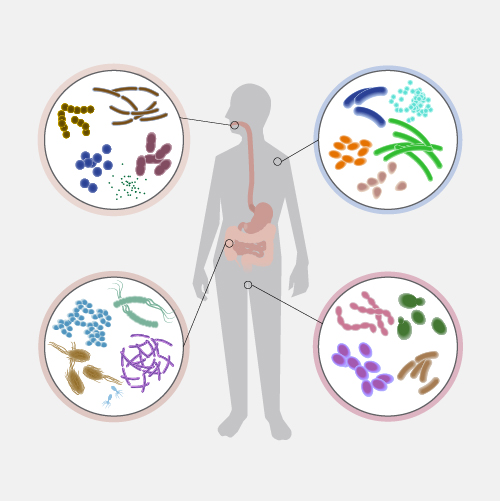
7. Bringing It Back to the Body Metaphor
A body that rushes digestion:
- Suffers inflammation
- Loses nutrients
- Becomes weak, not strong
A soul rushed into “change”:
- Performs righteousness
- Avoids repentance
- Breaks under temptation
- Confuses activity with maturity
So when Scripture says God is “not slow,” it’s telling us:
What looks like delay is actually careful formation.
Final Re-frame
God’s patience is not the absence of action. It is the discipline of love refusing to rush what must be transformed.
The world exists this long because repentance takes this long.
You are still being worked on because digestion takes this long.
And that’s not failure. That’s grace doing its full work. 🌱🪞
III. 1. What “Spiritual Fast Food” Actually Is
Fast food is not evil because it’s food.
It’s dangerous because it trains appetite while bypassing nourishment.
Spiritual fast food does the same thing.
It is spiritual content that:
- Is immediately gratifying
- Requires no repentance
- Produces emotional spikes without endurance
- Can be consumed endlessly without obedience
It fills the mouth but never reaches the muscle. 🍔➡️🚫💪
2. Empty Calories: Real Words, No Nutrients
Empty calories aren’t fake food—they’re low-density food.
Spiritually, empty calories include:
- Verses without context
- Promises without covenant
- Grace without lordship
- Identity without transformation
- Worship without submission
Nothing here is technically false.
It’s just nutrient-poor.
You’re eating, but you’re not building anything.
3. The Enemy’s Goal Is Not Starvation but Malnutrition
Satan doesn’t need to silence Scripture. He just needs to repackage it.
Jesus counters this in the wilderness with:
“Man shall not live by bread alone…”
The temptation was not bad bread. It was bread detached from obedience.
Malnourished believers:
- Know verses
- Lack discernment
- Confuse familiarity with formation
- Collapse under sustained pressure 🏋️♂️
4. How Fast Food Shapes Appetite
Here’s the most dangerous part:
Fast food doesn’t just weaken you. It rewires your hunger.
Signs of spiritual appetite distortion:
- Boredom with Scripture that requires effort
- Impatience with silence, prayer, or waiting
- Addiction to novelty (“I’ve heard this before”)
- Craving inspiration instead of instruction
- Avoidance of passages that confront sin
Your soul starts rejecting vegetables. 🥦😬
5. Milk vs. Solid Food Is About Capacity, Not Preference
Hebrews 5 isn’t shaming taste buds—it’s diagnosing digestion.
Milk:
- Requires no chewing
- Is pre-processed
- Delivers comfort quickly
Solid food:
- Requires effort
- Slows you down
- Produces strength over time
If someone lives on milk too long, the issue isn’t age—it’s underdeveloped digestion.
6. Platforms Can Become Drive-Thrus
Technology isn’t the villain—but it accelerates malnutrition.
Spiritual drive-thru patterns:
- 30 sermons, zero obedience
- Worship playlists, no confession
- Devotionals replacing Scripture
- Quotes replacing context
- Community replaced by content 📱➡️😶
You can’t build muscle watching cooking shows.
7. The False Sense of Fullness
Empty calories create the illusion of sufficiency.
You feel:
- Encouraged
- Validated
- Emotionally uplifted
But when temptation comes:
- There’s no resistance
- No endurance
- No practiced obedience
- No reflexive trust in God
Jesus didn’t collapse in the wilderness because He had stored nutrition, not just exposure. 🐑⚔️
8. What Real Nourishment Looks Like
Spiritually dense food includes:
- Scripture read slowly
- Truth applied personally
- Repentance practiced repeatedly
- Obedience when no one is watching
- Silence that reveals what’s actually inside
This kind of eating is boring at first.
So is training.
So is healing.
But it works.
9. A Gentle but Honest Diagnostic
Ask yourself:
- Am I consuming more than I am obeying?
- Do I feel inspired but unchanged?
- Do I avoid teachings that require repentance?
- Does my spiritual intake produce endurance or just emotion?
If the answer stings—that’s not condemnation. That’s hunger returning. 🍽️
Thought
God is not trying to make you feel full.
He’s trying to make you strong.
Spiritual fast food keeps you busy.
Spiritual nourishment makes you dangerous to the enemy. 🛡️⚔️
And the good news?
You can change your diet starting today—one slow, honest, obedient meal at a time. 🌱
The Parable of the Sower is not mainly about information delivery; it’s about reception capacity—which makes it a perfect lens for hunger vs. appetite. 🌱🍽️
IV. 1. Same Seed, Different Outcomes
Jesus is explicit:
The seed is the Word. It does not change.
What changes is the soil—the internal condition of the hearer.
That alone tells us the issue is not content quality but internal readiness.
Appetite asks, “Do I like this seed?”
Hunger asks, “Can I receive this seed?”
2. The Path: Appetite Without Openness
The seed on the path is exposed but never received.
Characteristics:
- Public access
- Hardened surface
- Immediate loss
This soil represents people who hear constantly but never slow down enough for penetration.
This is appetite culture:
- Always consuming
- Never stopping
- Constant stimulation
- No internal processing
Appetite skims.
Hunger opens.
The enemy steals what never had a chance to be absorbed. 🐦
3. Rocky Soil: Appetite That Wants Results Without Depth
This soil receives the seed with joy—important detail.
Joy ≠ hunger.
This is appetite excited by:
- Emotional response
- Immediate benefit
- Spiritual novelty
- Quick affirmation
But:
- No root
- No endurance
- No moisture
- No patience
When heat comes (pressure, obedience, suffering), appetite retreats.
Hunger stays.
This is why Jesus ties maturity to endurance, not enthusiasm. 🔥🌱
4. Thorny Soil: Competing Appetites That Choke Hunger
This soil allows growth—but not fruit.
The plant isn’t killed by false teaching. It’s strangled by legitimate desires.
Jesus names them:
- Cares of the world
- Deceitfulness of riches
- Desires for other things
This is appetite fragmentation.
Hunger wants one thing.
Appetite wants many.
You don’t starve here—you suffocate.
The soul never gets enough of anything. 🌾🪢
5. Good Soil: Hunger That Has Been Cultivated
Good soil isn’t morally superior.
It is prepared.
Prepared how?
- Softened by repentance
- Cleared of stones
- Weed-free by discipline
- Open to delay
Good soil accepts:
- Waiting
- Repetition
- Obedience
- Loss before gain
This is hunger.
Hunger doesn’t rush fruit—it trusts growth. 🍇
6. Why Appetite Resists Fruitfulness
Fruit requires:
- Time
- Energy
- Cost
- Consistency
Appetite wants:
- Taste
- Feeling
- Stimulation
- Control
Appetite consumes the seed.
Hunger lets the seed consume you.
That’s the reversal.
7. The Yield Ratios Reveal Hunger
Thirty-, sixty-, hundredfold fruitfulness shows varying digestive capacity, not different seeds.
All good soil is hungry.
Some have been hungry longer.
Appetite asks, “Why am I not like them?”
Hunger asks, “What must I continue to cultivate?”
8. Jesus Explains This Privately—for a Reason
The parable itself filters appetite from hunger.
Crowds heard stories.
Disciples asked questions.
Appetite is satisfied with hearing.
Hunger presses for understanding. 🧠📘
Final Synthesis
The Parable of the Sower is Jesus’ diagnostic tool for spiritual eating.
- Path = exposure without hunger
- Rocky = appetite without endurance
- Thorny = divided appetite choking hunger
- Good soil = hunger trained into reception
The seed doesn’t need improvement.
The soil doesn’t need entertainment.
It needs hunger.
And hunger, unlike appetite, will wait, receive, and bear fruit—even when no one is watching. 🌱🪞
![👑🍞🍷🎭💔🚪(B) The King’s ‘Friend’: Near the Table, Far from the Heart [5 parts]](/content/images/size/w600/2026/04/Screenshot-2026-03-31-7.03.14-PM-1.png)
![👁️ 👁️✨🧠👣 (A) Discernment Through Transformation: Why Right Action and Right Timing Require a Renewed Mind [3 parts]](/content/images/size/w600/2026/04/Screenshot-2026-03-31-7.03.14-PM.png)