🔥✝️🔥 (4) What?! The "Hell" of Hinnom's Valley [3 parts]
![🔥✝️🔥 (4) What?! The "Hell" of Hinnom's Valley [3 parts]](/content/images/size/w1200/2025/10/Valley-of-Hinnom.png)
I. 1. The Valley of Hinnom in History
- Location: South of Jerusalem, just outside the city walls.
- Biblical Associations:
- In the OT, it became notorious as the site where Judah’s kings (Ahaz, Manasseh) offered child sacrifices to Molech (2 Kgs 23:10; Jer 7:31; Jer 19:5–6).
- Jeremiah rebukes this abomination and prophesies that this very valley will no longer be called The Valley of the Son of Hinnom but rather the Valley of Slaughter (Jer 7:32; 19:6), because there will be so many corpses there from God’s judgment that there will be no place to bury them.
2. From Valley of Slaughter to Gehenna
- The Hebrew Ge-Hinnom (“Valley of Hinnom”) passed into Aramaic as Gehenna.
- By the Second Temple period, Gehenna had become a metaphor for divine judgment—not just a physical place of disgrace and slaughter, but the realm where God’s enemies would face destruction or purgation.
- Jesus uses “Gehenna” 11 times in the Gospels, always in warning, e.g., “Do not fear those who kill the body but cannot kill the soul. Rather fear Him who can destroy both soul and body in Gehenna” (Matt 10:28).
3. Why “Valley of Slaughter”?
Jeremiah’s renaming (Jer 7:32; 19:6) ties directly to what Gehenna came to mean later:
- Literal slaughter: In Jeremiah’s context, it meant foreign armies would lay waste to Judah; corpses would fill the valley as judgment for idolatry and child sacrifice.
- Symbolic slaughter: Later, the valley became shorthand for God’s ultimate judgment on sin—where life ends in disgrace, consumed by fire or left unburied for birds and beasts (Jer 7:33; Isa 66:24).
- Jesus’ imagery: He takes this prophetic background and applies it to the final fate of the wicked—a place of fire, decay (worms that don’t die), and destruction, echoing Isaiah 66:24.
4. How Gehenna Was Understood
- Jewish thought (Second Temple / Rabbinic):
- Sometimes temporary, a place of purging for the wicked before resurrection.
- Sometimes eternal, where the most unrepentant are annihilated or tormented.
- Christian thought:
- Became the word translated as “hell” in most Bibles.
- Viewed as the final place of judgment, paralleling the lake of fire in Revelation.
5. Thematic Significance
- By calling it the Valley of Slaughter, Jeremiah linked human sin (child sacrifice, bloodshed, idolatry) with divine justice.
- When Jesus uses “Gehenna,” He is not drawing on a random metaphor of fire, but on the memory of God’s judgment in that very valley: a place where covenant unfaithfulness led to massacre, disgrace, and fire.
- Thus, Gehenna = Valley of Slaughter = ultimate judgment, where sin and rebellion against God lead not to glory but to ruin.
✅ Summary:
The Valley of the Son of Hinnom, once a site of horrific child sacrifice, was renamed the Valley of Slaughter by Jeremiah as a prophetic sign that God’s judgment would fill it with corpses. By the time of Jesus, this valley had become a symbol of final judgment—Gehenna—where God’s enemies would meet destruction. The translation of Gehenna as “hell” in most Bibles reflects this shift: from a physical valley of slaughter, to a metaphor for the eternal consequence of sin and rebellion.
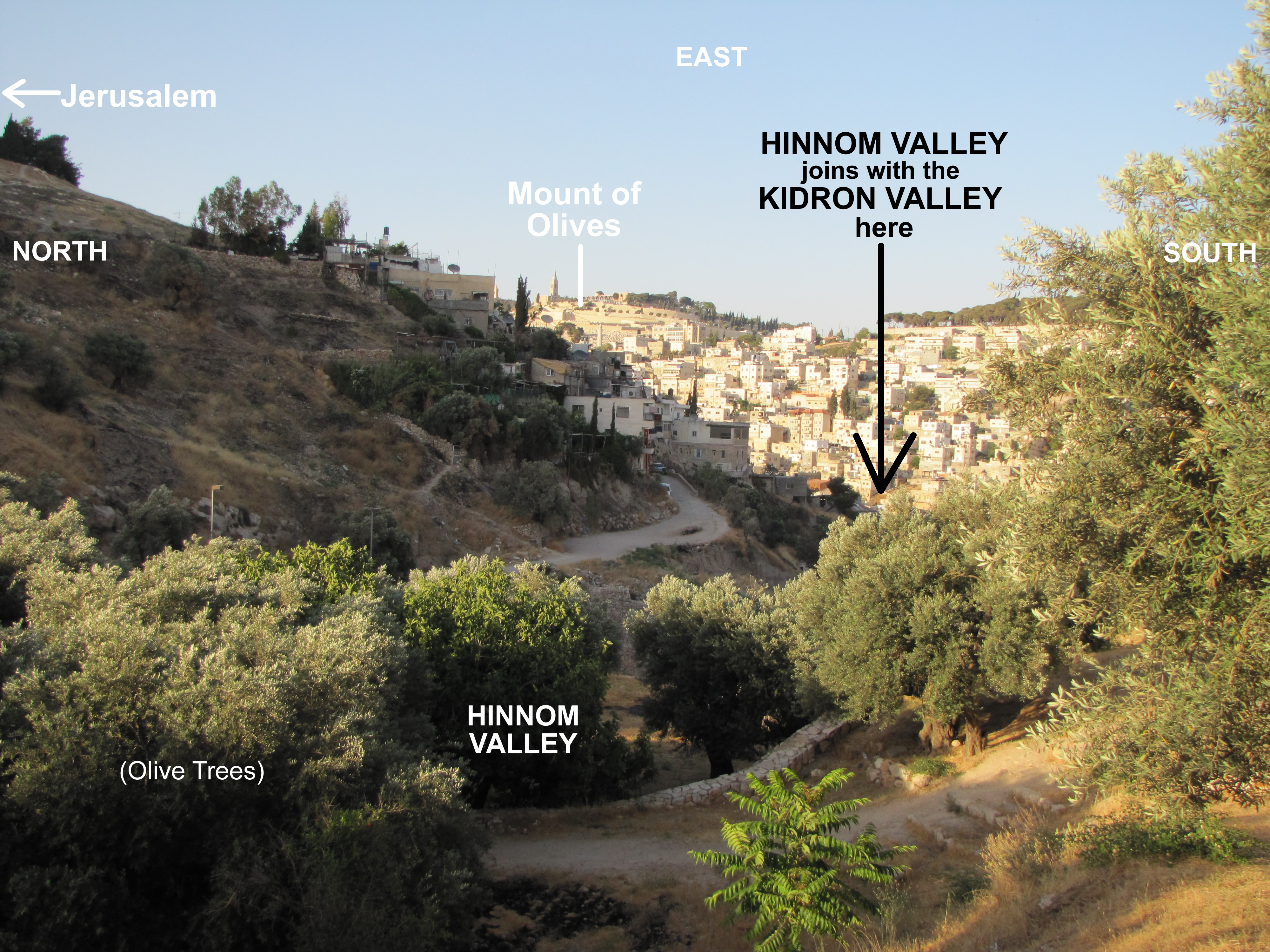
The Valley of Hinnom (Gehenna) evolved from a literal site of child sacrifice to a profound symbol of divine judgment in Jewish and early Christian thought.
II. 🔥 From Literal Valley to Symbolic Judgment
1. Gehenna in Jewish Apocalyptic Literature
- 1 Enoch (c. 300–100 BCE): This influential text describes Gehenna as a place of fiery judgment for the wicked. Specifically, in 1 Enoch 54:1–6, it portrays a fiery abyss where sinners are punished, emphasizing the valley's transformation into a symbol of divine retribution.
- 4 Esdras (c. 100 CE): This apocalyptic work presents Gehenna as a realm of torment for the unrighteous. In 4 Esdras 7:36, it describes a place where sinners face eternal punishment, aligning with the evolving concept of Gehenna as a destination for the wicked.
2. The Targums and Rabbinic Literature
- Targum Jonathan: In its interpretation of Genesis 3:24, the Targum Jonathan associates the "flaming sword" with Gehenna, indicating an early Jewish understanding of Gehenna as a place of fiery judgment.
- Rabbinic Texts: The Talmud and Midrashim further develop the concept of Gehenna, describing it as a place where sinners are purged. For instance, in Sanhedrin 108b, it is stated that the wicked are punished in Gehenna, with the duration and nature of their punishment varying based on their deeds.
🕊️ Jesus' Use of Gehenna
Jesus' references to Gehenna in the Gospels (e.g., Matthew 5:22, 10:28, Mark 9:43) draw upon this rich tapestry of Jewish thought. He utilizes the term to warn of impending judgment, particularly in the context of unrepentant sin and hypocrisy.
📜 Summary
The Valley of Hinnom's transformation from a site of child sacrifice to a symbol of divine judgment reflects a significant evolution in Jewish eschatological thought. Through texts like 1 Enoch, 4 Esdras, and the Targums, Gehenna emerged as a powerful metaphor for the consequences of sin, influencing both Jewish and Christian understandings of the afterlife.
III. 📖 Occurrences of “Gehenna” in Jesus’ Teaching
Examining every time Jesus uses the word Gehenna, how often He uses it, and what He actually says is important, because it shows how He builds on Jeremiah’s “Valley of Slaughter” prophecy and the Second Temple expectation of judgment.
The word Gehenna (γέεννα) appears 11 times in the Gospels, all on Jesus’ lips and in the letter written by His biological brother, James (3:6), which echoes Jesus' teaching.
1. Matthew 5:22 – Anger and Murder
“But I say to you that everyone who is angry with his brother will be liable to judgment… and whoever says, ‘You fool!’ will be liable to the hell [Gehenna] of fire.”
- Jesus warns that anger, insults, and contempt are not small sins but liable to God’s final judgment.
- Gehenna here = final consequence of unresolved hatred, echoing the Valley of Slaughter where violence filled the land.
2. Matthew 5:29–30 – Radical Removal of Sin
“If your right eye causes you to sin, tear it out… better that you lose one of your members than that your whole body be thrown into Gehenna.”
- Sin is serious enough to warrant extreme action to avoid Gehenna.
- Gehenna is cast as the ultimate destiny for those who let sin rule them.
3. Matthew 10:28 // Luke 12:5 – Fear God, Not Man
“Do not fear those who kill the body but cannot kill the soul. Rather fear Him who can destroy both soul and body in Gehenna.”
- Jesus contrasts human power vs. God’s authority.
4. Matthew 18:9 // Mark 9:43–47 – Better to Enter Life Maimed
“If your eye causes you to sin, tear it out… it is better for you to enter life with one eye than with two eyes to be thrown into the hell [Gehenna] of fire.”
- Same logic as Matthew 5:29–30, but now linked to eternal life vs. eternal loss.
- In Mark 9:48, Jesus ties this to Isaiah 66:24: “Where their worm does not die and the fire is not quenched.”
- Gehenna imagery = unceasing corruption and fire, echoing the disgrace of corpses in Jeremiah’s “Valley of Slaughter.”
5. Matthew 23:15 – Hypocritical Conversions
“Woe to you, scribes and Pharisees, hypocrites! For you travel across sea and land to make a single proselyte, and when he becomes one, you make him twice as much a child of Gehenna as yourselves.”
- Here Gehenna is not about Gentiles but about religious hypocrisy.
- Warning: leading others into false religion condemns both leader and follower.
Jesus calls the hypocritical Pharisees children of Gehenna (translated as hell).
If hell is a future destination then it would be hard for them to be children of it.
If, however, Gehenna is a present location outside the city, they could easily be seen as children of that dreaded place of death.
6. Matthew 23:33 – Final Condemnation of Hypocrites
“You serpents, you brood of vipers, how are you to escape being sentenced to Gehenna?”
- Jesus ties false religion and hypocrisy to serpent imagery (Genesis 3, Psalm 140, etc.).
- Gehenna = inescapable judgment for unrepentant religious leaders.
7. Matthew 23:15, 23:33 (again) – The Religious Elite and Gehenna
- Both references in Matthew 23 emphasize that those entrusted with God’s covenant but who pervert it are destined for Gehenna.
- This connects directly to Jeremiah’s Valley of Slaughter:
the priests (then) offered children to Molech;
the priests (now) lead people astray and face the same fate.
8. James 3:6 (echo of Jesus’ teaching)
“The tongue is a fire… set on fire by Gehenna.”
- James applies Jesus’ imagery: unchecked sin (especially speech) is fueled by Gehenna’s destructive power.
- James is not talking about a future tongue but the tongues used by the living; the tongues of the living are set on fire by Gehenna, not later on after death. Gehenna must be present.
🧩 Theological Patterns in Jesus’ Teaching
- Moral seriousness: Even “small” sins like insults (Matt 5:22) can lead to Gehenna when they indicate that the heart is not aligned with God.
- Radical response: Better to lose a hand/eye than be cast there (Matt 5:29–30; 18:9).
- Finality: God alone destroys body and soul there (Matt 10:28).
- Religious hypocrisy: Those who distort God’s truth are especially targeted (Matt 23).
- Imagery of fire and worms: Taken from Isaiah 66:24—corruption, shame, and unquenchable destruction.
🔑 Connection Back to the Valley of Slaughter
- It’s covenant language: those who betray God’s covenant (by idolatry, hypocrisy, rebellion, or violence) end up in the very place once marked by such betrayal.
- Jeremiah’s prophecy (Jer 7:32; 19:6): Valley of Hinnom would be filled with corpses as judgment for idolatry. What are corpses but bodies of the dead?
Eph. 2:1-3 - "You were dead in your transgressions and sins, in which you used to live when you followed the ways of this world and of the ruler of the kingdom of the air, the spirit who is now at work in those who are disobedient. All of us also lived among them at one time, gratifying the cravings of our flesh and following its desires and thoughts. Like the rest, we were by nature deserving of wrath."
The Valley of Hinnom (hell) will be filled with corpses, the bodies of those dead in their sins, following the ruler at work in those who are disobedient.
- Jesus’ warning: Gehenna is the ultimate Valley of Slaughter—not just physical corpses but the fate of those who resist God, who is the Ruler at work in those who are obedient (Phil. 2:13 - it is God who works in you to will and to act in order to fulfill His good purpose).
![💔✨🪞✝️❤️ God is Love: How His Power is Made Perfect in Weakness [3 parts]](/content/images/size/w600/2026/04/Screenshot-2026-04-03-11.15.26-PM.png)
![👑🍞🍷🎭💔🚪(B) The King’s ‘Friend’: Near the Table, Far from the Heart [5 parts]](/content/images/size/w600/2026/04/Screenshot-2026-03-31-7.03.14-PM-1.png)
![👁️ 👁️✨🧠👣 (A) Discernment Through Transformation: Why Right Action and Right Timing Require a Renewed Mind [3 parts]](/content/images/size/w600/2026/04/Screenshot-2026-03-31-7.03.14-PM.png)