When We Sin We Call God A Liar
There is a song by a band called The Beautiful South titled A Little Time that I've loved since I was a teenager. This study reminds me of some of the lyrics and the overall theme of the song. They are as follows:
"Funny how quick the milk turns sour, isn't it, isn't it?
Your face has been looking like that for hours, hasn't it, hasn't it?
Promises, promises turn to dust
Wedding bells just turn to rust.
Trust into mistrust"
With this in mind we'll explore the nature of sin and how when we sin...we call God a liar.
I. 1. Sin as the Fruit of Mistrust
At its root, sin is not merely breaking a rule, but breaking trust with the God who is forever faithful.
- Genesis 3: The serpent doesn’t begin with an invitation to murder or steal, but with a question that plants doubt: “Did God really say…?” Then he casts suspicion on God’s motives: “God knows that when you eat… you will be like Him.”
- The lie is not just about the fruit—it’s about God’s trustworthiness. Adam and Eve fall because they trust the serpent’s word over God’s.
Every later act of sin follows the same pattern: “I cannot trust God to provide, protect, or satisfy, so I will take matters into my own hands.”
2. Faith as Restored Trust
The Scriptures consistently define righteousness as trust in God.
- Abraham: “He believed the LORD, and it was credited to him as righteousness” (Gen. 15:6).
Abraham trusted God even when circumstances made the promise seem impossible.
- Habakkuk 2:4: “The righteous shall live by faith.” Paul seizes on this in Romans and Galatians—not as mental assent, but as relational reliance on God.
- Hebrews 11: The great “hall of faith” is essentially a history of people who trusted God’s word above appearances.
If sin is mistrust, salvation is trust restored—a reconciliation of relationship through Jesus.
3. Mistrust as Relationship Poison
Human relationships break down for the same reason: mistrust poisons them.
- Suspicion erodes intimacy.
- Jealousy destroys unity.
- Betrayal shatters peace and leaves deep wounds..
If this is true in human terms, how much more in our relationship with God? To mistrust Him is to shut ourselves off from the very source of life, peace, and joy.
The root is despising God’s trustworthiness—turning away in suspicion. All social evils—violence, greed, lust, anxiety—are outward signs of this relational poison.
4. Children and the Kingdom
Jesus highlights children as the model of trust:
- Matthew 18:3–6: “Unless you change and become like little children, you will never enter the kingdom of heaven.” Children are helpless, dependent, and naturally trusting of their father’s word.
- The warning that follows is sobering: “If anyone causes one of these little ones—those who believe in Me—to stumble, it would be better for them to have a millstone hung around their neck and to be drowned in the depths of the sea.”
- Jesus’ warning is severe: to destroy the trust of a child or a disciple is to reenact the serpent’s ancient deception.
5. The Ugliness of Distrust in the World
Everything twisted in creation, every form of brokenness, is a mirror of mistrust:
- Violence arises from not trusting God as Judge, so we take vengeance ourselves.
- Greed comes from not trusting God to provide, so we hoard.
- Lust arises from not trusting God’s design for love, so we grasp for pleasure without covenant.
- Fear and anxiety spring from not trusting His sovereignty, so we live enslaved to “what ifs.”
Every ugly thing in this world is traceable to this poisoned root.
6. Christ: The Restoration of Trust
- Jesus lived as the perfectly trusting Son. In the wilderness, He rebuked Satan’s whispers with: “It is written”—refusing to doubt His Father’s word.
- On the cross, when all appearances screamed “abandonment,” He entrusted Himself into His Father’s hands: “Father, into Your hands I commit My spirit” (Luke 23:46).
- Adam’s mistrust brought death, Christ’s trust restored life to the world; pride dragged us down but His humility lifted us back up.
- Scripture defines righteousness as restored reliance. Abraham’s trust in God’s promise (Gen. 15:6) is cited by Paul as the model of justification (Rom. 4).
- Augustine captured this well: “Sin is believing the lie of the serpent; faith is believing the truth of God” (City of God 14.11).
Thus, salvation is not a legal transaction alone but a return to humble trust in the Father.
✨ In sum: Sin is fundamentally the refusal to trust God. Faith is the restoration of that trust. Children picture the posture of trust, and the Kingdom belongs to such as these. To lead anyone—especially the vulnerable—into mistrust is to repeat the serpent’s lie. But to trust the Father who is forever trustworthy is to find life, freedom, and peace.
II. YHWH: The Name That Says You Can Trust Me 🙌
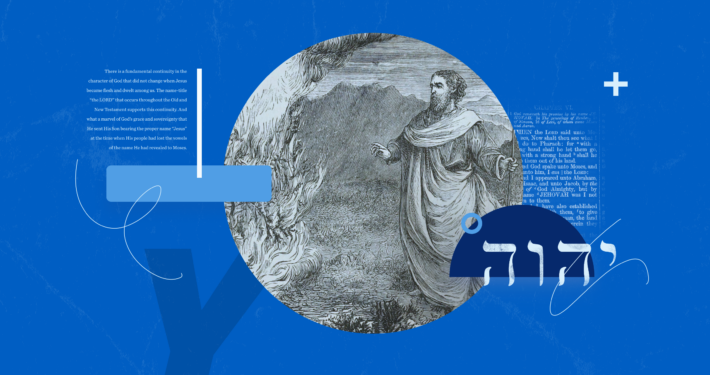
When God revealed His Name to Moses in Exodus 3, He gave a name unlike any other: YHWH. This name wasn’t just a label; it was a resume, a declaration of His character, and an invitation to trust Him fully.
God told Moses:
“I AM WHO I AM. This is what you are to say to the Israelites: ‘I AM has sent me to you. This is My Name forever, and thus I am to be remembered throughout all generations” (Ex. 3:14-15)
This statement isn’t abstract philosophy. It’s covenant language. YHWH is the covenant name for the God of Israel. God was telling Moses, “I am the One who always is. I am constant, faithful, present, and unchanging. You can count on Me to be who I am—always.”
"I the LORD (YHWH) do not change. So you, the descendants of Jacob, are not destroyed." (Mal. 3:6)
This is a shorter version of what God said to Moses:
The LORD (YHWH) came down in the cloud and stood there with him and proclaimed His name, the LORD (YHWH). And He passed in front of Moses, proclaiming, “The LORD (YHWH), the LORD (YHWH), the compassionate and gracious God, slow to anger, abounding in love and faithfulness, maintaining love to thousands, and forgiving wickedness, rebellion and sin. Yet He does not leave the guilty unpunished; He punishes the children and their children for the sin of the parents to the third and fourth generation.” (Ex. 34:5-7)
A Resume of Trustworthiness 📜
Think about what a resume does. It lists qualifications, experience, and evidence of reliability. When God presents Himself as YHWH, He is essentially presenting His eternal resume:
- I am the God of Abraham, Isaac, and Jacob (Ex. 3:15). In other words, I have been faithful to your fathers, and I will be faithful to you.
- I have seen the misery of My people (Ex. 3:7). God isn’t distant; He notices.
- I have come down to rescue them (Ex. 3:8). He doesn’t just observe; He acts.
- I will bring you into a good land (Ex. 3:8). His promises are not empty; His word can be trusted.
The name YHWH carries all of this. It is a guarantee that He is dependable. Where humans fail and break trust, YHWH never does.
Trust and the Poison of Mistrust 🕊️☠️
Every sin, from Eden on, traces back to mistrust of God’s word. The serpent’s strategy in Genesis 3 was simple: “Did God really say?” Distrust opened the door for disobedience.
But YHWH’s Name confronts this poison. His very identity is His promise. He is not like the false gods who demand but do not provide, who take but do not give. YHWH says: “I am with you. I am for you. I am enough.”
When we refuse to trust Him, we are calling His resume false. But when we rest in His Name, we find the freedom of children who simply believe their Father is good.
The Kingdom Belongs to Trusting Children 👶👑
Jesus picked this theme up when He said, “Unless you change and become like little children, you will never enter the kingdom of heaven” (Matt. 18:3).
Children trust instinctively. They don’t demand resumes, references, or contracts. They simply believe the word of someone they love. That’s why the Kingdom belongs to such as these. Trust opens the door.
And woe to those who cause a child—whether physically or spiritually young—to lose that trust (Matt. 18:6). To destroy trust in YHWH is to strike at the very heart of the relationship He desires.
Humbling Ourselves Under His Hand ✋🕊️
Peter later exhorts believers: “Humble yourselves, therefore, under God’s mighty hand, that He may lift you up in due time. Cast all your anxiety on Him because He cares for you” (1 Pet. 5:6–7).
Peter's reasoning for humbling ourselves isn't because God is big and powerful but because He cares for us.
Humility is choosing to trust that. It is saying, “I don’t need to control my own outcomes. My Father’s hand is strong enough. His resume is flawless. I can rest in Him.”
YHWH’s Name Is Our Anchor ⚓
In a world poisoned by broken trust—betrayal in families, dishonesty in friendships, corruption in governments—YHWH’s Name stands unshaken. It is His declaration:
- I am faithful.
- I am present.
- I am enough.
- I will be who I will be.
To call on YHWH is to lean on His resume, to stand on His history of never failing, never abandoning, never lying.
And this is why the Psalmist can cry:
“Those who know Your Name trust in You, for You, YHWH, have never forsaken those who seek You.” (Ps. 9:10)
His name is not only His identity—it’s His invitation. Trust Me, He says, I am YHWH.
![💔✨🪞✝️❤️ God is Love: How His Power is Made Perfect in Weakness [3 parts]](/content/images/size/w600/2026/04/Screenshot-2026-04-03-11.15.26-PM.png)
![👑🍞🍷🎭💔🚪(B) The King’s ‘Friend’: Near the Table, Far from the Heart [5 parts]](/content/images/size/w600/2026/04/Screenshot-2026-03-31-7.03.14-PM-1.png)
![👁️ 👁️✨🧠👣 (A) Discernment Through Transformation: Why Right Action and Right Timing Require a Renewed Mind [3 parts]](/content/images/size/w600/2026/04/Screenshot-2026-03-31-7.03.14-PM.png)