🌳👁️ 👁️🌸🙈✝️✨🌅🏙️ The Tree of Awakening: Healing Our Sight Distorted in Eden [3 parts]
👁️ Introduction: The Battle for Sight
From the opening chapters of Genesis to the closing vision of Revelation, Scripture repeatedly presents the human story as a matter of sight. The first temptation begins with seeing; the first sin follows a distorted perception of reality; and the first consequence is a new way of looking at oneself, God, and the world.
Throughout the biblical narrative, the eye becomes far more than an organ of vision—it is a symbol of perception, desire, understanding, and worship. Humanity's deepest problem is not blindness in the physical sense, but the inability to see rightly.
The recurring refrain, "they have eyes but do not see," reveals a tragic disconnect between observation and understanding. Whether in the good eye and bad eye teachings, the almond imagery of watchfulness, the fear that misreads God's presence as danger, or the longing to behold God's face, Scripture traces a journey from distorted sight to redeemed perception.
Scripture never identifies the forbidden fruit taken. Genesis simply calls it "the fruit of the tree of the knowledge of good and evil" (Genesis 2:17; 3:3, 6). The apple tradition arose much later through Latin wordplay (malum meaning both "apple" and "evil" in some contexts) and through European artistic conventions.
The fig theory has some textual support because Adam and Eve immediately use fig leaves (Gen. 3:7), but even there the text never says the fruit itself was a fig.
The suggestion of almonds is intriguing because almonds carry a remarkable symbolic weight throughout Scripture that aligns with several themes present in Eden.
I. The Tree That Awakens
Hebrew that may inform us as to the fruit in the Garden of Eden:
- shaqad (שָׁקַד) - verb. "to watch," "to be awake," or "to be vigilant."
- shaqed (שָׁקֵד) - noun. "almond"
When God gives Jeremiah a vision:
Jeremiah 1:11-12 - "What do you see, Jeremiah?"
"I see the branch of an almond tree."
Then the LORD said, "You have seen correctly, for I am watching over My word to perform it."
The almond tree was associated with awakening because it blossoms before most other trees in Israel, often in late winter.
This raises an interesting thematic possibility:
- The forbidden tree offered a kind of awakening.
- Adam and Eve sought premature knowledge.
- Their eyes were opened (Genesis 3:7).
- Yet their awakening led to shame rather than wisdom.
An almond tree is literally associated with "wakefulness" in biblical imagery.
The Menorah Was Shaped Like an Almond Tree
The lampstand commanded in Exodus was covered with almond imagery:
Exodus 25:33 - "Three cups made like almond blossoms..."
Exodus 25:34 - "On the lampstand itself four cups made like almond blossoms..."
The menorah was not merely decorated with flowers. It appears intentionally designed to resemble a living almond tree. Many scholars see the menorah as a symbolic tree.
If Eden was the first temple—as many biblical theologians argue—then the menorah may function as a symbolic remembrance of the tree of life within God's dwelling place.
Notice the pattern:
- Eden contains sacred trees.
- The Tabernacle contains a golden tree.
- The Temple contains carved trees and blossoms (1 Kings 6:18, 29, 32, 35).
- The New Jerusalem contains the tree of life again (Rev. 22:2).
The almond motif sits at the center of this temple symbolism.
Aaron's Rod and Resurrection
Aaron's staff budded with:
Numbers 17:8 - "buds, blossoms and ripe almonds."
This is one of the most extraordinary signs in Scripture. A dead stick buds, flowers, and bears fruit, all overnight.
The almond becomes a sign of:
- divine election,
- life from death,
- priesthood established by God.
That symbolism echoes Eden in surprising ways. In Genesis 3 humanity reaches for wisdom apart from God's appointment. In Numbers 17 God demonstrates that authority and life come only from Him.
The contrast is striking:
| Eden | Aaron's Rod |
|---|---|
| Humanity grasps | God chooses |
| Tree brings death | Dead wood brings life |
| Priesthood lost | Priesthood confirmed |
| Exile follows | Access to God's presence restored |
Cherubim and Almond Trees
Another fascinating connection appears in the Tabernacle and Temple. Genesis 3 ends with cherubim guarding access to the tree of life. The Tabernacle and Temple are filled with:
- cherubim,
- trees,
- blossoms,
- almond imagery.
Exodus and Kings repeatedly blend these images together. The sacred space seems deliberately designed to evoke Eden.
If almond symbolism was already connected with God's presence, priesthood, and life, it is conceivable that an Israelite reader might associate sacred trees with almond imagery.
A Theological Possibility
If one were to develop an almond reading, it might proceed symbolically rather than botanically.
The almond throughout Scripture becomes associated with:
- 🌸 Awakening
- 👀 Watching
- 🔥 Divine light (menorah)
- 🌱 Life from death
- 👑 Divine appointment
- ⛺ Temple imagery
One could therefore suggest that the almond tree became a later sanctuary symbol because it represented the proper path to wisdom and life under God's authority.
In that reading:
- Eden's tragedy is humanity seeking awakening apart from God.
- The almond imagery of the Tabernacle shows awakening restored through God's presence.
- Aaron's rod shows life restored through God's chosen priest.
- Christ ultimately fulfills all of these symbols as the true Priest, true Light, true Temple, and true Tree of Life.
A Deeper Possibility
There is another observation worth considering.
✨ The first thing Adam and Eve gain after eating is not wisdom but awareness. ✨
Genesis 3:7 - "Then the eyes of both were opened..."
The almond is the biblical tree of awakening and watchfulness.
Jeremiah's almond branch and God's declaration, "I am watching," create a fascinating resonance with Genesis:
- Humanity wanted opened eyes.
- Humanity wanted awakened perception.
- Humanity wanted wisdom before maturity.
- Humanity became aware, but not yet wise.
The almond symbolism fits that theme surprisingly well. Is there enough evidence to conclude the fruit was an almond? No. Is there enough biblical symbolism surrounding almonds, sacred space, priesthood, awakening, divine light, and restored access to God's presence to make the possibility worth exploring? I would say yes.
The strongest case is not that Genesis secretly tells us the fruit was an almond, but that the almond later becomes one of Scripture's richest symbols for the very things humanity sought—and mishandled—in Eden: awakening, knowledge, life, and access to God's presence. 🌸🌳🔥
II. The Eye as the Doorway of Desire
The Bible frequently treats the eye as more than a biological organ. It is a symbol of desire, perception, judgment, loyalty, and worship. The narrative of Eden itself unfolds through seeing.
Notice the progression:
Genesis 3:6 - "The woman saw that the tree was good for food, and that it was a delight to the eyes..."
✨ The fall begins not with eating, but with seeing. ✨
Genesis 3:7 - "Then the eyes of both were opened..."
The irony is profound. They already had eyes. What opened was a new mode of perception—one that included shame, self-consciousness, and alienation.
From that point onward, Scripture repeatedly presents humanity's struggle as a struggle over what we see and how we see.
- Eve sees, reaches to see more, her eyes are opened and she sees more than she bargained for.
- Achan sees the treasure in Jericho (Joshua 7:21).
- David sees Bathsheba (2 Samuel 11:2).
- The sons of God see the daughters of men (Genesis 6:2).
Throughout Scripture, seeing often precedes taking. One could almost summarize the fall pattern as:
- 👁️ See
- ❤️ Desire
- ✋ Take
- ⚖️ Reap
This pattern echoes again and again.
Almonds, Awakening, and Eyes
The almond's Hebrew symbolism adds another layer. As noted previously:
- shaqed = almond
- shaqad = watch, stay awake, keep vigil
The almond is the tree of watchfulness. Eyes are the organs of watchfulness. The connection becomes even more striking when one considers that human eyes themselves possess an almond-like shape.
Of course, Scripture never makes this anatomical observation. Yet as a symbolic meditation, it is beautiful: Every face bears two almond-shaped reminders of vigilance. Two living "almonds" through which we continually choose what we will behold.
The Daily Eden
If this symbolism holds, Eden is not merely a past event, it becomes a daily reality. Every day we encounter trees that appear good for food, pleasing to the eyes, and desirable for gaining something.
The form changes:
- status,
- wealth,
- power,
- comfort,
- self-sufficiency,
- approval,
- resentment,
- distraction.
But the question remains the same: "Will I trust God's wisdom, or will I seize wisdom for myself?" In that sense, our eyes become perpetual Eden. Every glance becomes an opportunity either for faithful perception or grasping desire.
Jesus and Redeemed Sight
This makes Jesus' teaching about the eye especially significant.
Matthew 6:22 - "The eye is the lamp of the body."
Notice the temple imagery. The eye functions almost like a menorah, giving light to the whole person. If the almond-shaped menorah symbolized divine light, and if the eye is the lamp of the body, then redeemed sight becomes a restoration of Eden's lost vision.
The problem in Eden was not that Adam and Eve saw too little. It was that they saw wrongly. The serpent offered a distorted interpretation of reality. Jesus comes not merely to forgive sin but to heal sight.
Matthew 11:2-5 - When John, who was in prison, heard about the deeds of the Messiah, he sent his disciples to ask Him, “Are You the One who is to come, or should we expect someone else?”
Jesus replied, “Go back and report to John what you hear and see: The blind receive sight, the lame walk, those who have leprosy are cleansed, the deaf hear, the dead are raised, and the good news is proclaimed to the poor.
The very first proof Jesus offers that He is the One to whom the Scriptures point is that the blind receive sight. Again and again in the Gospels blind eyes open, spiritual blindness is exposed, disciples slowly learn to see. The physical miracles become living parables.
The Eyes of the New Creation
The Bible ends with another vision. Not hidden trees, but the tree of life openly available. Not shame, but unveiled faces. No more hiding from God among trees.
Revelation 22:4 - "They will see His face."
The story begins with humanity using its eyes to seek autonomy. It ends with humanity using its eyes to behold God.
Seen this way, the almond shape of the eye becomes a fitting symbol. Every morning we awaken carrying two little reminders of the ancient choice: Will these eyes be instruments of grasping or of trust? Will they merely look, or will they truly see? Will we see with the almonds of Eden or the lamps of the New Jerusalem?
The biblical hope is not the destruction of sight but its redemption—until the eyes that once wandered among forbidden trees finally rest upon the face of God.
III. Eyes as the Gateway to the Heart
The eye in Scripture is far more than an organ of sight. It functions as a symbol of perception, interpretation, desire, and ultimately worship. The eye is not merely how one sees the world; it is how one understands the world.
This makes the recurring biblical refrain especially significant: "They have eyes, but do not see." (Psalm 115:5; 135:16; Jeremiah 5:21; Ezekiel 12:2)
The people in these passages are not blind. Their retinas work perfectly. The problem is perception. They receive information but fail to grasp reality. They encounter God but fail to recognize Him. They possess vision without understanding.
Modern thought often treats the mind as the center of perception. Biblical thought often places that function in the heart (lev/levav). The eye becomes the doorway through which reality enters and is interpreted by the heart.
This explains why Scripture repeatedly links eyes and hearts:
Matthew 13:13 - "Seeing they do not see, and hearing they do not hear, nor do they understand."
Notice the progression:
- 👁️ Eyes
- 👂 Ears
- ❤️ Heart
- 🧠 Understanding
The senses gather information, but the heart determines what that information means. Two people can witness the same miracle and one falls in worship, while the other walks away offended.
The difference is not eyesight. It is perception.
The Serpent's First Assault
Seen this way, Genesis 3 becomes an attack upon perception itself. The serpent never changes the fruit. He changes the interpretation of the fruit. The tree remains exactly what God said it was. What changes is how Eve sees it. Genesis carefully says: "The woman saw...."
The battle is won before the fruit is touched. The eye is captured first. The serpent effectively says:
- "Look again."
- "Interpret differently."
- "See through my lens instead of God's."
The first temptation is therefore not primarily disobedience, its distorted perception.
The Good Eye and the Bad Eye
This brings us to one of Scripture's most profound and misunderstood motifs.
Matthew 6:22-23 - "The lamp of the body is the eye. If therefore your eye is good, your whole body will be full of light. But if your eye is bad, your whole body will be full of darkness."
In Hebrew thought, a "good eye" (ayin tovah) and a "bad eye" (ayin ra'ah) were established idioms.
A good eye was generous, grateful, trusting, content (not grasping), open-handed. A bad eye was envious, selfish, resentful, greedy, grasping (discontent).
This is why Scripture says:
Proverbs 28:22 - "A man with an evil eye hastens after wealth..."
And why Jesus connects the eye passage directly to money and treasure in Matthew 6. The eye reveals how one perceives abundance.
The Good Eye
The good eye sees: gift rather than scarcity, provision rather than deprivation, abundance rather than lack. It receives. It trusts. It thanks.
The Bad Eye
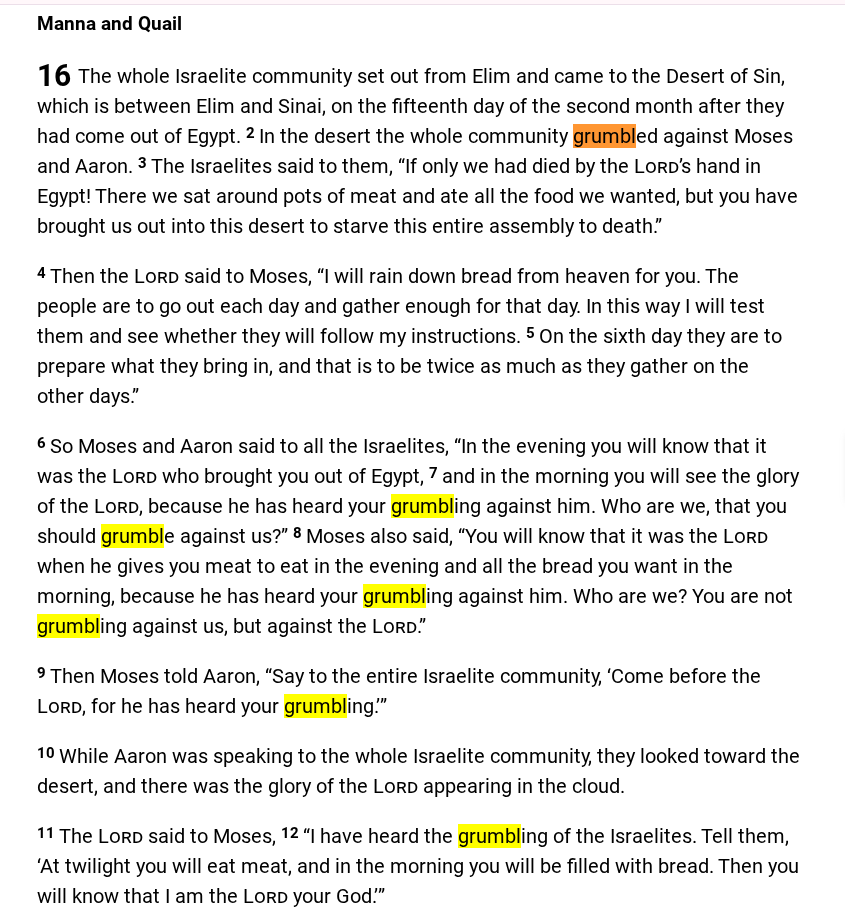
The bad eye sees competitors instead of neighbors, scarcity instead of provision, opportunities to take rather than opportunities to give. It grasps. It envies. It fears. And you can bet both your eyelids it grumbles.
Eden Through the Lens of the Eye
Notice how perfectly this maps onto Genesis. The serpent introduces scarcity into a garden overflowing with abundance. God had said:
"From every tree of the garden you may freely eat."
The emphasis is abundance. The serpent shifts attention to the one restriction. The bad eye always focuses on what is withheld while the good eye delights in what has been given.
- The bad eye asks: "What am I missing?"
- The good eye asks: "What have I received?"
✨ The fall may therefore be understood as humanity's movement from a good eye to a bad eye. ✨
From gratitude to grasping. From trust to suspicion. From abundance to scarcity.
Idolatry and Blindness
The Psalms make an astonishing connection:
Psalm 115:4-5 - "Their idols are silver and gold, made by human hands. They have mouths, but cannot speak, eyes, but cannot see."
Psalm 115:8 - "Those who make them will be like them, and so will all who trust in them."
This is one of Scripture's deepest insights. We become what we worship. An idol cannot perceive reality, it cannot hear, it cannot understand.
Therefore those who worship idols gradually lose perception themselves. Not physically. Spiritually. The eye becomes darkened. The heart becomes dull. The mind becomes confused.
Jesus as the Restoration of Sight
The Gospels are filled with blindness stories. This is not accidental. Blind Bartimaeus (Mark 10:46-52). The man born blind (John 9). The disciples who continually misunderstand. The Pharisees who cannot recognize the Messiah standing before them.
The physical miracles point toward a deeper reality: Jesus is restoring Edenic sight. He is healing perception. He is teaching people to see reality as the Father sees it. This is why in the Sermon on the Mount Jesus says:
Matthew 5:8 - "Blessed are the pure in heart, for they shall see God."
Purity of heart precedes clarity of vision. The problem is not primarily with the eye, the problem is with the heart behind the eye.
The Almond-Shaped Reminder
If the almond in Scripture symbolizes wakefulness, vigilance, and awakened perception, then the almond-shaped eye becomes an intriguing living parable.
Every day we carry two symbols of watchfulness. Every day we are confronted with the same question posed in Eden: How will we see? Will we see through the serpent's lens of scarcity, suspicion, envy, and grasping? Or through God's lens of abundance, trust, generosity, and love?
✨ The eye becomes a daily test of worship. ✨
Not because the eye merely looks outward, but because it reveals what is happening inward. In Scripture, the greatest tragedy is not blindness. It is seeing anything except reality.
The greatest miracle is not restored eyesight, its the restoration of a good eye—a heart so aligned with God that it perceives His goodness, recognizes His presence, and sees the world as a gift rather than a possession to be seized.
✨ The redeemed person is not merely one who knows about God, but one whose eyes have become full of light and capable of seeing God everywhere He has always been. ✨
🌅 Conclusion: From Opened Eyes to Clear Sight
The biblical story begins with eyes being opened in the wrong way and ends with eyes seeing in the right way. In Eden, humanity sought sight apart from trust and gained awareness without wisdom.
Ever since, the struggle has been over how reality is perceived: through fear or faith, scarcity or abundance, self-protection or love. Yet God persistently works to heal human vision.
Through covenant, instruction, discipline, Christ's ministry, and the transforming work of the Spirit, He teaches His people to see as He sees. The goal is not merely greater knowledge, but restored perception—a good eye full of light, a heart capable of recognizing God's goodness, and a people no longer afraid of His presence.
✨ The final promise of Scripture is not simply that God will dwell with His people, but that "they will see His face." ✨
What began with misdirected sight in a garden ends with unveiled sight in a city, where fear, distortion, and exile are gone, and humanity finally beholds the One it was created to see.