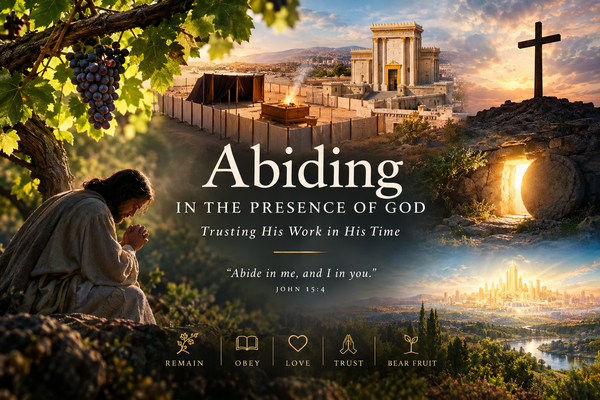
🌍🏛️🔥🪴 Citizens of Heaven, Servants on Earth: Allegiance, Transformation, and the Witness of God’s People
Introduction ✨
Where do we truly belong when the place where we live is not the ultimate source of our identity? How should allegiance to God shape our participation in the societies, households, and communities in which we find ourselves?
Scripture approaches these questions through the experiences of citizens, exiles, servants, and ambassadors—people whose visible circumstances do not always reveal the deeper allegiance governing their lives.
In this study, we will explore the relationship between belonging to God and living responsibly among others, considering how identity, conduct, and inward transformation work together.
The aim is to understand not only what it means to belong to God, but how that belonging should shape the way we inhabit the world around us.
I.✨ 🏛️ Citizens of Heaven: Paul’s Roman Citizenship and the Allegiance of God’s People
1. Roman citizenship as a lived experience
Paul's language becomes especially compelling when we place Philippians 3:20 alongside two episodes in Acts where his Roman citizenship changes how authorities must deal with him.
A. Philippi: beaten and imprisoned before his citizenship is acknowledged
In Acts 16:16–24, Paul and Silas are seized, dragged before the magistrates, accused, stripped, beaten with rods, and imprisoned. The authorities order the jailer to guard them securely.
The following morning, the magistrates send word that Paul and Silas may be released. Paul responds:
Acts 16:37 - “They have beaten us publicly, uncondemned, men who are Roman citizens, and have thrown us into prison; and do they now cast us out secretly? No!”
Paul insists that the magistrates come personally to escort them out.
The point is not that Roman citizenship prevented Paul from suffering injustice. It did not. His citizenship mattered because the authorities had violated protections attached to his status. Once the violation became known, the magistrates became alarmed and personally came to appease the missionaries (Acts 16:38–39).
Consider the contrast:
- Before his status is acknowledged, Paul is subjected to public beating and imprisonment.
- Once his citizenship is revealed, the officials recognize the seriousness of their conduct.
- Paul refuses a quiet dismissal that would leave the public injustice unaddressed.
His citizenship does not erase what happened. It changes the officials' response and gives Paul leverage to insist on public accountability.
B. Jerusalem: citizenship interrupts a planned flogging
Acts 22:22–29 presents a second episode. After Paul speaks to the Jerusalem crowd, a Roman tribune orders him to be examined by flogging. As the soldiers prepare to bind him, Paul asks the centurion:
Acts 22:25 - “Is it lawful for you to flog a man who is a Roman citizen and uncondemned?”
The centurion immediately alerts the tribune, who asks Paul about his citizenship. Paul states that he was born a Roman citizen. The tribune explains that he acquired his citizenship at considerable expense, while Paul says his was his by birth (Acts 22:26–28).
The soldiers withdraw from the planned examination, and the tribune becomes alarmed because he has bound a Roman citizen (22:29).
Here again, citizenship changes the legal and procedural situation. Paul has not yet been convicted, and the authorities cannot treat him as though his status carries no protections.
C. Caesarea and the appeal to Caesar
In Acts 25:1–12, Paul faces further accusations before Festus. When Festus asks whether he is willing to go to Jerusalem for trial, Paul invokes his right to appeal to Caesar.
Acts 25:11 - “I appeal to Caesar.”
Festus consults with his council and responds that Paul has appealed to Caesar and will go to Caesar (25:12).
The precise legal operation of Roman appeals is more complicated than a modern appeal from one court to another. Nevertheless, Luke presents Paul's citizenship and appeal as consequential to the next stage of his custody and trial.
Across these episodes, Roman citizenship provides Paul with a form of legal standing that affects how authorities can process him. It does not make him immune to violence, accusation, imprisonment, or uncertainty. It gives him rights he can invoke within an imperfect system.
2. Philippians 1:27 and 3:20: Paul deliberately connects conduct and citizenship
The Greek vocabulary makes the connection particularly strong.
Philippians 1:27 - Lead your lives [politeuesthe] in a manner worthy of the gospel of Christ, so that you are standing firm in one spirit, with one mind contending side by side for the faith of the gospel.
The key verb is (politeuesthe), meaning to live as a citizen or conduct oneself in civic life. In context, Paul urges the Philippians to live in a manner worthy of the gospel of Christ.
Philippians 3:20 - Our citizenship [politeuma] exists in heaven, from which also we eagerly await a savior, the Lord Jesus Christ.
The key noun is (politeuma), which can refer to citizenship, a commonwealth, or the civic community to which one belongs. In the Old Testament, they would probably have said "tribe" or "clan."
These are related words from the same Greek word family. Paul uses citizenship language at both ends of his argument:
- Philippians 1:27: Let your conduct reflect the gospel.
- Philippians 3:20: Your politeuma is in heaven.
This creates a compelling conceptual connection. Their conduct is to be shaped by the community to which they ultimately belong.
There is a translation nuance worth preserving: politeuma does not map perfectly onto the modern concept of individual citizenship. Some scholars therefore favor "commonwealth" or a related expression that emphasizes the community and its governing order. Peter Oakes, for example, has argued that the term deserves a more nuanced interpretation than the simple transfer of Roman citizenship to a heavenly realm.
Whatever translation we prefer, the relationship between Philippians 1:27 and 3:20 is difficult to miss: the community's identity determines the character of its life.
3. The decisive contrast: who has the authority to define Paul's future?
Roman citizenship gave Paul certain protections, but those protections depended on human officials who could act unjustly, misunderstand the law, or impose confinement while proceedings continued.
Philippians 3:20–21 introduces a different horizon:
Philippians 3:20–21 - “But our citizenship is in heaven, and from it we await a Savior, the Lord Jesus Christ, who will transform our lowly body to be like his glorious body, by the power that enables him even to subject all things to himself.”
Notice the sequence.
1. An earthly legal status
Paul's Roman citizenship establishes rights within the imperial system. It can constrain what officials lawfully do to him and provide a basis for demanding accountability.
2. An earthly authority with limited jurisdiction
Roman officials can imprison Paul, arrange his transportation, and determine aspects of his legal process. They cannot determine the ultimate truth of the gospel or exercise ultimate authority over God's purposes.
3. The heavenly Lord who will finally set things right
Paul awaits Jesus Christ, the Savior and Lord who has power to subject all things to Himself and transform the believer's lowly body. His hope reaches beyond the outcome of an earthly legal proceeding.
This is not a claim that earthly law has no value. Paul's own actions in Acts show that he considers legal protections worth invoking. Rather, earthly jurisdiction is not ultimate. His future does not finally depend on whether a magistrate, tribune, governor, or emperor treats him fairly.
4. The Roman colony and the heavenly commonwealth
Philippi's civic identity adds another dimension to Paul's language.
Acts 16:12 - “Philippi, which is a leading city of that district of Macedonia, a Roman colony.”
Such colonies could cultivate a strong sense of Roman identity, customs, and civic privilege, even while situated far from Rome itself. Scholars differ over how sharply Philippians 3:20 contrasts the Christian community with imperial identity.
But the contrast becomes particularly forceful when we read the entire passage.
In Philippians 3:18–19, Paul warns against those whose minds are set on earthly things (Matthew 16:23). In verses 20–21, he contrasts them with believers whose politeuma is in heaven and who await Jesus as Savior and Lord.
Their identity is not exhausted by the civic status they possess, the empire in which they reside, or the honors their society confers. They belong to a community whose Lord is Jesus and whose future is bound up with His coming reign.
This is not an assurance that believers will eventually go to heaven. Paul immediately connects their heavenly identity with the transformation of their bodies and Christ's authority over all things.
The hope is bodily, communal, and ultimately cosmic.
The value, and limits, of earthly citizenship
Paul's own experiences make his language in Philippians 3:20 especially concrete. In Philippi, Roman citizenship gave him grounds to challenge an unlawful beating and demand public acknowledgment of wrongdoing.
In Jerusalem, it interrupted a planned flogging. In Caesarea, his appeal to Caesar redirected the course of his proceedings. Yet none of those protections prevented Paul from suffering or guaranteed a favorable outcome. Roman citizenship was consequential, but it was not sovereign.
That distinction illuminates Paul's declaration that the believers' politeuma is in heaven. Their deepest identity and ultimate future rest in the Lord Jesus Christ, whose authority surpasses the jurisdiction of earthly officials and whose promised work includes the transformation of their lowly bodies.
Paul can invoke Roman citizenship without entrusting his ultimate future to Rome. He can demand justice from earthly authorities without confusing their authority with God's.
And he can encourage believers to live faithfully within their earthly communities while insisting that their conduct must be shaped by the Lord to whom they finally belong.
There is a striking symmetry here: the apostle whose Roman citizenship could protect him from certain abuses calls the Philippians to live according to a heavenly commonwealth whose Lord will ultimately overcome the conditions that make such protection necessary.
✨ Earthly rights matter, but they are not the final measure of justice, belonging, or hope. ✨
II.✨ 🪴 Citizens in Exile: Ambassadors Seeking the Good of a Land That Is Not Home
A person's place of residence and the community to which that person owes ultimate allegiance are not necessarily the same.
Israel's experience of exile provides a powerful backdrop for understanding how God's people can live faithfully in a place that is not their ultimate home, contribute to its welfare, and still represent the Lord to whom they belong.
There is one historical distinction worth preserving. When Israelites were exiled to Babylon, they did not possess modern citizenship in the nation-state of Israel. Rather, they remained members of a people defined by God's covenant, ancestral identity, and promises, even when displaced from their land and its institutions.
That distinction actually sharpens the theological point: their identity was not exhausted by the political authority governing the territory in which they lived.
1. Exiles commanded to seek the welfare of their temporary home
Jeremiah 29:4–7 contains one of Scripture's clearest expressions of this tension. God tells the Judean exiles in Babylon to build houses, plant gardens, marry, raise families, and multiply. Then He gives them an especially striking command:
Jeremiah 29:7 - “But seek the welfare of the city where I have sent you into exile, and pray to the LORD on its behalf, for in its welfare you will find your welfare.”
Notice that God does not command them to withdraw from Babylon, refuse to contribute to its welfare, or treat everyone outside Israel as an enemy. They are to establish households, cultivate the land, and seek the good of the city in which they find themselves.
Yet Babylon is still the place of their exile. Their flourishing there does not mean that Babylon has become the fulfillment of God's covenant promises to Israel. This creates a productive tension:
- They are present: They have real responsibilities toward the people and place where they live.
- They are productive: They are to build, plant, raise families, and contribute to the common good.
- They are representative: Their conduct should reflect their allegiance to YHWH, even in a foreign land.
- They remain expectant: Their present circumstances do not cancel God's purposes concerning their people and their restoration.
✨ The exile therefore does not suspend their calling. It changes the circumstances in which they must live it out. ✨
There is also a crucial point about God's sovereignty in Jeremiah 29: God says that He has sent them into exile. Babylon is not outside His jurisdiction. Even in a foreign land, Israel remains within the reach and purposes of its God.
2. Daniel: Serving an empire without surrendering ultimate allegiance
Daniel provides a lived example of this principle.
Daniel and his companions learn the language and literature of Babylon, receive positions within its administrative system, and contribute to the functioning of the empire (Daniel 1:3–7, 17–20).
They are not instructed to become incompetent servants or to undermine every task assigned to them. Yet their cooperation has boundaries.
Daniel 1 — Faithfulness within the system
Daniel accepts training for royal service while drawing a boundary around what would defile him. He learns how to function in Babylon without allowing Babylon to define every aspect of his identity.
Daniel 2 — Wisdom that directs honor to God
When the king demands an interpretation of his dream, Daniel acknowledges that the mystery is revealed by the God of heaven, not by the superior wisdom of Babylon's specialists (Daniel 2:27–28).
Daniel 3 and 6 — The limits of imperial obedience
Daniel's companions refuse the king's command to worship the image, and Daniel later continues praying to God despite the prohibition. Their service to the empire cannot extend to giving the empire the worship and allegiance that belong to God.
Daniel's story reveals an important distinction between serving a ruler and treating that ruler as one's ultimate lord.
Daniel can serve Nebuchadnezzar, interpret his dreams, and contribute to the administration of Babylon. But he consistently locates ultimate wisdom, authority, and deliverance in the God of heaven.
✨ Daniel's competence serves the empire; his allegiance remains with God. ✨
This also helps us avoid a simplistic reading of exile. Daniel is not required to be hostile toward every Babylonian. He can work for the welfare of the empire while refusing to participate in its idolatry.
3. The master of the household: whose character does the servant represent?
In Matthew 10:24–25, Jesus speaks of the relationship between a disciple and a teacher, and between a servant and a master. The disciple is not above the teacher, nor the servant above the master. Jesus then warns His disciples that they should expect to be treated as He is treated.
The logic is one of representation: the household's treatment of its servants can reflect its response to the master they serve.
Likewise, in Matthew 5:14–16, Jesus tells His disciples to let their light shine before others so that people may see their good works and glorify their Father in heaven.
The goal is not self-promotion. The servant's conduct should direct attention beyond the servant to the one whose character and authority the servant represents.
This connects naturally with the exilic calling of Daniel and the Philippians' heavenly citizenship. God's people are to conduct themselves in ways that make their allegiance visible. Paul expresses something similarelsewhere:
2 Corinthians 5:20 - “We are ambassadors for Christ, God making His appeal through us.”
An ambassador lives and works in a place without making that place the ultimate source of the ambassador's authority. The ambassador represents another ruler and another polity. The assignment is not to display personal greatness but to represent the one who sent the ambassador.
Paul's image is particularly fitting for a discussion of heavenly citizenship, although it should be distinguished from the precise terminology of Philippians 3:20. In Philippians, Paul speaks of the believers' politeuma in heaven; in 2 Corinthians, he explicitly uses the language of ambassadors.
Together, the images establish a coherent principle: God's people live among others as representatives of the Lord to whom they belong.
4. Home is the source of identity, conduct, and hope
Philippians 3:20 - “Our citizenship is in heaven, and from it we await a Savior, the Lord Jesus Christ.”
The exilic backdrop helps us hear three dimensions of this declaration.
First, identity: The Philippians' ultimate belonging is not determined by their location in a Roman colony. They belong to a community whose defining authority is Jesus Christ.
Second, conduct: Philippians 1:27 uses the related verb politeuesthe, calling believers to live in a manner worthy of the gospel. Their heavenly citizenship is not an excuse to neglect their present responsibilities. It determines how they fulfill them.
Third, hope: Paul does not say that the believers must escape earthly life to reach their true home. He says they await a Savior who will transform their lowly bodies and subject all things to Himself (3:20–21). Their hope is that the Lord will bring His purposes to completion.
This is where the comparison with Israel's exile becomes especially fruitful. The exiles were commanded to build, plant, raise families, and seek Babylon's welfare while continuing to trust God's covenant promises.
The Philippians are likewise called to live faithfully in their present circumstances while awaiting the consummation of Christ's reign. The analogy concerns allegiance, representation, and hope without erasing the differences between the historical settings.
5. Seeking the good of the place where we live is not the same as making it our home
The exile pattern challenges two opposite mistakes.
One mistake is withdrawal: treating life outside one's ultimate home as though it carries no meaningful responsibilities. Jeremiah's exiles are told to plant gardens, raise families, and seek the welfare of Babylon. Their temporary residence does not make their contribution worthless.
The opposite mistake is assimilation: allowing the society in which one lives to redefine one's ultimate loyalties. Daniel's service to Babylon does not authorize worship of Babylon's image. His participation in the empire has limits established by his allegiance to God.
The biblical pattern is neither withdrawal nor unqualified conformity, it is faithful participation under a higher allegiance. That has practical implications for the Christian understanding of work, civic responsibility, service, and relationships.
Believers should seek the good of their communities, fulfill legitimate responsibilities, and contribute to the flourishing of others. But they must also recognize that the expectations of their surrounding culture cannot override the character and commands of their Lord.
Their lives are to be useful where they are without confusing their present location with the ultimate source of their identity and hope.
6. The larger biblical movement: exile, witness, and restoration
The pattern extends beyond Babylon.
- Jeremiah 29: The exiles seek Babylon's welfare while trusting God's promises.
- Daniel: Faithful service in a foreign empire is bounded by exclusive allegiance to God.
- Matthew 5: Jesus' disciples live so that their good works direct others toward their Father.
- 2 Corinthians 5: Christ's people act as ambassadors through whom God makes His appeal.
- Philippians 1 and 3: Believers live worthy of the gospel because their citizenship is in heaven, awaiting the Lord who will transform them and bring all things under His authority.
- 1 Peter 2:11–12: Believers are described as sojourners and exiles who must maintain honorable conduct among the nations, so that their lives can bear witness to God.
The pattern is consistent, although each text addresses its own circumstances:
God's people do not need to control the place where they live in order to represent the Lord faithfully there. Nor does the fact that they are not ultimately at home render their present service insignificant. On the contrary, their conduct is part of their witness.
Faithful residents, representatives of another Lord
Israel's exiles were to seek the welfare of Babylon without treating Babylon as the fulfillment of God's promises. Daniel could serve an empire without granting it ultimate allegiance. Paul's Philippians could live responsibly in a Roman colony while confessing that their politeuma was in heaven.
The common thread is not contempt for the place where God's people find themselves. It is faithfulness to the Lord whose character they are called to represent.
They build houses, plant gardens, serve neighbors, practice their professions, and contribute to the welfare of their communities. They do not abandon those responsibilities because their ultimate hope lies elsewhere. But neither do they allow their surroundings to determine the limits of their allegiance.
The servant's task is to represent the master well. The ambassador's task is to represent the ruler who sent him. And the exiled community's task is to seek the good of its temporary home while remaining faithful to the God whose promises define its future.
That makes heavenly citizenship more than a statement about where believers will eventually go. It is a statement about whom they belong to now, whose character should be visible in their conduct, and whose reign will ultimately bring them home.
III.🔥 Living Sacrifices: The Renewal of the Mind and the Practice of Heavenly Allegiance
Living in Exile Without Being Formed by Exile
Romans 12:1–2 brings the themes of heavenly citizenship, Israel's exile, and representing the Master into sharp focus. Paul calls believers to offer their bodies to God and refuse to be conformed to the present age, instead being transformed through the renewal of their minds.
Read alongside Jeremiah 29, Daniel's service in Babylon, and Philippians 3:20, this passage describes how God's people can live productively within a world that does not ultimately define them.
The striking point is that Paul does not tell believers to abandon the world in which they live. He calls them to live in it differently, with their bodies, minds, and conduct offered to God.
1. Allegiance expressed through embodied service
Romans 12:1 - “Present your bodies as a living sacrifice, holy and acceptable to God, which is your spiritual worship.”
The Greek verb parastēsai, “to present” or “to offer,” evokes the language of presenting something for God's service. The noun thysia, “sacrifice,” places that offering within a distinctly worshipful framework.
Notice what Paul asks believers to offer: their bodies.
This is important in the context of exile and citizenship. Allegiance to God is not confined to private beliefs, religious gatherings, or verbal declarations. It involves how believers use their time, abilities, resources, relationships, and physical presence in the places where they live.
Jeremiah's exiles were told to build houses, plant gardens, raise families, and seek Babylon's welfare. Romans 12:1 supplies a complementary theological principle: the ordinary activities of embodied life can become part of one's service to God.
A believer can work in a profession, care for a neighbor, participate in a community, or advocate for someone vulnerable as an offering to God. The activity takes place in the earthly community, but its ultimate orientation is toward the Lord. This is the difference between simply occupying a place and representing one's Master within it.
2. Babylon must not become the mold
Romans 12:2a - “Do not be conformed to this world, but be transformed by the renewal of your mind.”
The Greek expression translated “this world” is literally “this age.” Paul is concerned with the patterns and values characteristic of the present age, not with the proposition that everything in the created world is inherently evil.
The verb syschēmatizesthe refers to being conformed to a pattern or shaped according to a model. Its contrast is metamorphousthe, “be transformed.”
Daniel learned the language and literature of Babylon (Daniel 1:4). He served its rulers and contributed to its administration. Yet he refused to let Babylon's religious demands determine his allegiance to God (Daniel 1:8; 3:16–18; 6:10).
✨ Daniel's example helps us distinguish between learning how to function within a society and allowing that society to determine what is ultimately good. ✨
The same distinction applies to Paul's readers. They need not reject every practice, institution, or custom of the surrounding world. They must, however, resist being shaped by patterns that conflict with the character and purposes of God.
Jeremiah's exiles were to seek Babylon's welfare without adopting Babylon as the ultimate measure of their identity. Romans 12:2 describes the inward formation necessary to sustain that kind of faithfulness.
3. Renewal of the mind: learning to see the host land through the eyes of the home country
Paul does not leave the instruction at resistance. He identifies the alternative: renewal of the mind.
The Greek anakainōsis means renewal, a making-new. This renewal changes the way believers discern what is good, acceptable, and complete in God's will. Here the citizenship analogy becomes especially fruitful.
An ambassador must understand the place where the ambassador serves, but must also remain faithful to the purposes of the one who sent them. Without understanding the host country, the ambassador cannot serve effectively. Without fidelity to the sending authority, the ambassador loses the basis of the assignment.
Similarly, Christians need wisdom about the communities in which they live. They must understand their neighbors, recognize genuine needs, work competently, and discern how to contribute to the common good. But their judgments must be continually renewed in light of God's character and purposes.
This is why Paul connects transformation with discernment:
Romans 12:2b - “That by testing you may discern what is the will of God, what is good and acceptable and perfect.”
✨ The goal is not withdrawal from society, it is a transformed capacity to recognize and practice what pleases God while living within society. ✨
4. The context matters: Romans 12 follows Paul's account of God's mercy
Romans 12:1 begins with “therefore,” and that word matters. Paul has spent Romans 1–11 explaining humanity's predicament, God's faithfulness, justification, life in the Spirit, the inclusion of the nations, and God's mercy toward both Jews and Gentiles.
Romans 11:30–32 emphasizes God's mercy in relation to disobedience. Romans 12:1 then appeals to believers “by the mercies of God.” The sequence is significant:
- God acts in mercy.
- Believers respond by offering their lives to Him.
- They refuse the formative patterns of the present age.
- Their renewed minds learn to discern God's will.
- Their conduct becomes an embodied expression of their allegiance.
This is not an attempt to earn God's favor through good behavior, it is a response to the mercy already proclaimed.
The exiles' situation offers a useful parallel: their identity and hope rested on God's covenant purposes, not on Babylon's approval. Likewise, Paul's appeal rests on God's mercy, not on the world's standards of success.
5. Romans 12:1–2 leads directly into the life of a community
The next verses prevent us from reducing transformation to individual self-improvement.
- Romans 12:3–8 calls believers to sober judgment, humility, and the use of their different gifts for the good of the body.
- Romans 12:9–21 then describes love, hospitality, patience in suffering, care for others, and refusing to repay evil for evil.
✨ The renewed mind produces a particular kind of community. ✨
This is where Romans 12 connects especially closely with Philippians 2:1–11. Both passages challenge self-serving ambition and call believers into a life marked by humility, service, and concern for others.
The citizen of God's Kingdom does not demonstrate allegiance by announcing a different identity, the allegiance becomes visible through the way that person treats other people. A community shaped by Romans 12 should therefore be recognizable not simply by the beliefs it professes but by the character of its shared life.
6. The combined picture: Jeremiah 29, Romans 12, and Philippians 3
Jeremiah 29:4–7
- Seek the welfare of the place where you live.
- God's exiles are to build, plant, establish households, and pray for the city in which they have been placed.
Romans 12:1–2
- Do not let the present age determine how you live.
- Offer your embodied life to God and allow your mind to be renewed so that you can discern His will.
Philippians 1:27; 3:20–21
- Live according to the community and Lord to whom you belong.
- Conduct yourselves worthy of the gospel because your citizenship is in heaven, and await the Savior who will bring God's purposes to completion.
- Together, these passages establish a coherent pattern: God's people are to be actively involved in the welfare of their present communities while remaining inwardly and outwardly formed by their allegiance to Him.
The command to seek the good of the host land does not cancel the call to resist its corrupting patterns. The call to resist those patterns does not cancel the responsibility to seek the host land's good.
Both obligations belong together.
Present in the land, formed by the Lord
Romans 12:1–2 gives theological depth to the picture of God's people living as exiles and heavenly citizens. Their lives are offered to God; their minds are renewed by His purposes; their conduct becomes a visible expression of the Lord they serve.
They do not need to abandon their earthly responsibilities to remain faithful. They need to fulfill those responsibilities without allowing the surrounding age to become the pattern that determines their values.
This is the crucial distinction between living in a place and being formed by that place. Daniel could serve Babylon without worshiping its gods. Jeremiah's exiles could seek Babylon's welfare without confusing it with the fulfillment of God's promises. Paul's readers could contribute to Roman society while living according to the gospel of Jesus Christ.
The ultimate question, then, is not simply whether God's people are doing good where they live. It is whether the good they do, the way they do it, and the character they display reveal the Lord to whom they belong.
✨ Heavenly citizenship is not an excuse to neglect the earth. It is the reason to serve the earth faithfully without allowing the present age to define the limits of that service. ✨
Insight from the Septuagint (LXX)
3 Maccabees 3:21 - “bestowing upon them the rights of citizens of Alexandria”
This is an especially clear civic use. The Greek refers to granting the Jews Alexandrian citizenship. It concerns formal membership and status within a particular city, not citizenship in a heavenly realm.
3 Maccabees 3:23 - “have rejected the inestimable rights.”
The king’s decree describes the Jews’ refusal of the offered civic privileges. These verses illustrate how politeía language could operate in an explicitly political and legal setting.
The precise word translated “rights” in verse 23 should be distinguished from the specific politeía term in verse 21.
4 Maccabees 3:20 - “recognized their commonwealth—”
The context describes a period when the Jewish people prospered through observance of the Law and even received support from a foreign king. Their communal order was recognized alongside provision for the Temple.
The Greek word belongs to the politeía family.
4 Maccabees 8:7 - “you will have positions of authority in my government if you will renounce the ancestral tradition of your national life.”
The tyrant offers the Jewish brothers positions of authority if they abandon their ancestral way of life. The Greek explicitly uses politeías, connecting their ancestral communal order with their religious and cultural commitments. This is particularly relevant to the question of whether a person can change political circumstances without surrendering a deeper allegiance.
4 Maccabees 17:9 - “Here an aged priest, and an aged woman, and seven sons, are buried through the violence of a tyrant, who wished to destroy the polity of the Hebrews.”
Here the Greek word is politeía, translated “polity.” The tyrant’s violence is portrayed as an attempt to destroy not only individuals but the communal order of the Hebrew people.
Together, these passages show that the politeía word family can refer to civic government, a people’s commonwealth, formal citizenship, or an ancestral way of communal life.
That background intensifies Paul’s language in Philippians. In Philippians 3:20, políteuma does not have to mean only an individual's legal status; it can evoke the commonwealth or civic community to which a person belongs.
Paul’s audience could therefore hear a claim about where the Christian community’s ultimate allegiance lies, which Lord governs it, and what kind of life follows from belonging to Him.
Conclusion
Allegiance to God is not an escape from earthly responsibility; it is the foundation for carrying that responsibility faithfully. Paul could invoke the protections of Roman citizenship without treating Rome as the source of his ultimate security.
Israel’s exiles could seek Babylon’s welfare without allowing Babylon to redefine their covenant identity. And believers could offer their bodies as living sacrifices because God’s mercies, rather than the values of the present age, were to govern their lives.
Jeremiah 29 establishes that seeking the welfare of the place where we live is compatible with recognizing that it is not our ultimate home. Philippians clarifies that the people of God possess a deeper civic identity, one ordered around the lordship of Jesus Christ and the hope of His transforming work.
Romans 12 then brings these convictions into daily practice: we offer ourselves to God, resist the patterns of the present age, and allow our minds to be renewed so that we can discern and practice His will.
These are not three disconnected duties. They form a coherent movement from belonging, to faithful presence, to transformed conduct. The connection to representation is especially important.
A servant’s actions reflect upon the master whom the servant serves. An ambassador’s conduct communicates something about the ruler who sent that ambassador.
Likewise, God’s people are called to make His character visible through the way they treat neighbors, exercise authority, respond to injustice, perform their work, and care for those who cannot repay them.
✨ Our conduct does not earn God’s mercy; it becomes a response to the mercy we have received. ✨
Nor does faithfulness require either unquestioning assimilation to the surrounding culture or withdrawal from its needs. It requires discernment: serving where we can, resisting what contradicts God’s character, and remaining faithful when those commitments carry a cost.
Romans 12:2 therefore becomes the hinge of the entire study. If we allow the present age to determine what we desire, admire, fear, and pursue, our conduct will eventually reflect its priorities.
✨ When God renews our minds, we can participate in our communities without adopting every assumption that governs them.✨
We can pursue the common good without making social approval our master, exercise our rights without treating privilege as our identity, and endure displacement or uncertainty without surrendering our hope.
The ultimate question, then, is not whether we are physically present in this world or whether we have responsibilities within it. We are here, and those responsibilities matter. The question is whether our presence is governed by the values of the age or by the character and purposes of God.
Heavenly citizenship gives earthly service its direction. Exile tests the faithfulness of our allegiance. The renewal of the mind forms us into people whose lives testify to the Lord we serve. We belong to God, so we seek the welfare of those around us; we serve those around us, so that our lives may point beyond ourselves to Him.