👑❤️🐑📜🔎🏙️✝️ Jesus: When Our King Became Our Shepherd [3 parts]
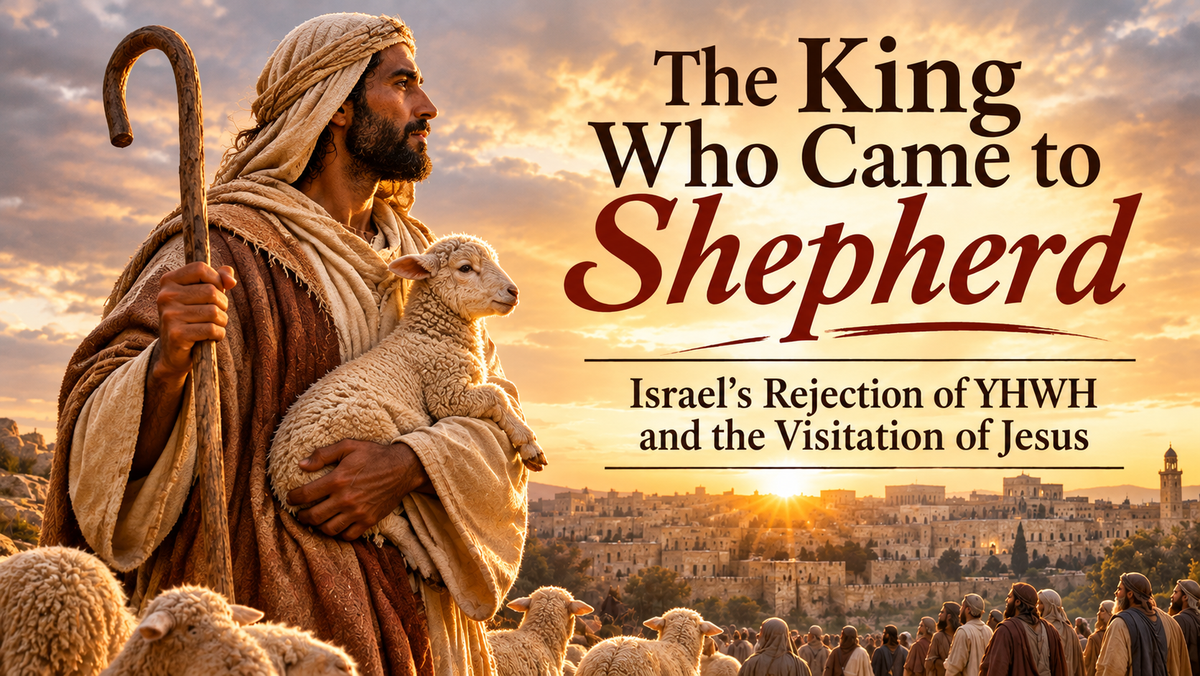
Introduction - The King Israel Needed
The question of kingship runs throughout Scripture, but Israel's history reveals a persistent tension between the kind of king humanity desires and the kind of King YHWH promises to provide.
Matthew's Gospel, understood through its King-centered structure as David Haken observes, presents Jesus as the promised King whose authority, identity, and mission must be understood against Israel's history of rejecting the rule of YHWH.
This history is particularly important because Israel's rejection of God's kingship was accompanied by the failure of its appointed shepherds to care for His people.
The prophetic promise that YHWH Himself would come to seek, gather, and shepherd His scattered flock therefore establishes the expectation against which Jesus' ministry must be understood.
What makes this connection especially significant is that Jesus did not arrive simply to announce a kingdom or establish another human dynasty.
He came as the King who personally fulfills YHWH's promise to shepherd His people, accomplishing what Israel's failed shepherds had neglected and what the nation had repeatedly demonstrated it was unwilling to receive.
Jerusalem's failure to recognize the time of His visitation was therefore much more consequential than a failure to identify a prophet or political opportunity. It was a failure to recognize that the promised Shepherd-King had come among them.
I. The Rejection of YHWH: Israel's History of Refusing Its King ✨
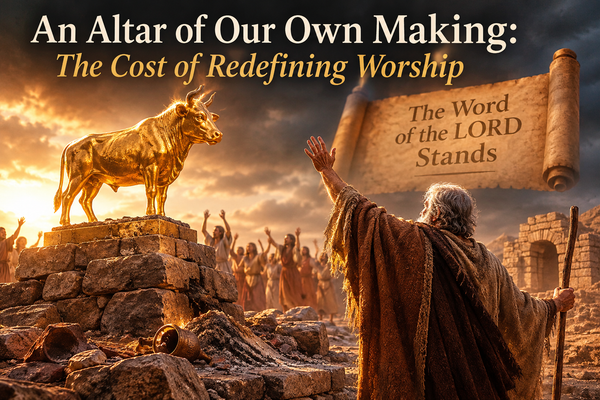
The biblical history of Israel's kingship begins with a revealing declaration in 1 Samuel 8, where the elders of Israel demand that Samuel appoint a king to govern them like the surrounding nations.
Their request is not received as an ordinary political development because it exposes a deeper problem: Israel is dissatisfied with the direct kingship of YHWH (because they can't see Him). This is why the LORD identifies that:
Habbakuk 2:4 - The righteous person will live by his faithfulness.
The LORD identifies the spiritual significance of their demand when He tells Samuel that their rejection is directed ultimately against Him.
1 Samuel 8:7-8 - "They have not rejected you, [Samuel], but they have rejected Me from being King over them.
Like all the deeds which they have done since the day that I brought them up from Egypt even to this day—they have forsaken Me and served other gods."
The wording is particularly important because YHWH connects their present rejection with their entire history since the Exodus.
Their demand for a human king is not an isolated departure from faithfulness but another expression of an established pattern: forsaking YHWH, turning toward other gods, and seeking security in arrangements that resemble the nations around them.
The problem is that Israel wants kingship on its own terms rather than receiving it as an expression of YHWH's authority. The distinction is between a king who represents and submits to YHWH's reign and a king who effectively replaces YHWH in the people's allegiance.
This pattern becomes especially significant when the monarchy itself begins reproducing the very failures that characterized Israel's earlier rebellion. Rather than consistently representing YHWH's character, Israel's kings and leaders frequently exploit, scatter, and neglect the people entrusted to their care.
The appointment of human shepherds does not resolve Israel's underlying problem when those shepherds themselves refuse to embody the character and purposes of the divine King.
Consequently, the prophetic indictment of Israel's leadership becomes inseparable from the original question of who truly reigns over God's people. Matthew's King-centered presentation of Jesus brings this history into focus.
The Kingdom Emphasizing Structure of Matthew's Gospel:
- Prologue: Jesus is Israel's King (ch. 1-2)
- The King proclaimed (ch. 3-7)
- Arrival of kingdom (ch. 8-10)
- Kingdom rejected by Israel (ch. 11-13)
- Paradoxical present before kingdom comes (ch. 14-18)
- King in conflict with Israel (ch. 19-25)
- Epilogue: Death and resurrection of the King (ch. 26-28)
The genealogy establishes Jesus' relationship to David, while the opening chapters repeatedly identify Him in relation to the promised royal identity and the arrival of God's kingdom.
Matthew 2:1-2 - After Jesus was born in Bethlehem in Judea, during the time of King Herod, Magi from the east came to Jerusalem and asked, “Where is the One who has been born King of the Jews? We saw His star when it rose and have come to worship Him.”
✨ Matthew presents Jesus' ministry as the proclamation and demonstration of the kingdom of heaven. ✨
His kingship, however, is not defined by the self-preserving ambitions of earthly rulers but by His faithfulness to the Father and His willingness to give Himself for those He came to save.
II. The Failed Shepherds: YHWH Promises to Shepherd His People Himself
The imagery of shepherd and flock provides one of Scripture's most important ways of describing the relationship between YHWH and His people.
A shepherd is not simply a person who possesses authority over a flock; he is responsible for its welfare, protection, nourishment, direction, and recovery when individual sheep become lost.
Consequently, Israel's kings and leaders were entrusted with a responsibility that reflected the character of the divine King Himself.
When those leaders exploited their position or neglected the flock, their failure was not simply administrative; it was a betrayal of the very purpose for which their authority had been entrusted to them.
Ezekiel 34 delivers one of the strongest indictments of Israel's leadership, addressing those whom YHWH calls the shepherds of Israel.
Rather than strengthening the weak, healing the sick, binding up the injured, bringing back the straying, and seeking the lost, these shepherds feed themselves and exercise their authority at the expense of the flock.
Their failure produces a devastating result: the sheep become scattered, vulnerable to predators, and deprived of anyone genuinely concerned for their welfare. The contrast is between leaders who consume the flock and a Shepherd who gives Himself for it.
Ezekiel 34:2-4 - "Woe, shepherds of Israel who have been feeding themselves! Should not the shepherds feed the flock? You eat the fat and clothe yourselves with the wool; you slaughter the fat sheep without feeding the flock.
Those who are sickly you have not strengthened, the diseased you have not healed, the broken you have not bound up, the scattered you have not brought back, nor have you sought for the lost; but with force and with severity you have dominated them."
Notice the specific responsibilities that YHWH identifies as neglected: strengthening, healing, binding, restoring, and seeking. These are not incidental expressions of kindness but the defining responsibilities of a shepherd who understands that the flock belongs to someone other than himself.
The leaders have inverted their calling, treating the sheep as resources to be consumed rather than lives entrusted to their care. Their failure also explains why the flock is scattered: without faithful shepherding, the sheep are left exposed and vulnerable.
The most remarkable development comes when YHWH announces that He will personally undertake the work that Israel's shepherds have abandoned. He does not simply promise to appoint a better collection of human administrators or improve the existing system of leadership.
He declares that He Himself will search for His sheep, gather them from the places where they have been scattered, feed them, provide rest, and bring healing to those who have been injured.
Ezekiel 34:11-12 - "For thus says the Lord GOD, 'Behold, I Myself will search for My sheep and seek them out. As a shepherd cares for his herd in the day when he is among his scattered sheep, so I will care for My sheep and will deliver them from all the places to which they were scattered on a cloudy and gloomy day.'"
The repeated personal emphasis is significant: "I Myself." YHWH does not distance Himself from the responsibility of shepherding His people, even though their appointed shepherds have failed.
✨ He personally assumes the work of searching, rescuing, gathering, and caring for His people.✨
This is an extraordinary promise because the One who was rejected as King in 1 Samuel 8 now declares that He will personally come to fulfill the responsibilities that His human representatives have neglected.
Ezekiel 34:15-16 - "I will feed My flock and I will lead them to rest," declares the Lord GOD. "I will seek the lost, bring back the scattered, bind up the broken and strengthen the sick."
The correspondence between Ezekiel 34:4 and 34:16 is particularly striking.
The failures of the shepherds are answered by the personal commitments of YHWH: what they did not strengthen, He will strengthen; what they did not heal, He will heal; what they did not bind, He will bind; and those whom they did not seek, He will seek.
The language is deliberately restorative, revealing that YHWH's kingship is expressed through His commitment to the welfare of His people. His authority is not exercised to consume the flock but to preserve and restore it.
This promise also establishes an important expectation concerning the identity of Israel's coming Shepherd. YHWH's declaration that He Himself will shepherd His people cannot be separated from the larger biblical expectation of a Davidic shepherd-king.
Ezekiel 34:23-24 - I will place over them one Shepherd, My Servant David, and He will tend them; He will tend them and be their Shepherd. I the LORD will be their God, and My Servant David will be Prince among them.
I the LORD have spoken.
The two declarations belong together: YHWH will personally shepherd His people, and He will establish His servant David as their shepherd-prince. This prepares us to recognize the significance of Jesus, the Son of David, identifying Himself not simply as another shepherd but as the Shepherd whose coming fulfills YHWH's own promise.
III. The Visitation of the Shepherd-King: Jerusalem Fails to Recognize Its King
✨ Matthew's Gospel presents Jesus as the Davidic King whose arrival demands a response from Israel. ✨
The King is announced, His authority is demonstrated through teaching and healing, and His kingdom is proclaimed throughout His ministry. Yet the closer Jesus comes to Jerusalem, the more apparent the conflict becomes between His kingship and the expectations of those who occupy positions of religious authority.
The city that should have recognized the arrival of its promised King instead fails to discern what YHWH is doing in its midst.
Luke records Jesus weeping over Jerusalem as He approaches the city. His sorrow is not simply over its failure to recognize a political Messiah or its inability to appreciate an extraordinary teacher.
He identifies a much deeper problem: Jerusalem has failed to recognize the things that make for peace and, most importantly, the time of its visitation.
Luke 19:41-44 - "When [Jesus] approached Jerusalem, He saw the city and wept over it, saying, 'If you had known in this day, even you, the things which make for peace! But now they have been hidden from your eyes.
For the days will come upon you when your enemies will throw up a barricade against you, and surround you and hem you in on every side, and they will level you to the ground and your children within you, and they will not leave in you one stone upon another, because you did not recognize the time of your visitation.'"
- The Greek expression translated "the time of your visitation" is ton kairon tēs episkopēs sou.
Two words deserve particular attention: kairos and episkopē. Kairos identifies an appointed, decisive, or opportune time, while episkopē describes visitation, oversight, or the exercise of supervisory care.
The related word episkopos describes an overseer, someone entrusted with responsibility for watching over others; thus, the vocabulary creates a meaningful connection with the shepherding responsibilities described in Ezekiel 34.
It is important to distinguish the lexical meaning from the theological connection: episkopē does not itself mean shepherd, nor does Luke explicitly call Jesus an episkopos in this passage.
Nevertheless, its emphasis on visitation and oversight resonates powerfully with Ezekiel's promise that YHWH Himself would come to inspect, seek, rescue, and care for His scattered flock.
Jerusalem failed to recognize the appointed time when God's promised oversight and care had come near, in the person of Jesus. The visitation was not an abstract divine intervention; it was taking place before their eyes.
How Matthew introduces Jesus' identity
- Matthew 1:1 - The Gospel opens with the declaration that Jesus is the Messiah, the Son of David, and the Son of Abraham.
- Matthew 1:21 - The angel announces that Jesus will save His people from their sins.
- Matthew 1:23 - Matthew connects Jesus' birth with the prophetic declaration that He will be called Emmanuel (meaning God with us).
The King has come among His people, not to exploit them, but to accomplish the saving and restoring work promised by YHWH.
The Gospel's King-centered structure reinforces this movement. Jesus is presented as King, His kingdom is proclaimed, His authority is demonstrated, opposition to His kingship develops, and His suffering, death, and resurrection establish the nature of His reign.
The five major teaching discourses also demonstrate that this King does not rule through the arbitrary exercise of power but teaches His people how life under God's reign is to be lived.
The closing declaration that all authority in heaven and on earth belongs to Jesus (Matthew 28:18) brings the royal theme to its culmination. The One whom Jerusalem failed to recognize possesses the very authority that Israel's history had repeatedly refused to acknowledge.
Matthew's Torah-shaped Gospel
Matthew's Gospel appears deliberately shaped around a five-fold structure that evokes the five books of the Torah (Genesis, Exodus, Leviticus, Numbers, and Deuteronomy), presenting Jesus as the authoritative King who brings God's instruction to its intended fulfillment.
Each of the five major sections alternates between narrative, demonstrating what Jesus does, and an extended discourse, revealing what life under His kingship requires:
- I. Matthew 3–7: the identity and authority of the King and the Sermon on the Mount
- II. Matthew 8–10: the King's authority demonstrated through healing and deliverance, followed by instructions for His commissioned representatives
- III. Matthew 11–13: growing rejection of the King, alongside the parables revealing the nature of His kingdom
- IV. Matthew 13–18: the formation of His community and instructions concerning its relationships and responsibilities
- V. Matthew 19–25: the King's journey toward Jerusalem, judgment upon unfaithful leadership, and teaching concerning the coming consummation
Each discourse concludes with a recognizable formula, "And it happened when Jesus had finished," appearing in Matthew 7:28; 11:1; 13:53; 19:1; and 26:1.
This five-fold arrangement invites comparison with Moses, who received and transmitted Torah, while presenting Jesus as the definitive Teacher and King whose words carry divine authority.
Matthew 5:17 - "Do not think that I have come to abolish the Law or the Prophets; I have not come to abolish them but to fulfill them."
The birth narrative (chapters 1–2) establishes His identity, while the passion, resurrection, and Great Commission (chapters 26–28) bring the narrative to its climax, with the risen King declaring:
Matthew 28:19-20 - Jesus came to them and said, “All authority in heaven and on earth has been given to Me.
Therefore go and make disciples of all nations, baptizing them in the Name of the Father and of the Son and of the Holy Spirit, and teaching them to obey everything I have commanded you.
Thus, Matthew can be read as a kind of new Torah, not because Jesus replaces YHWH's instruction with an unrelated system, but because the promised King embodies God's purposes, authoritatively teaches His people, and commissions them to live and teach obedience to everything He commanded.
Jesus identifies Himself with the promised prince-shepherd
John's Gospel makes the shepherding connection explicit. Jesus does not leave His identity as the promised Shepherd to inference; He directly identifies Himself in terms that recall the failures of Ezekiel 34.
John 10:11 - "I am the Good Shepherd; the Good Shepherd lays down His life for the sheep."
- The Greek expression is egō eimi ho poimēn ho kalos.
Jesus identifies Himself as the good or noble Shepherd, and His defining characteristic is that He lays down His life for the sheep. This is precisely the opposite of the shepherds condemned in Ezekiel 34, who use the flock to preserve and enrich themselves.
Jesus gives Himself to preserve the flock, demonstrating that His authority is expressed through self-giving love rather than self-serving domination. The contrast becomes even more pronounced in the surrounding verses.
Jesus describes the hired hand as someone who abandons the sheep when danger arrives because the sheep do not belong to him (John 10:12-13). The hired hand's relationship with the flock is conditional upon his own security, whereas Jesus' relationship with the sheep is defined by His willingness to surrender His own life.
He knows His sheep, and His sheep know Him, reflecting the intimate relationship between YHWH and His people described throughout the prophetic Scriptures (John 10:14-15).
The connection to Ezekiel 34:16 is particularly powerful because Jesus fulfills the very actions that the failed shepherds neglected. He seeks the lost, restores the scattered, heals the broken, and strengthens the weak through His ministry.
His healing of the sick, compassion toward the marginalized, reception of sinners, and pursuit of those whom others overlook all demonstrate the character of the promised Shepherd. What Israel's shepherds failed to do, Jesus accomplishes, and He ultimately goes further by laying down His life for the flock.
The identity of Jesus as the Good Shepherd therefore reveals something profound about His identity as King.
He is not a human ruler attempting to replace YHWH's kingship, nor is He an additional shepherd operating independently of God's promises. He is the Davidic King through whom YHWH's promised personal shepherding becomes visible and tangible.
✨ The King has come to do what the King Himself promised to do. ✨
Conclusion - The King Who Shepherds His Own
The connections between 1 Samuel 8, Ezekiel 34, Luke 19, and John 10 reveal a continuous biblical testimony concerning the kingship and shepherding character of YHWH. Israel rejected YHWH as King, repeatedly turned toward other gods, and entrusted its welfare to human shepherds who frequently failed to care for the flock.
Through Ezekiel, YHWH promised that He Himself would come to seek, gather, heal, strengthen, and feed His people, accomplishing what their appointed shepherds had neglected.
Jesus arrives as the Son of David and identifies Himself as the Good Shepherd, bringing that promise into view through His own ministry and ultimately through His death.
Matthew's Gospel makes this arrival especially significant by presenting Jesus as King throughout its narrative. The King is introduced, His kingdom is proclaimed, His authority is demonstrated, and His rejection unfolds against the backdrop of Israel's long history of refusing YHWH's reign.
Yet the irony is profound: the very people who should have recognized the arrival of their promised King fail to recognize the time of their visitation.
✨ Jerusalem's tragedy is not that God failed to come near, but that the people failed to recognize Him when He did. ✨
Luke's use of episkopē adds another dimension to this tragedy because the visitation carries the sense of divine oversight and care. The appointed time had arrived when the Shepherd would exercise His responsibility toward His flock, yet Jerusalem did not recognize the nature of the visitation taking place among them.
The Shepherd they needed was standing before them, weeping over the city that did not know the things that made for peace. Their failure to recognize Him was a failure to recognize the character of the God who had promised to come for them.
There is also a profound contrast between the nature of the kingship Israel originally demanded and the kingship Jesus demonstrates.
Israel wanted a king like the surrounding nations, one who could provide the appearance of security and national strength, but Jesus reveals a King whose greatness is demonstrated through service, compassion, protection, and self-sacrifice.
The failed shepherds preserved themselves by consuming the sheep, while Jesus preserves the sheep by giving Himself. This is not a departure from divine kingship but its clearest revelation.
It isn't enough to identify that Israel failed to recognize Jesus as its King, we must also identify whether we recognize the kind of King He actually is.
It is possible to desire His protection while resisting His authority, to appreciate His provision while refusing His direction, and to claim His promises while overlooking the responsibilities of belonging to His flock.
Jesus does not invite us into a relationship with a King who exists to serve our ambitions, but into the care, authority, and life of the Shepherd who knows His sheep and gives Himself for them.
The proper response to His visitation is not simply admiration of the Shepherd, but recognition, trust, and willing submission to His shepherding.
John 10:27-28 - "My sheep hear My voice, and I know them, and they follow Me; and I give eternal life to them, and they will never perish; and no one will snatch them out of My hand."
The language of hearing, knowing, and following brings the entire study to a fitting conclusion. The question that began with Israel's rejection of YHWH as King in 1 Samuel 8 now finds its answer in the relationship Jesus describes between Himself and His sheep.
His sheep recognize His voice, receive His care, and follow His direction because they belong to Him. The King has come, the Shepherd has gathered His flock, and the invitation is to recognize His voice rather than repeat the history of those who refused to hear.